Adoption guide
Adopting a rescue kitten in London: rescues, rules and costs
London's cat rescues rehome kittens every year, mostly from foster homes rather than catteries, and each sets its own rules on pairs, gardens and indoor homes. Here is who has kittens, how adopting one works, and what it costs.
By the LocalPetFinder Team · Checked 19 October 2026
The short answer
To adopt a rescue kitten in London, start with the cat rescues whose kittens we list, such as Celia Hammond Animal Trust in Lewisham and Canning Town, Hounslow Animal Welfare Society, with fosterers in west London, and Animal Rescue and Care in Twickenham. Many rehome kittens only in pairs, and their rules on indoor homes differ, so read each one's before you apply. You pay an adoption fee, usually with vaccinations and a microchip included.
- Rescue adoption fees
- Each rescue sets its own fee. Battersea charges £130 for a kitten under six months or £225 for a pair of kittens, Cats Protection says you can expect to pay £80 to £120 on average for an adult cat and £100 to £120 for a kitten, varying between its branches, and Blue Cross kittens up to 16 weeks start from £175. The fee usually covers neutering, microchipping and first vaccinations, and each rescue confirms its own fee.
- London kitten rescues
- Hounslow Animal Welfare Society asks £125 for a kitten up to 6 months, Feline Friends London £125 for a single kitten or £200 for a pair, Animal Rescue and Care a minimum donation of £130 (£230 a pair), and Croydon Animal Samaritans £160 for a fully vaccinated kitten. Celia Hammond Animal Trust suggests a minimum donation of £85 per cat.
- Buying a pedigree kitten
- Cats Protection says, in its "Getting a pedigree cat" advice, that a registered pedigree can cost anything from £200 to well over £1,000 depending on the breed.
- A lifetime with a cat
- PDSA estimates a cat costs at least £11,400 to £13,600 over its lifetime, with set-up costs of about £366 and a minimum of £79 a month (its 2024 figures, not counting buying the cat).
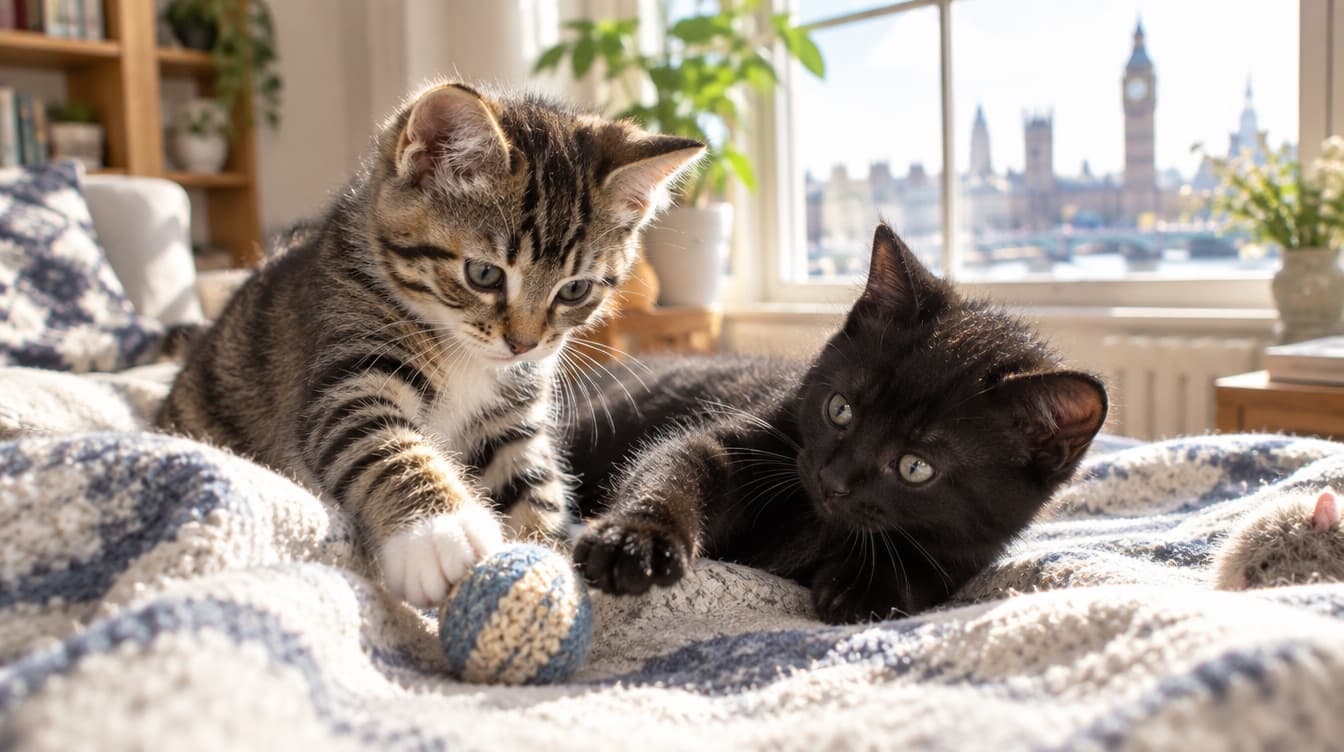
Where to find a rescue kitten in London
The count under the short answer is live: it shows every kitten (12 months or under by its listed age) with the rescues we list in London and within about 35 miles. When we checked in October 2026, Celia Hammond Animal Trust had the most kittens listed with us, followed by Protected Paws Animal Rescue and Hounslow Animal Welfare Society (HAWS). Most of these rescues keep their cats in foster homes, so you meet a kitten in someone's house rather than a cattery.
| Rescue | Where | Kitten rules (their site) | Fee (their words) |
|---|---|---|---|
| Celia Hammond Animal Trust | Lewisham and Canning Town centres | Rehomes kittens in pairs or with their mother; home visit first | Suggested minimum donation £85 per cat |
| Hounslow Animal Welfare Society (HAWS) | Foster homes in W, TW and KT postcodes | No kittens where they can't go outside; not singly where alone most of the day | £125 per kitten up to 6 months |
| Animal Rescue and Care | Twickenham, foster homes | Not before 8 weeks; a pair or an older kitten if you work all day | Minimum £130, £230 a pair |
| Croydon Animal Samaritans | Foster homes in South London and Surrey | Better homed as pairs; kept in until 6 months and neutered; generally not to flats | £160 vaccinated, £120 if your vet vaccinates |
| Feline Friends London | Fosterers across London | Apply by email; kittens go from 9 weeks with a first vaccination | £125 single kitten, £200 a pair |
| London Inner City Kitties (L.I.C.K.) | Fosters in East and North London, and SE16 | Indoor first; no single kittens | Not on its adopt page |
| Protected Paws Animal Rescue | Foster homes in and around London | Home check by video call | Not published |
| Pussycat Lodge | Brentwood, Essex, foster based | Kittens kept in until at least 9 months; no flats except special cases | A donation |
| Foal Farm Animal Rescue | Biggin Hill, London Borough of Bromley | Introductions, then a home checker visits | £100 to £175 for a cat, by age |
Charities with London cat centres
Cats Protection has two London centres, its South London Cat Centre in Mitcham and its North West London Cat Centre in Harrow, plus local branches; see Cats Protection. Battersea Dogs & Cats Home rehomes cats from its London centre and says its kittens are adopted very quickly once they are ready to go home. Mayhew in Kensal Green and Blue Cross's Hertfordshire rehoming centre rehome cats too. We don't list their cats, so search their own sites.
Pairs, gardens and indoor homes: the rules differ
The biggest surprise for many London adopters is that a single kitten is hard to get. Croydon Animal Samaritans says kittens "are much better homed as pairs", because they learn from playing together how hard is too hard when biting. L.I.C.K. says it doesn't rehome single kittens: it homes them in pairs, or with a young cat already in the home, and Celia Hammond Animal Trust says a pair of kittens keep each other company and settle more easily, especially into a home with an adult cat.
On indoor homes, London's rescues pull in opposite directions. L.I.C.K. is an "indoor first" rescue and asks for a cat-proofed home, while HAWS won't home kittens where they can't go outside, Animal Rescue and Care doesn't advocate solely indoor homes for young kittens, and Pussycat Lodge won't rehome to a flat except in special circumstances. Battersea generally places cats where they have a garden or other outside space, with some exceptions. Celia Hammond Animal Trust does rehome pairs of kittens to indoor-only homes, provided they have not been used to going outdoors, and says they need a spacious home and lots of your time. If you live in a flat, apply to a rescue whose rules allow it.
How adopting a kitten works in London
The order varies, but most London cat rescues follow the same steps. A "home check" or "home visit" is an informal chat at your home, in person or by video, to see that it suits the kitten.
- Read the rescue's rules, then apply. Most use a form; Feline Friends London asks for an email with the cat's name in the subject line, and you can also ask it to keep your details for kittens.
- Talk to the rescue. At Celia Hammond Animal Trust a member of its homing team phones you back to discuss your offer of a home.
- Have the home visit. Celia Hammond Animal Trust says it usually lasts half an hour to an hour, that some are done by video call, and that it is "not there to inspect your home". Protected Paws Animal Rescue does every home check by video call.
- Meet the kittens, usually at the foster home. Animal Rescue and Care gives you the fosterer's details after the home check so you can arrange a time.
- Sign the adoption form and pay the fee or donation, often to the fosterer, and take your kittens home. Many rescues include a few weeks' free insurance.
What a rescue kitten costs, and what the fee covers
The rescues in the cost box above ask £85 to £160 for a kitten. The fee usually buys vet work you would otherwise pay for: Foal Farm Animal Rescue says every cat leaves vaccinated, neutered, microchipped and treated for fleas and worms, and Croydon Animal Samaritans includes five weeks' free insurance.
Buying puts those costs on you. Cats Protection says a registered pedigree costs from £200 to well over £1,000, and that you then have all the usual costs of owning a cat on top. PDSA puts those at a minimum of £79 a month.
Vaccinations, neutering and microchips
Young kittens often go home before their vet work is finished, so ask the rescue what has been done and what you agree to do. This is what London rescues say on their own pages:
- Vaccinations. Celia Hammond Animal Trust vaccinates kittens from eight weeks against cat flu and enteritis, with two vaccinations 3 to 4 weeks apart, and tells you when the second and the annual booster are due. Feline Friends London rehomes kittens at 9 weeks with a first vaccination, and with the full course from 13 weeks. L.I.C.K. says it can't provide vaccinations at the moment.
- Neutering. Many rescues neuter before rehoming once a kitten is old enough. If not, you sign to do it: Celia Hammond Animal Trust gives you a date it must be done by, and Feline Friends London asks that kittens are neutered and microchipped by 6 months.
- Microchips. Celia Hammond Animal Trust registers you as the new owner of a chipped kitten. The law on microchipping cats in England is below.
When to look: kitten season
Celia Hammond Animal Trust says kitten season runs from spring to late autumn, when it looks for homes for lots of young mothers and their kittens. Outside it there are fewer kittens, and Battersea says those it has are adopted very quickly.
If no kittens are listed when you look, consider a young adult cat: rescues know an adult's character, and some, like Animal Rescue and Care, suggest an older kitten for homes where everyone works all day.
If you've been searching "kittens for sale London"
Rescue kittens are adopted, not sold: you apply, the rescue matches you, and you pay its adoption fee or donation. The law on selling kittens in England is in the next section.
If you decide to buy a pedigree, Cats Protection suggests a breeder registered with a breed association such as the GCCF, and seeing the kitten with its mother at home rather than buying from a video or social media advert. If an advert looks like a scam, report it to Report Fraud (formerly Action Fraud).
The law in England
Microchipping cats
In England, cats must be microchipped before they are 20 weeks old and registered on a database, a rule in force since 10 June 2024. An owner found without one has 21 days to comply or may be fined up to £500. Free-living cats (farm, feral and community cats) are exempt.
Lucy's Law: buying a kitten
In England, Lucy's Law has meant since 6 April 2020 that kittens under six months can't be sold by a third party such as a pet shop or dealer: you buy direct from the breeder or adopt from a rehoming centre.
Questions
Tap a question to expand
Which London rescues have kittens to adopt?
Mostly the foster-based cat rescues. When we checked in October 2026, Celia Hammond Animal Trust had the most kittens listed with us, followed by Protected Paws Animal Rescue and HAWS, with others at Animal Rescue and Care, L.I.C.K., Feline Friends London, Croydon Animal Samaritans and Foal Farm Animal Rescue. Battersea and Cats Protection's two London centres rehome kittens too.
How much is a rescue kitten compared with buying one?
Far less. London rescues ask from a suggested £85 at Celia Hammond Animal Trust to £160 for a vaccinated kitten at Croydon Animal Samaritans, and Battersea charges £130. Cats Protection says a registered pedigree costs from £200 to well over £1,000. A rescue fee usually includes vaccinations and a microchip.
Can I get a kitten for free, or for £85 or less, in London?
Not for free from the rescues that publish a fee, but around £85 is possible. Celia Hammond Animal Trust suggests a minimum donation of £85 per cat, while most London rescues ask £125 to £160 for a kitten and Cats Protection says £100 to £120 on average. A "free kitten" advert comes from a private seller with no rescue checks behind it, so be cautious.
Can I adopt just one kitten?
Often not. L.I.C.K. doesn't rehome single kittens, Croydon Animal Samaritans says kittens are much better homed as pairs, and HAWS and Animal Rescue and Care won't place a single kitten where it would be alone for long. A pair keep each other company while you are out.
Can I adopt a kitten if I live in a London flat?
Yes, with some rescues. L.I.C.K. is an indoor first rescue that asks for a cat-proofed home, and Celia Hammond Animal Trust rehomes pairs of kittens to indoor-only homes if they have not been used to going outdoors. Others want outdoor access: HAWS won't home kittens where they can't go outside, Croydon Animal Samaritans generally doesn't home kittens to flats, and Pussycat Lodge only in special cases.
What vet care will my rescue kitten have had?
Usually vaccinations, neutering and a microchip, if it is old enough. Foal Farm Animal Rescue says every cat leaves vaccinated, neutered and microchipped, while younger kittens may go home with a first vaccination and a neutering agreement: Feline Friends London asks for neutering and microchipping by 6 months. In England, cats must be microchipped before 20 weeks old. Register with your own vet before the kitten arrives and take its vaccination record to the first visit.
How old is a rescue kitten when it goes home?
Usually at least 8 weeks. Animal Rescue and Care doesn't home kittens before 8 weeks, and Feline Friends London rehomes them from 9 weeks with a first vaccination. Croydon Animal Samaritans lists kittens up to 6 months old, and some rescues ask you to keep kittens indoors for months after adoption.
When is the best time to adopt a kitten in London?
Spring to late autumn. Celia Hammond Animal Trust calls that kitten season, when it has lots of young mothers and kittens needing homes. Battersea says its kittens are adopted very quickly, so register early and be ready to act.
Should I adopt a kitten or an adult cat?
It depends on your days. A kitten needs company and time, and Animal Rescue and Care asks people who work all day to take a pair or an older kitten. Battersea says adult cats can be energetic and playful too, and being open to more ages makes a match likelier.
Keep reading
- Kittens for adoption in and around London
- All rescue cats in and around London
- The best cat rescues in London, compared
- Adopting a Ragdoll cat in London: rescues, rules and costs
- Adopting a Bengal cat in London: rescues, rules and costs
- Adopting a British Shorthair in London: rescues, rules and costs
- Adopting a Maine Coon in London: rescues, rules and costs
- Adopting a Persian cat in London: rescues, rules and costs
- Adopting a Russian Blue in London: rescues, rules and costs
- Adopting a Siamese cat in London: rescue, rules and costs
- Adopting a Siberian cat in London: rescues, rules and costs
- Every cat adoption guide for London
- Rescue pets in London
Kittens in other cities: Chelmsford, Guildford, Luton, Watford, Crawley, Maidstone, Belfast, Birmingham, Bournemouth, Christchurch and Poole, Brighton and Hove, Bristol, Canterbury, Cardiff, Carlisle, Dumfries and Galloway, Edinburgh, Exeter, Glasgow, Ipswich, Kendal, Kingston upon Hull, Leeds, Lincoln, Liverpool, Manchester, Middlesbrough, Newcastle upon Tyne, Northampton, Norwich, Nottingham, Oxford, Peterborough, Plymouth, Portsmouth, Preston, Sheffield, Stoke-on-Trent, Swansea, Truro, Worcester
Kitten guides in other cities: Belfast, Birmingham, Brighton and Hove, Canterbury, Cardiff, Carlisle, Glasgow, Ipswich, Leeds, Lincoln, Liverpool, Manchester, Middlesbrough, Newcastle upon Tyne, Northampton, Norwich, Nottingham, Oxford, Peterborough, Plymouth, Portsmouth, Preston, Sheffield, Stoke-on-Trent, Truro
For rescues and rehoming centres
Are you a rescue near London? Get your animals listed free.
Every animal links back to your own adoption page, and you can ask to be removed at any time.
Sources: Celia Hammond Animal Trust: adopt a cat · Hounslow Animal Welfare Society: requirements · Animal Rescue and Care: cats adoption process · Croydon Animal Samaritans: kittens · Feline Friends London: adoption · London Inner City Kitties: adopt · Protected Paws Animal Rescue: adopting · Pussycat Lodge: rehoming policy · Foal Farm Animal Rescue: rehoming process · Battersea: cat rehoming FAQs · Mayhew: how rehoming works · Blue Cross: Hertfordshire rehoming centre · Cats Protection: Getting a pedigree cat, and buying a kitten (homepage linked; its terms ask that deep links be approved) · GCCF · PDSA: the cost of owning a cat · Report Fraud · gov.uk: Get your dog microchipped · gov.uk: Banned dogs · gov.uk: Lucy's Law in England · legislation.gov.uk: Microchipping of Cats and Dogs (England) Regulations 2023 · gov.uk: microchipping for cats becomes compulsory