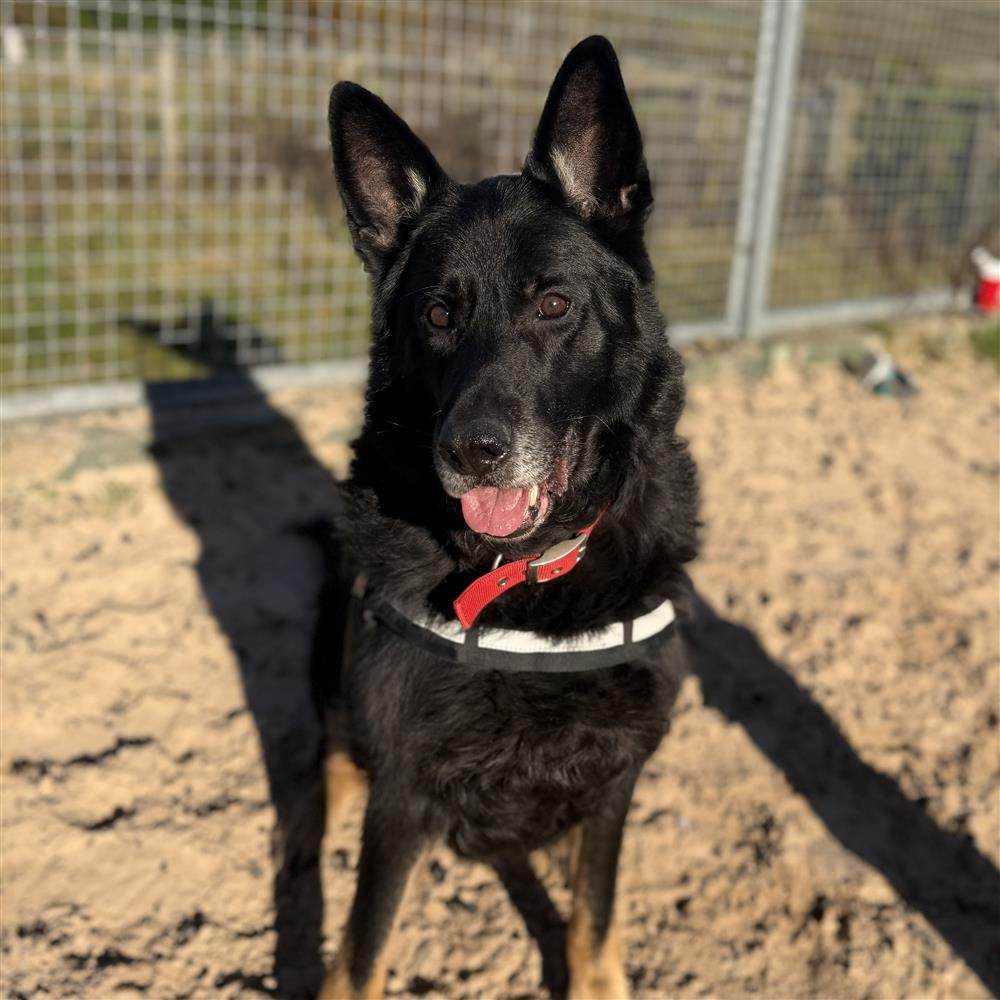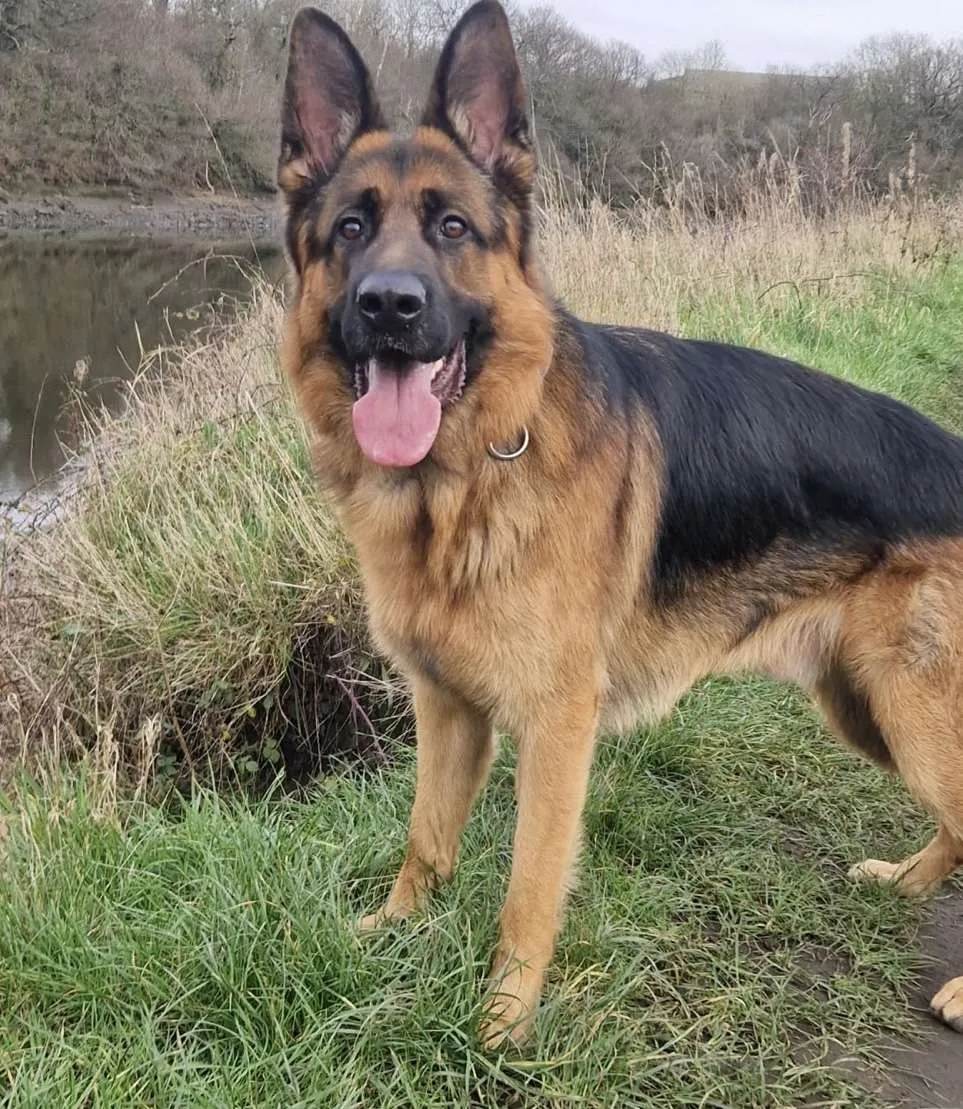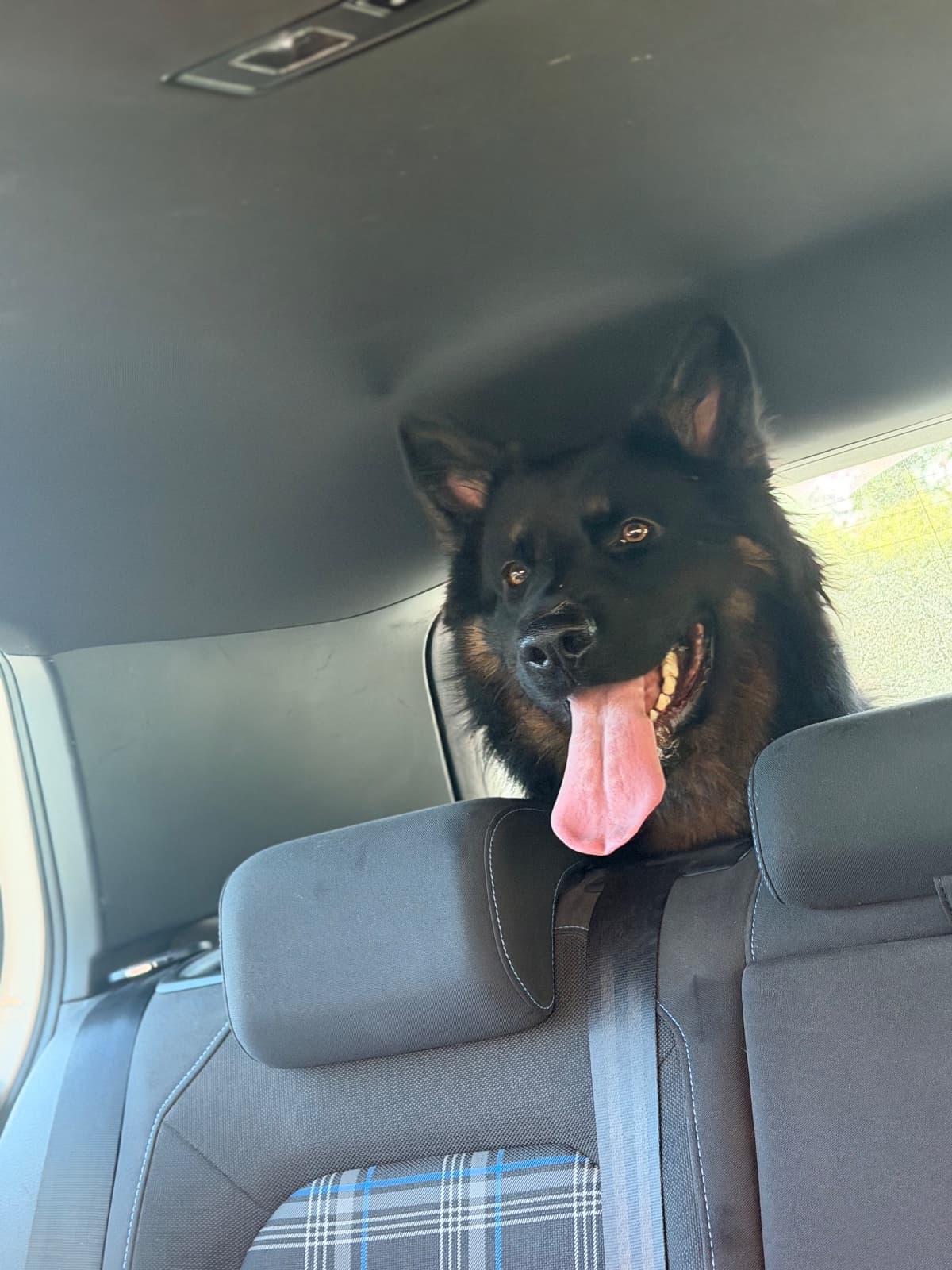


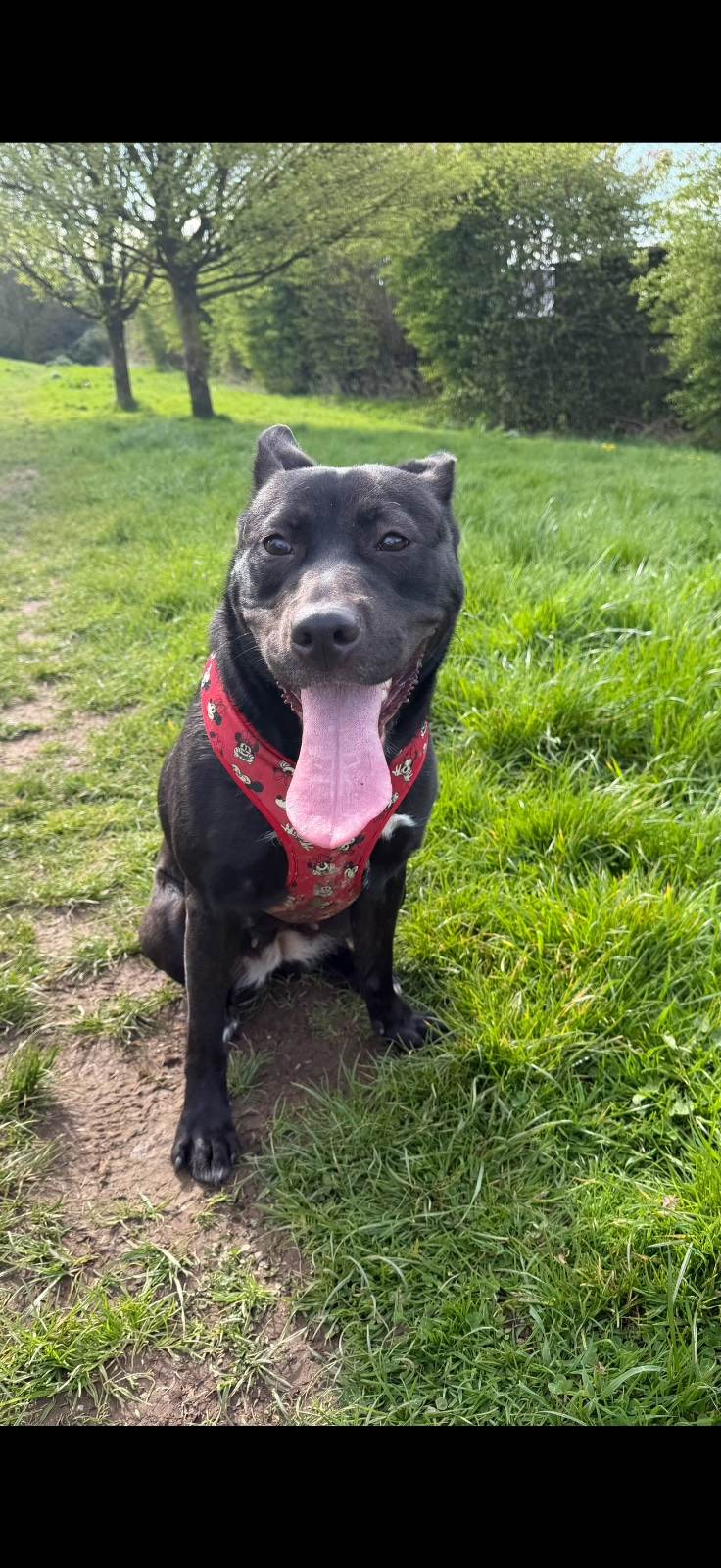
Bambi
2 years, 5 months • Female • German Shepherd Mix
Medium
Can live with:Other dogsCats
Listed by owner· Mid Devon
Meet Bambi →German Shepherds and German Shepherd crosses looking for new homes with rescues and rehoming centres across the UK, gathered in one place. Adult German Shepherds are usually large dogs, though crosses can vary.
71 listed across the UK from 40 rescues
Twelve months old or under, listed by rescues and rehoming centres. Each one links to the rescue to apply.
Showing 71 dogs
Never miss new German Shepherds
Be first to know when new German Shepherds are listed across the UK. No spam, unsubscribe any time.
2 years, 5 months • Female • German Shepherd Mix
10 months • Male • German Shepherd
6 years • Male • Alsatian German Shepherd Dog
2 years • Male • German Shepherd
10 months • Female • German Shepherd Cross
10 months • Male • German Shepherd Cross
List your dog for free. Your dog stays at home until you find the right family, every listing is checked by a person, and you choose who adopts. Not sure yet? Read the rehoming guide first.
List your dog for free →71 german shepherds are listed across the UK today, with 40 rescues. By age: 11 puppies, 48 adult dogs and 9 older dogs, plus 3 with no age given. 43 are male and 28 female. The newest was added on 13 November 2026.
Breed labels on rescue listings are often a best guess, and every dog is an individual. Read the profile, then ask the rescue about the dog’s history, what they can live with and the home they need.
| Breed group | Pastoral |
|---|---|
| Size | Large |
| Height (breed standard) | Ideal 63 cm for dogs, 58 cm for bitches (2.5 cm either way tolerated) |
| Exercise | More than 2 hours a day |
| Size of home | Large house with a large garden |
| Grooming | More than once a week |
| Coat | Short or long (sheds) |
| Lifespan | Over 10 years |
The Royal Kennel Club describes the German Shepherd Dog as a "versatile worker and service dog noted for bravery and intelligence". It says the breed was first developed as a herding dog, then used as a working dog by the police and the armed forces, and has also worked as a guide dog, a tracking dog and in obedience.
The breed standard asks for a dog that is "steady of nerve, loyal, self-assured, courageous and tractable", and "never nervous, over-aggressive or shy". Dogs Trust adds that every dog has its own personality and experiences, so each German Shepherd will respond to situations in its own way.
That tells you what the breed was bred for, not how one dog will be. A rescue German Shepherd may be a cross, and each has its own history. The rescue knows how this dog behaves at home, on the lead and with visitors, so ask them.
This is a big, active breed. The Royal Kennel Club lists the German Shepherd as large, needing more than two hours of exercise a day, and suited to a large house with a large garden, in town or country.
Dogs Trust says German Shepherds are typically high-energy dogs that need lots of exercise to stay physically and mentally healthy: daily walks plus plenty of time to explore, burn energy and play, along with training and daily enrichment. It says if you love spending active time outdoors, the breed could be a great match.
The Royal Kennel Club lists two coat lengths, short and long, and says the long-haired variety is now officially recognised in the breed standard. Either way the coat sheds and needs grooming more than once a week.
Dogs Trust says German Shepherds have thick coats, so they shed a lot, and you will typically need to brush a short or long-haired German Shepherd a few times a week. They may also need professional grooming.
The Royal Kennel Club asks German Shepherd breeders, at a minimum, to have hips and elbows scored under the BVA/KC schemes. Its best practice list adds eye testing and a DNA test for degenerative myelopathy (DM). It lists the breed's lifespan as over 10 years, and Dogs Trust says typically 10 or more.
The Royal Kennel Club's Breed Watch list of points of concern for show judges names incorrect hind conformation or poor rear movement, and nervous temperament. The breed standard asks that the dog be able to stand "comfortably and calmly, freely and unsupported", with both rear pasterns vertical.
A rescue dog's parents may not have been health tested, so ask the rescue what vet checks the dog has had and whether any condition is known. Your own vet is the right person to advise on anything you notice later.
As of 14 November 2026, 71 German Shepherds are listed with rescues in the UK on LocalPetFinder: by their listed age, 11 puppies aged 12 months or under, 48 adults and 9 aged 7 or over. The rest have no age we can read, so check the profile.
40 of them are listed as a cross, as the rescue describes it: German Shepherd Cross (26), Beagle x German Shepherd and Belgian Malinois x Gsd and others. Breed labels on rescue listings are often a best guess from looks.
The rescues mark 26 as able to live with children, 2 with cats and 23 with other dogs. Where a profile says nothing, it doesn't mean no: ask the rescue.
Whether a particular German Shepherd can live with children, cats or other dogs depends on the dog, not the breed. Go by the rescue's own assessment, which is often noted on the profile.
Dogs Trust runs family workshops on living happily together with a dog, for children aged 7 to 11.
The breed standard has two varieties of coat. The short coat is straight, hard and close-lying with a thick undercoat; the long coat is longer, "not always straight", with tufts at the ears and feathering on the legs. The Royal Kennel Club says the long-haired variety, "once frowned upon in its native country", is now officially recognised.
The Royal Kennel Club also says the breed's changed appearance over the last fifty years "has provoked fierce debate", and that the German Shepherd has "a marked division of breed type". So two rescue German Shepherds can look quite different. Its Breed Watch asks show judges to watch for incorrect hind conformation and poor rear movement, so ask the rescue how this dog moves and whether a vet has looked at its hips.
Sources (checked 30 September 2026)
Breed descriptions are general. Every rescue animal is an individual, so the rescue's own assessment of the animal comes first.
Tap a question to expand
As of 14 November 2026, 71 German Shepherds are listed for adoption in the UK on LocalPetFinder, from German Shepherd Rescue Elite, German Shepherd Rescue South, Greenacres Rescue, Animals In Need Northamptonshire, Dumfries and Galloway Canine Rescue Centre, North Clwyd Animal Rescue, Animals in Distress (Torbay & Westcountry), Bleakholt Animal Sanctuary, Last Chance Animal Rescue, Paws A While Shelter, Rescue Remedies, St Giles Animal Welfare, All Dogs Matter, Almost Home Animal Rescue NI, Ashbourne Animal Welfare, Assisi Animal Sanctuary, Birch Hill Dog Rescue, Cardiff Dogs Home, Cheltenham Animal Shelter, Chesterfield Animal Rescue, Doris Banham Dog Rescue, Edinburgh Dog and Cat Home, Greenleaf Animal Rescue, Greyhound Gap, Hull Animal Welfare Trust, Jerry Green Dog Rescue, Manchester & Cheshire Dogs' Home, Margaret Green Animal Rescue (Lincoln Farm), National Animal Welfare Trust Bedfordshire, Pawprints Dog Rescue, Penny Jones Animal Hospice, Skylor's Animal Rescue, St Francis Animal Welfare, St Francis Dogs Home, Stokenchurch Dog Rescue, Suffolk Animal Rescue, Three Counties Dog Rescue, Windyway Animal Rescue and 1 other rescue. Each profile links to the rescue, and you apply to adopt with them directly.
As of 14 November 2026, German Shepherd Rescue Elite (at Essex): 10, German Shepherd Rescue South (at Southampton): 5, Greenacres Rescue (at Talbenny): 5, Animals In Need Northamptonshire (at Wellingborough): 3, Dumfries and Galloway Canine Rescue Centre (at Glencaple): 3 and North Clwyd Animal Rescue (at Trelogan): 3, and 34 more. By age, that is 11 puppies, 48 adult dogs and 9 older dogs, plus 3 with no age given. The newest was added on 13 November 2026. Each profile links to the rescue, which handles the adoption.
With the rescue that has the dog. Today the German Shepherds on this page are with German Shepherd Rescue Elite, German Shepherd Rescue South, Greenacres Rescue, Animals In Need Northamptonshire, Dumfries and Galloway Canine Rescue Centre, North Clwyd Animal Rescue and 33 other rescues. Open a profile and apply to that rescue: each one runs its own application, home check and adoption fee. We don't rehome animals ourselves.
More than two hours a day, according to The Royal Kennel Club. It also lists the breed as suited to a large house with a large garden. Dogs Trust calls German Shepherds typically high-energy dogs that need lots of exercise. A rescue dog's needs can differ with age and health, so ask the rescue about this dog.
Yes, a lot. The Royal Kennel Club lists the German Shepherd as a breed that sheds, with a short or long coat that needs grooming more than once a week. Dogs Trust says their thick coats shed a lot, and you will typically need to brush them a few times a week.
Yes. Dogs Trust says German Shepherds are sometimes referred to as Alsatians, but their correct breed name is German Shepherd. The Royal Kennel Club calls the breed the German Shepherd Dog. Dogs listed as Alsatians are on this page.
One of the breed's two coat varieties. The Royal Kennel Club says the long-haired variety, once frowned upon in its native country, is now officially recognised in the breed standard. The breed standard describes the long coat as longer, not always straight, with tufts at the ears and feathering on the legs. It is the same breed.
The breed's look has changed and divided. The Royal Kennel Club says its appearance over the last fifty years "has provoked fierce debate" and that there is a marked division of breed type. Its Breed Watch asks show judges to watch for incorrect hind conformation and poor rear movement. With a rescue dog, ask what the vet has found about its hips, back legs and movement.
Not within the German Shepherd Dog breed. Its breed standard lists whites and near whites among colours it calls "highly undesirable", while adding that colour "is of secondary importance having no effect on character or fitness for work". The Royal Kennel Club does recognise the White Swiss Shepherd Dog as a separate breed: it was "granted breed status by The Kennel Club in October 2017", and the club says it is generally accepted that it was developed from a white strain of the German Shepherd Dog. For a rescue dog, colour tells you nothing about its character: the rescue's assessment does.
The breed standard gives an ideal height of 63 cm for dogs and 58 cm for bitches, with 2.5 cm either way tolerated. The Royal Kennel Club lists the breed as large. A standard describes the ideal, so a dog may be larger or smaller.
The Royal Kennel Club gives the lifespan as over 10 years, and Dogs Trust says typically 10 or more.
We only list dogs with rescues, so there is nothing to buy here: every German Shepherd on this page is adopted for the rescue's fee. If you decide to buy, The Royal Kennel Club runs a Find a Puppy service, and Dogs Trust's breed guides suggest talking to your vet, and say some practices offer pre-purchase consultations covering likely health conditions and rough costs. With an adult rescue German Shepherd, the rescue can tell you about its personality and vet history.
It depends on the dog, not the breed. Today the rescues mark 26 of the 71 German Shepherds listed in the UK as able to live with children. Where a profile says nothing, ask the rescue what age of children the dog could live with.
Each rescue sets its own adoption fee. Battersea charges £230 for a dog over six months and £275 for a puppy under six months, Dogs Trust charges £300 for a puppy or adult dog in England, Wales and Scotland, and Blue Cross fees start from £235 for dogs aged 8 or over and £335 for dogs aged 1 to 7. The fee usually covers neutering, microchipping and first vaccinations, and each rescue confirms its own fee.
No. We don't list animals for sale. Every German Shepherd on this page is with a rescue or rehoming centre. Rescues rehome animals rather than selling them, usually for an adoption fee: for example, Battersea charges £230 for a dog over six months and £275 for a puppy under six months, and Dogs Trust £300. The fee usually goes towards vet work already done, such as neutering, microchipping and first vaccinations. If you searched "german shepherd puppies for sale", the German Shepherds here are the rescue route: you apply to the rescue and pay its adoption fee, not a sale price.
Usually not. UK rescues normally ask for an adoption fee, which pays towards neutering, microchipping and vaccinations. Many rescue fees are under £500: Battersea charges £230 for a dog over six months, Dogs Trust £300, and Blue Cross from £235 for dogs aged 8 or over. An animal offered "free to a good home" is usually a private advert rather than a rescue. All dogs in the UK must be microchipped by 8 weeks old, and in England, Wales and Scotland a dog can't pass to a new keeper until it is chipped, so ask to see the microchip details.
Yes: 11 puppies of the 71 listed in the UK are 12 months or under by the listed age.
Yes: 9 German Shepherds of the 71 listed in the UK are aged 7 or over by the listed age. Some rescues charge less for older dogs: Blue Cross fees start from £235 for dogs aged 8 or over.
This page lists every German Shepherd with the rescues we list across the UK, each with its town. For a city, see German Shepherds in Aberdeen, Belfast, Birmingham, Bournemouth, Christchurch and Poole, Brecon, Brighton and Hove, Bristol, Cambridge, Canterbury, Cardiff, Carlisle, Dumfries and Galloway, Edinburgh, Exeter, Glasgow, Ipswich, Kendal, Kingston upon Hull, Leeds, Lincoln, Liverpool, London, Manchester, Middlesbrough, Newcastle upon Tyne, North Wales, Northampton, Norwich, Nottingham, Oxford, Perth, Peterborough, Plymouth, Portsmouth, Preston, Sheffield, Shrewsbury, Stoke-on-Trent, Swansea, Taunton, Truro and Worcester. You can also search by postcode with the pet finder on our home page to see what is closest to you.
Need to rehome your German Shepherd? Read our German Shepherd rehoming guide →
Not sure which breed suits you? Take our dog breed quiz →