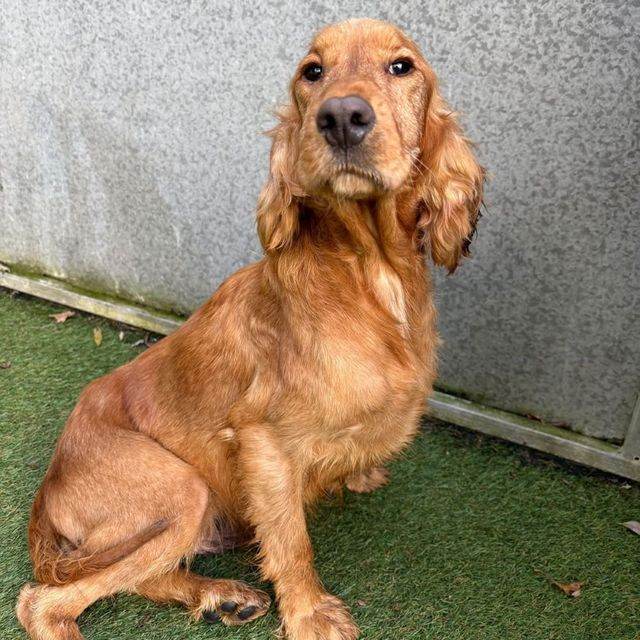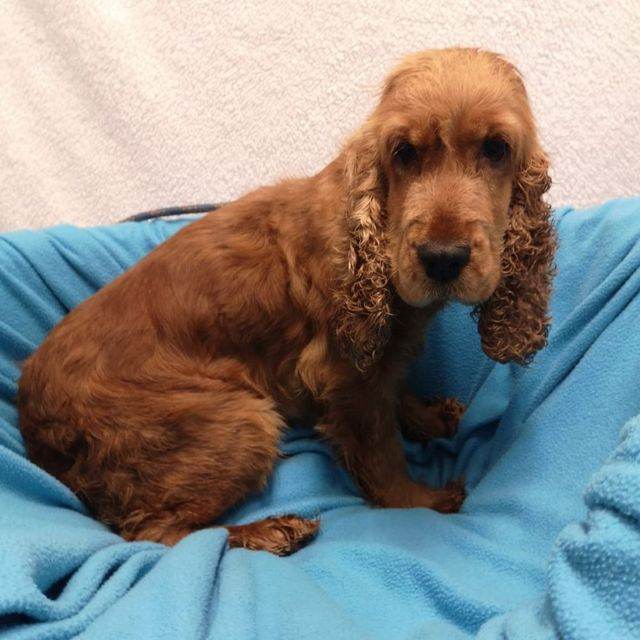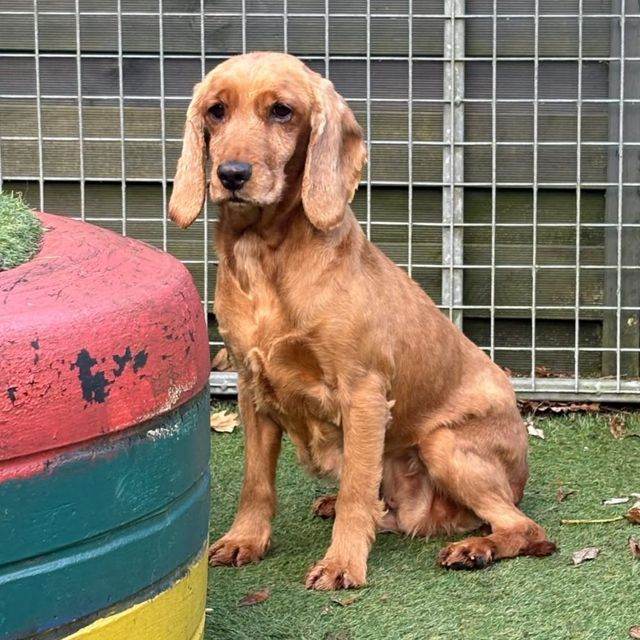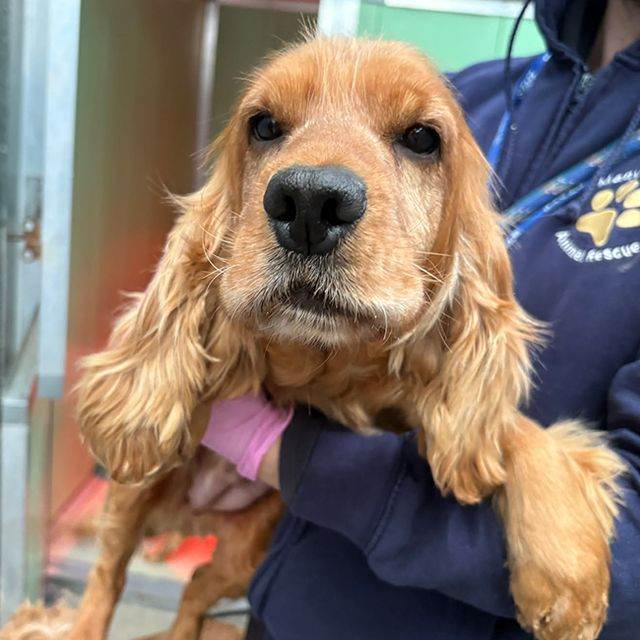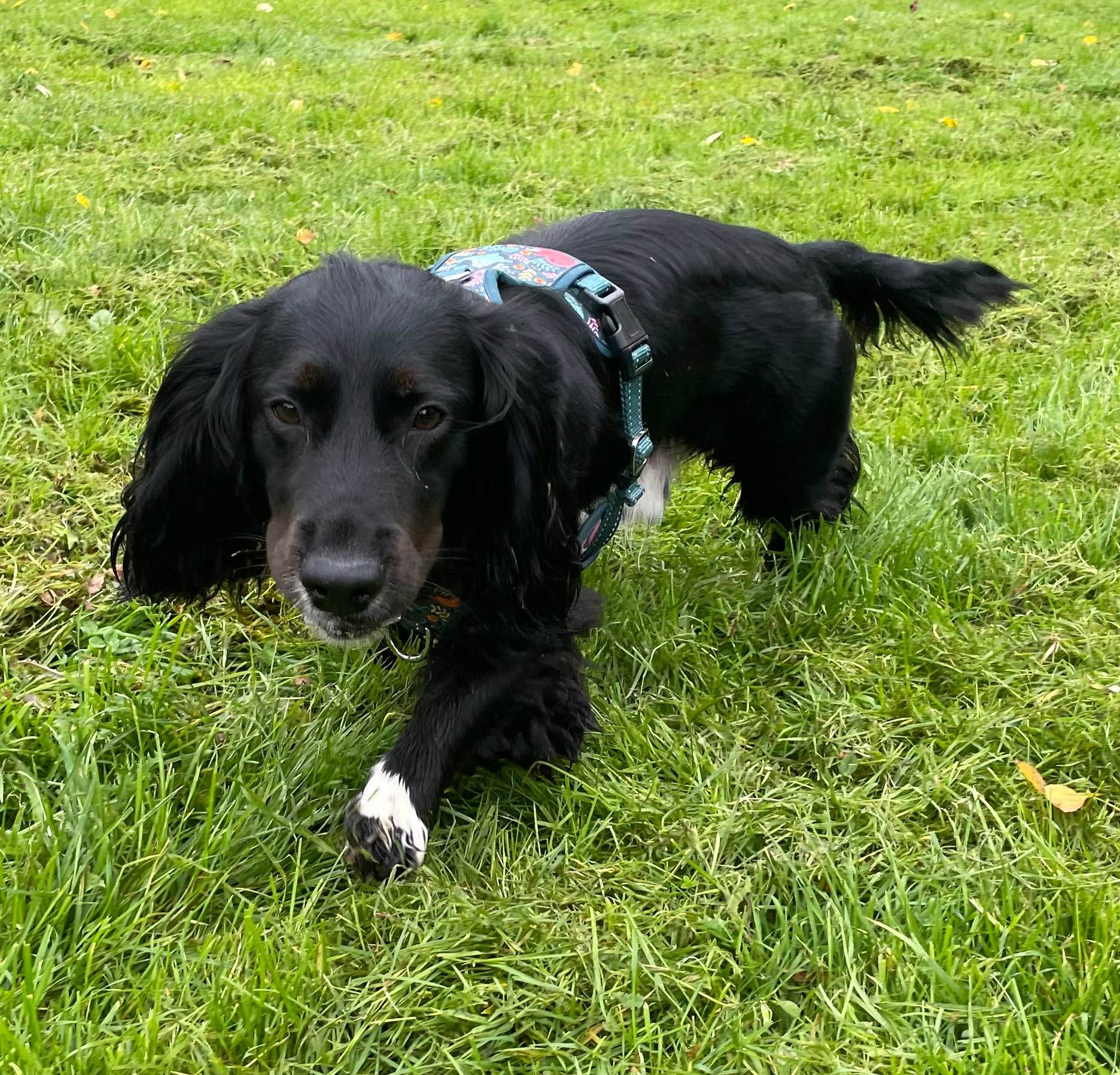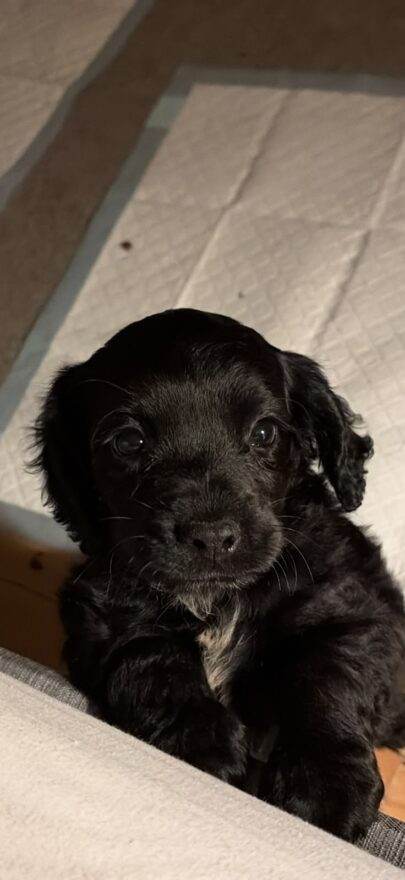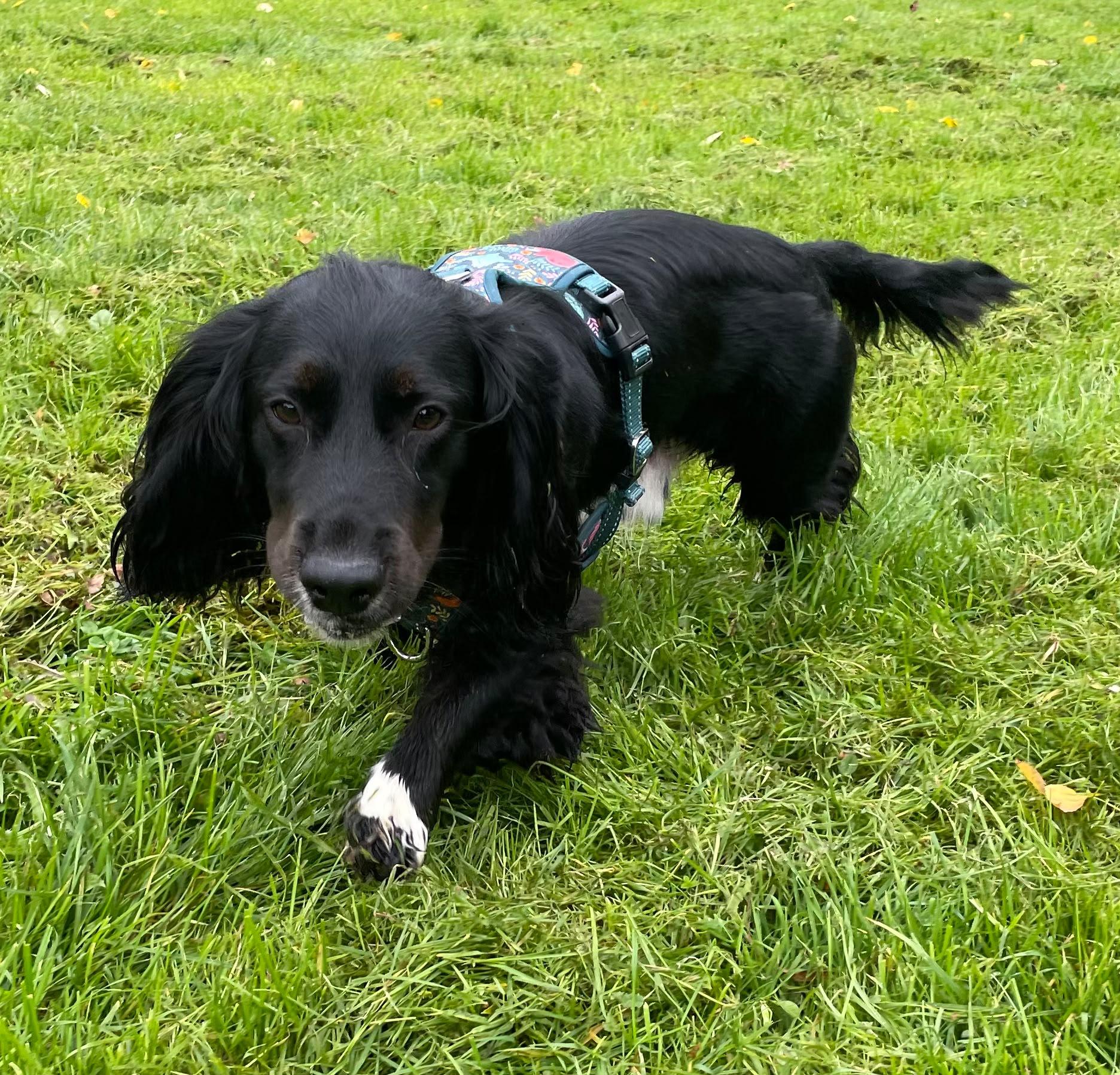

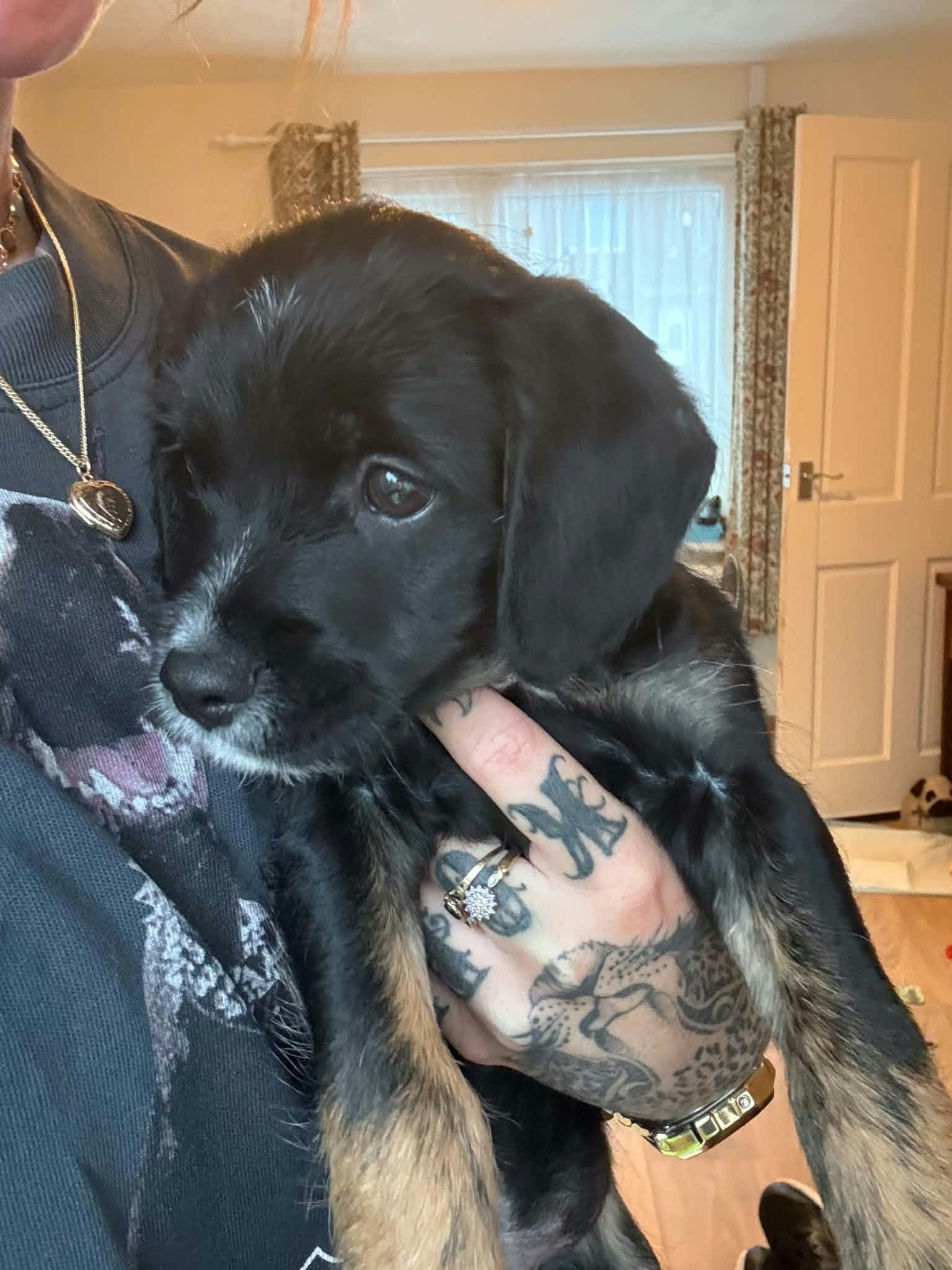

Ivy
4 years • Female • Cocker Spaniel
Medium
Can live with:ChildrenOther dogs
Listed by owner· Aberdeen
Meet Ivy →Cocker Spaniels and Cocker Spaniel crosses looking for new homes with rescues and rehoming centres across the UK, gathered in one place. Adult Cocker Spaniels are usually medium dogs, though crosses can vary.
39 listed across the UK from 23 rescues
Twelve months old or under, listed by rescues and rehoming centres. Each one links to the rescue to apply.
Showing 39 dogs
Never miss new Cocker Spaniels
Be first to know when new Cocker Spaniels are listed across the UK. No spam, unsubscribe any time.
4 years • Female • Cocker Spaniel
9 years • Male • Cocker Spaniel
4 years • Female • Cocker Spaniel
2 years • Female • Cocker Spaniel
5 years • Female • Cocker Spaniel
4 years • Female • Cocker Spaniel
6 years • Female • Cocker Spaniel
1 year • Male • Cocker Spaniel Cross
8 weeks • Male • Cockerspaniel
List your dog for free. Your dog stays at home until you find the right family, every listing is checked by a person, and you choose who adopts. Not sure yet? Read the rehoming guide first.
List your dog for free →39 cocker spaniels are listed across the UK today, with 23 rescues. By age: 3 puppies, 27 adult dogs and 4 older dogs, plus 5 with no age given. 19 are male and 20 female. The newest was added on 13 November 2026.
Breed labels on rescue listings are often a best guess, and every dog is an individual. Read the profile, then ask the rescue about the dog’s history, what they can live with and the home they need.
| Breed group | Gundog |
|---|---|
| Size | Small (PDSA and Dogs Trust call it medium) |
| Height (breed standard) | Dogs about 39 to 41 cm, bitches about 38 to 39 cm |
| Exercise | Up to 1 hour a day |
| Size of home | Small house with a small or medium garden |
| Grooming | Every day |
| Coat | Medium (sheds) |
| Lifespan | Over 10 years |
The Royal Kennel Club calls the Cocker a "popular family pet and gundog first bred to hunt woodcock". It says the breed was not recognised as a separate variety until 1893, earned the name "the merry cocker" for its ever-wagging tail, and "remains hugely popular as a family pet". The breed standard describes the ideal temperament as "gentle and affectionate, yet full of life and exuberance".
That energy is the first thing the charities mention. Battersea says many Cockers keep their "puppy" energy throughout their lives rather than settling down in early adulthood, and that even show-bred dogs are often more energetic than people expect. It says an active household ready for daily exercise, training and grooming will find a Cocker a brilliant companion, and that if you want a calmer, lower-maintenance dog another breed may suit you better.
PDSA calls Cockers very people-oriented dogs who love company all day, and says they are a popular choice for first-time owners because of their gentle natures, though they need plenty of patience and training. Battersea adds that long walks alone often aren't enough to tire their brain: they also need scent work, retrieval games or puzzle toys, or they can find it hard to switch off.
All of that describes the breed, not one dog. Dogs Trust reminds adopters that every dog is an individual with its own personality and prior experiences. A rescue Cocker may be older, may be a cross, and may have a history the rescue already knows, so ask them how this dog behaves at home, on the lead and with visitors.
The Royal Kennel Club lists the Cocker as small and needing up to an hour of exercise a day, in a small house with a small or medium garden, in town or country. PDSA puts the minimum at an hour a day, spread across a few walks with lots of chances to sniff, plus off-lead running in a secure area and plenty of play and training games.
Dogs Trust calls Cockers typically high-energy dogs who need lots of exercise to stay physically and mentally healthy, and says the breed could be a great match if you love spending active time outdoors. PDSA says a Cocker whose parents were bred to work will probably need more time to run around than the average Cocker, and Battersea says working Cockers have even higher energy.
The Royal Kennel Club lists the coat as medium length, shedding, and needing grooming every day. PDSA calls Cockers "high maintenance" for grooming: a daily brush to stop tangles, and a professional clip about every three months for a show-type coat. Working types tend to need less coat care, so groomer visits are less frequent.
Battersea warns that grass seeds and burrs easily get caught in a Cocker's coat, that some Cockers find it hard to keep still for grooming if they were not handled as puppies, and that regular professional grooming adds up in cost. Dogs Trust describes the coat as shedding heavily. With a rescue Cocker, ask when the dog was last groomed and how it copes with being brushed and handled.
The Royal Kennel Club asks Cocker breeders, at a minimum, to prioritise genetic diversity and to DNA test for acral mutilation syndrome (AMS) and progressive retinal atrophy (prcd-PRA), an inherited eye disease. Its best practice list adds DNA tests for adult-onset neuropathy (AON) and familial nephropathy (FN, a kidney disease), eye testing including gonioscopy, and hip scoring. It lists no points of concern for show judges under its Breed Watch (Category 1).
PDSA lists hip dysplasia, atopy (allergies causing itchy skin and ear infections), ear problems, inherited eye conditions and some auto-immune conditions among the problems Cockers can have. Battersea says itchy or sore ears and skin and ear infections are common, often lifelong and needing regular medication and cleaning; that Cockers can inherit glaucoma and PRA; and that they can be more prone to immune-mediated conditions, which can be costly to diagnose and manage.
A rescue dog's parents may never have been health tested. Ask the rescue what vet checks the dog has had and whether any condition is already known, and talk to your own vet about anything you notice later.
Battersea says it often sees Cocker Spaniels given up, "usually because people underestimated the time, training and grooming this breed needs". That is the honest picture behind a rescue Cocker: often a healthy, friendly dog whose first home was not ready for its energy or its coat. Breed rescues take them in too: Springer Rescue for Scotland, one of the rescues we list, says it "rescues and re-homes Spaniels across Scotland", not only Springers.
As of 14 November 2026, 39 Cocker Spaniels are listed with rescues in the UK on LocalPetFinder: by their listed age, 3 puppies aged 12 months or under, 27 adults and 4 aged 7 or over. The rest have no age we can read, so check the profile.
5 of them are listed as a cross, as the rescue describes it: Beagle x Cocker Spaniel (2), Cocker Spaniel Cross (2) and Collie x Cocker Spaniel. Breed labels on rescue listings are often a best guess from looks.
The rescues mark 19 as able to live with children, 2 with cats and 22 with other dogs. Where a profile says nothing, it doesn't mean no: ask the rescue.
PDSA says Cockers tend to get on well with children because of their patient personalities, but can be excitable, so keep play calm and always supervise them with children. It says well-socialised Cockers usually get along with other dogs, and that Cockers raised with cats and small pets are usually fine with them, as they don't have a high prey drive. Whether a particular rescue Cocker can live with children, cats or other dogs depends on the dog, so go by the rescue's own assessment, which is often noted on the profile.
Cockers come from working lines, show lines, or a mix of the two. Battersea describes working Cockers as "go-go-go types": very smart, high-energy, with shorter coats, flatter skulls and higher-set ears. It describes show Cockers as generally more laid-back and affectionate, with longer, silky coats that need more grooming, and says they can be more sensitive and find it harder to be away from you.
Battersea says a lot of Cockers today sit somewhere in between, and that pedigree papers give clues: FtCh (Field Trial Champion) points to a working line and ShCh (Show Champion) to a show line. A rescue may not have papers, so watch the dog itself and ask the rescue what its energy and coat are like day to day.
PDSA says Cockers are known for suffering with separation anxiety, so it is best to have someone with them during the day, and that a Cocker should never be left alone for more than four hours, which may still be too much for some. Battersea says some find being left challenging because they find it hard to settle and switch off, and that teaching them to settle and meeting their exercise needs can help. If you work away from home, tell the rescue: they will know how this dog copes on its own.
Sources (checked 16 October 2026)
Breed descriptions are general. Every rescue animal is an individual, so the rescue's own assessment of the animal comes first.
Tap a question to expand
As of 14 November 2026, 39 Cocker Spaniels are listed for adoption in the UK on LocalPetFinder, from Many Tears Animal Rescue, Animals In Need Northamptonshire, Almost Home Animal Rescue NI, Aireworth Dogs in Need, All Dogs Matter, Best Life Dog Rescue, Birch Hill Dog Rescue, Chesterfield Animal Rescue, Cliffe Kennels & Rescue, Diana Brimblecombe Animal Rescue Centre, Dogs' Friends, Dumfries and Galloway Canine Rescue Centre, Eden Animal Rescue, Greenleaf Animal Rescue, Just Like Home Rescue, Linbee Dog Rehoming, Midlands Dog Rescue, Paws and People, RATS Animal Rescue, Raystede Centre for Animal Welfare, Springer Rescue Scotland and Stokenchurch Dog Rescue. Each profile links to the rescue, and you apply to adopt with them directly.
As of 14 November 2026, Many Tears Animal Rescue (at Llanelli): 12, Animals In Need Northamptonshire (at Wellingborough): 5, Almost Home Animal Rescue NI (at Moira): 2, Aireworth Dogs in Need (at Keighley): 1, All Dogs Matter (at London): 1 and Best Life Dog Rescue (at Doncaster): 1, and 17 more. By age, that is 3 puppies, 27 adult dogs and 4 older dogs, plus 5 with no age given. The newest was added on 13 November 2026. Each profile links to the rescue, which handles the adoption.
With the rescue that has the dog. Today the Cocker Spaniels on this page are with Many Tears Animal Rescue, Animals In Need Northamptonshire, Almost Home Animal Rescue NI, Aireworth Dogs in Need, All Dogs Matter, Best Life Dog Rescue and 16 other rescues. Open a profile and apply to that rescue: each one runs its own application, home check and adoption fee. We don't rehome animals ourselves.
Around an hour a day. The Royal Kennel Club lists up to an hour, and PDSA a minimum of an hour, including off-lead time in a secure area. Battersea adds daily mental stimulation such as scent work and puzzle toys. A Cocker from working lines usually needs more.
It can be. PDSA says Cockers are a popular choice for first-time owners because of their gentle natures, but need plenty of patience and training. Battersea says they suit an active household ready for daily exercise, training and grooming. Ask the rescue whether this dog would suit a first home.
Not for long. PDSA says Cockers are known for suffering with separation anxiety and should never be left alone for more than four hours, which may still be too long for some. Ask the rescue how this dog copes on its own.
Yes. The Royal Kennel Club lists the medium-length coat as shedding and needing grooming every day, and Dogs Trust describes the shedding as heavy. PDSA says show-type Cockers may need a professional clip about every three months.
Energy and coat, mainly. Battersea says working Cockers are very high-energy with shorter coats, while show Cockers are generally more laid-back, with longer coats that need more grooming. Many Cockers are a mix of both lines, so ask the rescue about the dog in front of you.
Over 10 years, according to The Royal Kennel Club and PDSA. Dogs Trust says typically 10 or more.
PDSA estimates at least £80 a month after the initial costs, and over £13,000 across the dog's lifetime. Battersea quotes an RSPCA estimate of £77 to £241 a month, and says ongoing grooming comes on top of the usual costs. Pet insurance and a groomer are worth pricing before you apply.
Not here: we only list dogs with rescues, so every Cocker on this page is adopted for the rescue's fee. If you decide to buy, The Royal Kennel Club runs a Find a Puppy service, and Battersea says to choose a breeder who health-tests both parents and can tell you whether the line is working or show. Dogs Trust suggests talking to your vet first, and says some practices offer pre-purchase consultations on likely health conditions and rough costs. With an adult rescue Cocker, the rescue can tell you about its energy, coat and vet history.
It depends on the dog, not the breed. Today the rescues mark 19 of the 39 Cocker Spaniels listed in the UK as able to live with children. Where a profile says nothing, ask the rescue what age of children the dog could live with.
Each rescue sets its own adoption fee. Battersea charges £230 for a dog over six months and £275 for a puppy under six months, Dogs Trust charges £300 for a puppy or adult dog in England, Wales and Scotland, and Blue Cross fees start from £235 for dogs aged 8 or over and £335 for dogs aged 1 to 7. The fee usually covers neutering, microchipping and first vaccinations, and each rescue confirms its own fee.
No. We don't list animals for sale. Every Cocker Spaniel on this page is with a rescue or rehoming centre. Rescues rehome animals rather than selling them, usually for an adoption fee: for example, Battersea charges £230 for a dog over six months and £275 for a puppy under six months, and Dogs Trust £300. The fee usually goes towards vet work already done, such as neutering, microchipping and first vaccinations. If you searched "cocker spaniel puppies for sale", the Cocker Spaniels here are the rescue route: you apply to the rescue and pay its adoption fee, not a sale price.
Usually not. UK rescues normally ask for an adoption fee, which pays towards neutering, microchipping and vaccinations. Many rescue fees are under £500: Battersea charges £230 for a dog over six months, Dogs Trust £300, and Blue Cross from £235 for dogs aged 8 or over. An animal offered "free to a good home" is usually a private advert rather than a rescue. All dogs in the UK must be microchipped by 8 weeks old, and in England, Wales and Scotland a dog can't pass to a new keeper until it is chipped, so ask to see the microchip details.
Yes: 3 puppies of the 39 listed in the UK are 12 months or under by the listed age.
Yes: 4 Cocker Spaniels of the 39 listed in the UK are aged 7 or over by the listed age. Some rescues charge less for older dogs: Blue Cross fees start from £235 for dogs aged 8 or over.
This page lists every Cocker Spaniel with the rescues we list across the UK, each with its town. For a city, see Cocker Spaniels in Aberdeen, Belfast, Birmingham, Bournemouth, Christchurch and Poole, Brecon, Brighton and Hove, Bristol, Cambridge, Canterbury, Cardiff, Carlisle, Dumfries and Galloway, Edinburgh, Exeter, Glasgow, Ipswich, Kendal, Kingston upon Hull, Leeds, Lincoln, Liverpool, London, Manchester, Middlesbrough, Newcastle upon Tyne, North Wales, Northampton, Norwich, Nottingham, Oxford, Perth, Peterborough, Plymouth, Portsmouth, Preston, Sheffield, Shrewsbury, Stoke-on-Trent, Swansea, Taunton, Truro and Worcester. You can also search by postcode with the pet finder on our home page to see what is closest to you.
Can’t keep your dog? List them free, safely →
Not sure which breed suits you? Take our dog breed quiz →