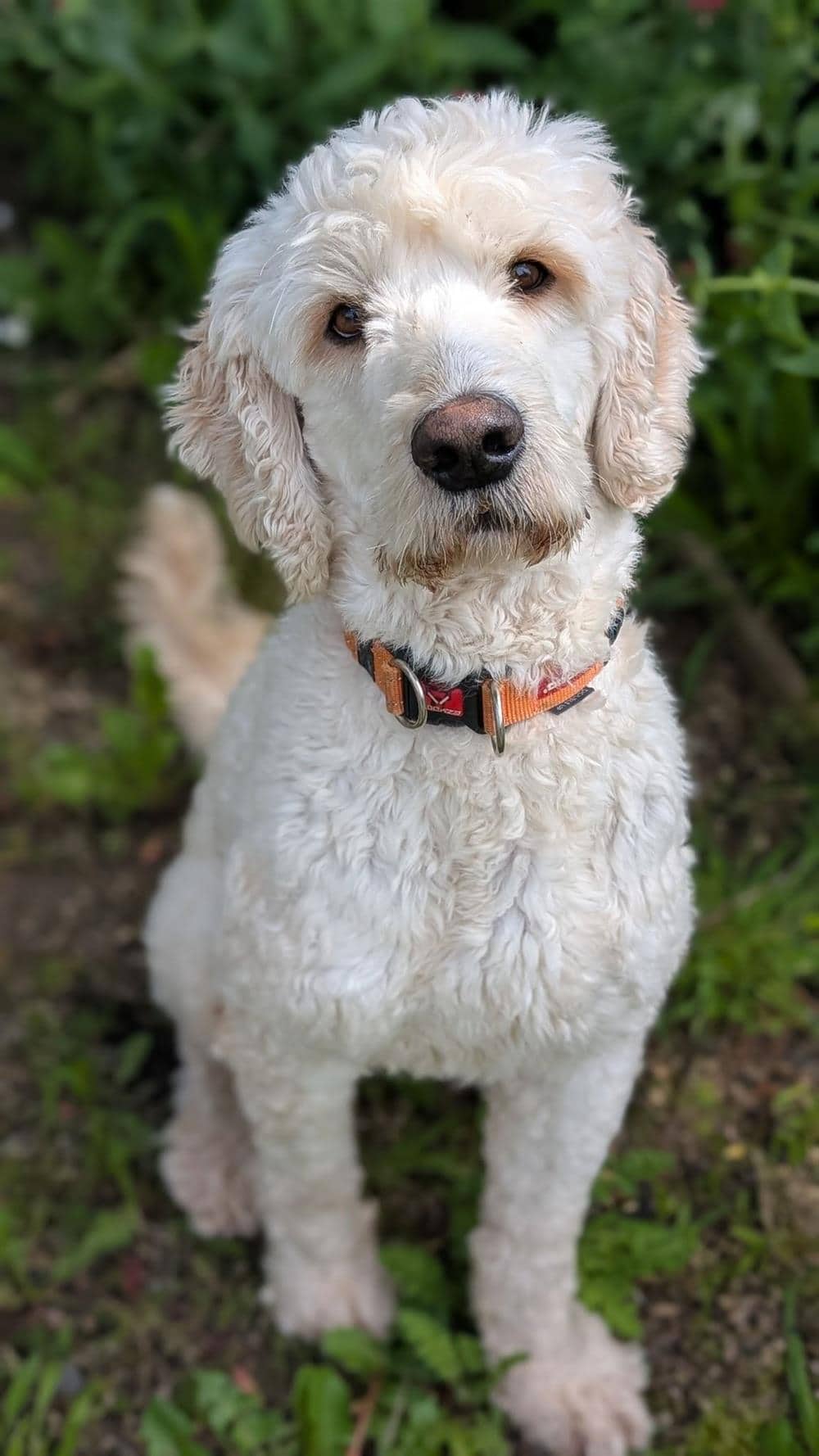
Skittles
2 years, 7 months • Male • Labradoodle
Largehigh energy
Can live with:Other dogs
Jerry Green Dog Rescue· Broughton
Meet Skittles →Labradoodles and Labradoodle crosses looking for new homes with rescues and rehoming centres across the UK, gathered in one place. Labradoodles come in a range of sizes, so check each dog's profile.
4 listed across the UK from 4 rescues
Showing 4 dogs
Never miss new Labradoodles
Be first to know when new Labradoodles are listed across the UK. No spam, unsubscribe any time.
2 years, 7 months • Male • Labradoodle
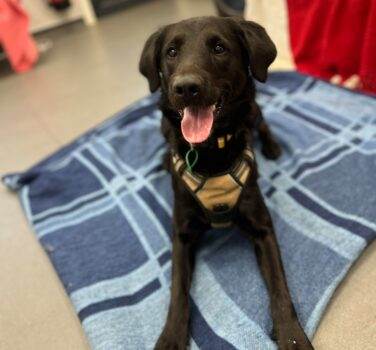
4 years • Female • Labradoodle
5 years • Female • Labradoodle
3 years • Male • Labradoodle
List your dog for free. Your dog stays at home until you find the right family, every listing is checked by a person, and you choose who adopts. Not sure yet? Read the rehoming guide first.
List your dog for free →4 labradoodles are listed across the UK today, with 4 rescues. 2 are male and 2 female. The newest was added on 28 October 2026.
Breed labels on rescue listings are often a best guess, and every dog is an individual. Read the profile, then ask the rescue about the dog’s history, what they can live with and the home they need.
| What it is | A Labrador and Poodle mix, not a Royal Kennel Club breed |
|---|---|
| Size (Dogs Trust) | Typically large |
| Labrador parent | Large; more than 2 hours of exercise a day; grooming once a week; short coat that sheds; over 10 years |
| Standard Poodle parent | Medium; up to 1 hour of exercise a day; grooming every day; coat listed as not shedding; over 12 years |
| Exercise (Doodle Trust) | 60 to 120 minutes a day for most, plus mental stimulation |
| Fully grown (Doodle Trust) | Can take up to 18 months |
A Labradoodle is "a mix between a Labrador and a Poodle", as Dogs Trust puts it, and Dogs Trust lists it among the popular Poodle crossbreeds. It is not a breed. It isn't on The Royal Kennel Club's Breeds A to Z, so there is no breed standard. The Royal Kennel Club's guide to crossbreeds names the Labradoodle as an example of a "designer dog", and says a cross's traits combine in ways that make it "difficult to predict how the puppies will look and behave". Any one Labradoodle can take after the Labrador, the Poodle, or both.
Doodle Trust, which began in 2007 as Labradoodle Rescue UK, rescues them across the UK. It says they "get a lot of positive press" and that many people believe they're the "perfect dog", but that they "are absolutely not the right choice for everyone" (things to consider). Every Doodle, Labradoodles included, is part Poodle, it says, which means high intelligence, sensitivity, a need for structure and significant grooming. They're eager to please but get bored easily, so training is essential.
The parents themselves are well liked. PDSA calls Labradors devoted, affectionate and eager to please, and PDSA calls Poodles playful, adventurous and very obedient. A rescue Labradoodle is an individual, though, so ask the rescue how this dog behaves at home, on the lead and with visitors.
The parents differ here. The Royal Kennel Club lists the Labrador as needing more than two hours of exercise a day and the Standard Poodle up to an hour, and suggests a large house with a large garden for both. Doodle Trust says most Poodle crosses need 60 to 120 minutes of "proper daily exercise plus mental stimulation", that a quick run in the garden is not enough, and that without it many become frustrated, destructive or anxious.
With a young dog, more is not better. Doodle Trust's exercise advice, written mainly for the Standard Labradoodle, says many grow into very large dogs that can take up to 18 months to reach full growth, and that over-exercising a growing puppy can increase the risk of skeletal problems including hip dysplasia. It suggests short, interesting walks for puppies and building up to proper walks from about one year old.
Coats vary more than in most breeds. The Royal Kennel Club's crossbreed guide uses this exact pairing as its example: mixing a Standard Poodle's coat with a Labrador's "may produce a coat that's a hybrid of the two and requires extensive grooming". Doodle Trust says scruffy-coated Doodles need a good brush and comb once a week, while fleece or wool coats need an intensive routine to avoid being clipped short, and that most Doodles need the hair just inside the ear plucked to keep air moving.
Doodle Trust also says "All Doodles shed, though some definitely shed more than others". The Royal Kennel Club lists the Labrador coat as shedding and the Standard Poodle coat as not shedding, which is why a Labradoodle can land anywhere between. With a rescue Labradoodle, ask when it was last groomed and what its coat is like to care for.
The Royal Kennel Club's crossbreed guide warns that crossing two breeds that both have hip dysplasia, and it names the Labrador and Standard Poodle, "could still produce puppies that suffer from joint problems". It says anyone breeding this cross should consider carrying out all the tests for both breeds, including hip and elbow scoring, eye testing and DNA tests.
For the parents, The Royal Kennel Club asks Labrador breeders for hip and elbow scoring, eye testing and DNA tests including progressive retinal atrophy (prcd-PRA) and exercise induced collapse (EIC). It asks Standard Poodle breeders for hip scoring, eye testing and DNA tests for von Willebrand disease and two forms of progressive retinal atrophy. PDSA lists hip and elbow dysplasia and PRA among the problems Labradors are prone to, and PDSA lists conditions in Poodles including gastric dilatation volvulus ("bloat"), which it calls an emergency often seen in large, deep-chested breeds.
A rescue Labradoodle's parents may never have been tested. Ask the rescue what vet checks the dog has had and whether any condition is already known, and talk to your own vet about anything you notice later.
Doodle Trust says "many of the myths that made them popular are the same reasons so many end up abandoned", and its list of reasons not to get a Doodle covers shedding, allergies, energy, training, grooming and time alone. It says it rescues and rehomes Labradoodles, Goldendoodles, Cockapoos, other Poodle crosses and Poodles throughout the UK, assessing each dog in a foster home before rehoming. The next section shows how many Labradoodles the rescues we list have today.
As of 14 November 2026, 4 Labradoodles are listed with rescues in the UK on LocalPetFinder: by their listed age, 4 adults.
The rescues mark 1 as able to live with children and 3 with other dogs. Where a profile says nothing, it doesn't mean no: ask the rescue.
PDSA says Labradors make perfect family pets given the right socialisation, and PDSA says Poodles generally get on well with other pets and children, given the right socialisation as puppies. Doodle Trust is more cautious about the cross: it warns against getting a Doodle "for the kids", and says not all are suitable for homes with children, as some are sensitive to noise, unpredictable movement or hands-on handling. Go by the rescue's own assessment of this dog with children, cats and other dogs, which is often noted on the profile.
Labradoodles are sold as "miniature", "medium" or "standard", but with no breed standard those words have no fixed size. Doodle Trust's exercise advice says the smaller "Miniature" Doodles are often growing into dogs that are 20 inches tall and need as much care. Ask the rescue for this dog's actual height and weight.
The Royal Kennel Club's crossbreed guide explains the letters. An F1 puppy has two parents of different breeds (a Labrador and a Poodle). An F2 puppy has two F1 parents, and an F1b has one F1 parent bred back to one of the original breeds. A rescue rarely knows a dog's generation, so judge the dog in front of you.
Sources (checked 16 October 2026)
Breed descriptions are general. Every rescue animal is an individual, so the rescue's own assessment of the animal comes first.
Tap a question to expand
As of 14 November 2026, 4 Labradoodles are listed for adoption in the UK on LocalPetFinder, from Bleakholt Animal Sanctuary, Diana Brimblecombe Animal Rescue Centre, Jerry Green Dog Rescue and Many Tears Animal Rescue. Each profile links to the rescue, and you apply to adopt with them directly.
As of 14 November 2026, Bleakholt Animal Sanctuary (at Ramsbottom): 1, Diana Brimblecombe Animal Rescue Centre (at Hurst): 1, Jerry Green Dog Rescue (at Broughton): 1 and Many Tears Animal Rescue (at Llanelli): 1. The newest was added on 28 October 2026. Each profile links to the rescue, which handles the adoption.
With the rescue that has the dog. Today the Labradoodles on this page are with Bleakholt Animal Sanctuary, Diana Brimblecombe Animal Rescue Centre, Jerry Green Dog Rescue and Many Tears Animal Rescue. Open a profile and apply to that rescue: each one runs its own application, home check and adoption fee. We don't rehome animals ourselves.
No. Dogs Trust describes the Labradoodle as a mix between a Labrador and a Poodle, and it is not on The Royal Kennel Club's Breeds A to Z, so there is no breed standard. A cross can take after either parent, so size, coat and temperament vary.
Not reliably. Doodle Trust says "No dog is allergy friendly", that a Doodle may shed little like a Poodle or a great deal like a Labrador, and that a puppy's coat can change in adulthood. If someone at home has allergies, ask the rescue whether you can spend time with the adult dog first.
Yes, most do. Doodle Trust says most Doodles shed to some degree, and its grooming advice says some shed much more than others and that regular brushing helps keep shedding under control.
Typically large, according to Dogs Trust. Doodle Trust says many grow into very large dogs and can take up to 18 months to reach full growth. Ask the rescue for this dog's weight and height.
A good deal. Doodle Trust says most need 60 to 120 minutes of daily exercise plus mental stimulation, and that a quick run in the garden is not enough. Young dogs need less while they're still growing.
There is no breed figure, because the Labradoodle is a cross. The Royal Kennel Club gives the Labrador a lifespan of over 10 years and the Standard Poodle over 12 years. For a rescue dog, ask the rescue what it knows about its health.
Not here: we only list dogs with rescues, so every Labradoodle on this page is adopted for the rescue's fee. If you decide to buy, The Royal Kennel Club's crossbreed guide says the health tests for both the Labrador and the Standard Poodle apply, including hip and elbow scoring. Dogs Trust's breed guides suggest talking to your vet, and say some practices offer pre-purchase consultations on likely health conditions and rough costs.
It depends on the dog, not the breed. Today the rescues mark 1 of the 4 Labradoodles listed in the UK as able to live with children. Where a profile says nothing, ask the rescue what age of children the dog could live with.
Each rescue sets its own adoption fee. Battersea charges £230 for a dog over six months and £275 for a puppy under six months, Dogs Trust charges £300 for a puppy or adult dog in England, Wales and Scotland, and Blue Cross fees start from £235 for dogs aged 8 or over and £335 for dogs aged 1 to 7. The fee usually covers neutering, microchipping and first vaccinations, and each rescue confirms its own fee.
No. We don't list animals for sale. Every Labradoodle on this page is with a rescue or rehoming centre. Rescues rehome animals rather than selling them, usually for an adoption fee: for example, Battersea charges £230 for a dog over six months and £275 for a puppy under six months, and Dogs Trust £300. The fee usually goes towards vet work already done, such as neutering, microchipping and first vaccinations. If you searched "labradoodle puppies for sale", the Labradoodles here are the rescue route: you apply to the rescue and pay its adoption fee, not a sale price.
Usually not. UK rescues normally ask for an adoption fee, which pays towards neutering, microchipping and vaccinations. Many rescue fees are under £500: Battersea charges £230 for a dog over six months, Dogs Trust £300, and Blue Cross from £235 for dogs aged 8 or over. An animal offered "free to a good home" is usually a private advert rather than a rescue. All dogs in the UK must be microchipped by 8 weeks old, and in England, Wales and Scotland a dog can't pass to a new keeper until it is chipped, so ask to see the microchip details.
Not right now: none of the 4 Labradoodles listed in the UK is under a year old by its listed age. Puppies do get listed, so check back or look at the adults, whose rescues can tell you much more about their character.
Not right now: none of the 4 Labradoodles listed in the UK is aged 7 or over by its listed age. Older Labradoodles do come into rescue, so check back. Some rescues charge less for older dogs: Blue Cross fees start from £235 for dogs aged 8 or over.
This page lists every Labradoodle with the rescues we list across the UK, each with its town. For a city, see Labradoodles in Aberdeen, Belfast, Birmingham, Bournemouth, Christchurch and Poole, Brecon, Brighton and Hove, Bristol, Cambridge, Canterbury, Cardiff, Carlisle, Dumfries and Galloway, Edinburgh, Exeter, Glasgow, Ipswich, Kendal, Kingston upon Hull, Leeds, Lincoln, Liverpool, London, Manchester, Middlesbrough, Newcastle upon Tyne, North Wales, Northampton, Norwich, Nottingham, Oxford, Perth, Peterborough, Plymouth, Portsmouth, Preston, Sheffield, Shrewsbury, Stoke-on-Trent, Swansea, Taunton, Truro and Worcester. You can also search by postcode with the pet finder on our home page to see what is closest to you.
Can’t keep your dog? List them free, safely →
Not sure which breed suits you? Take our dog breed quiz →