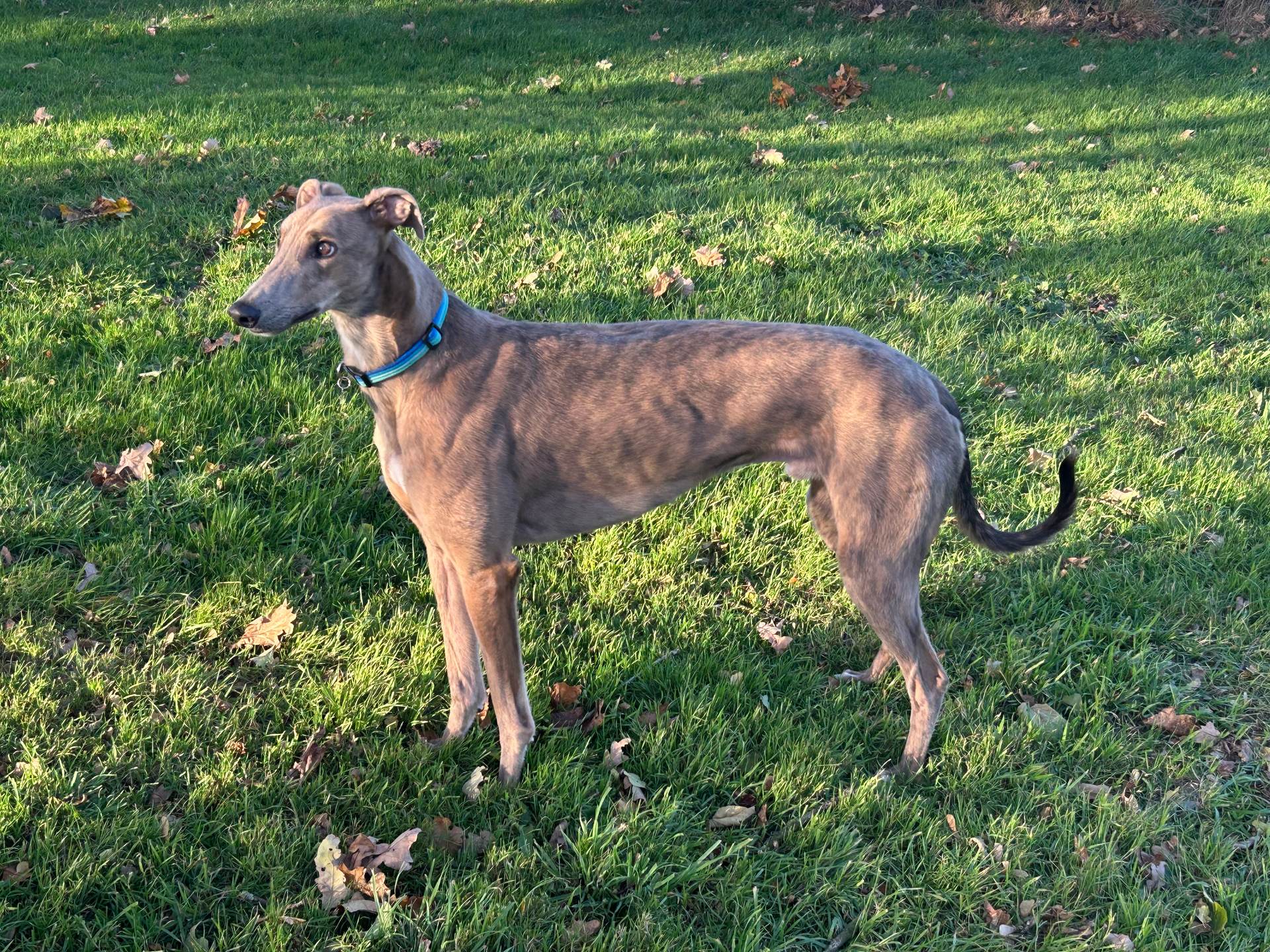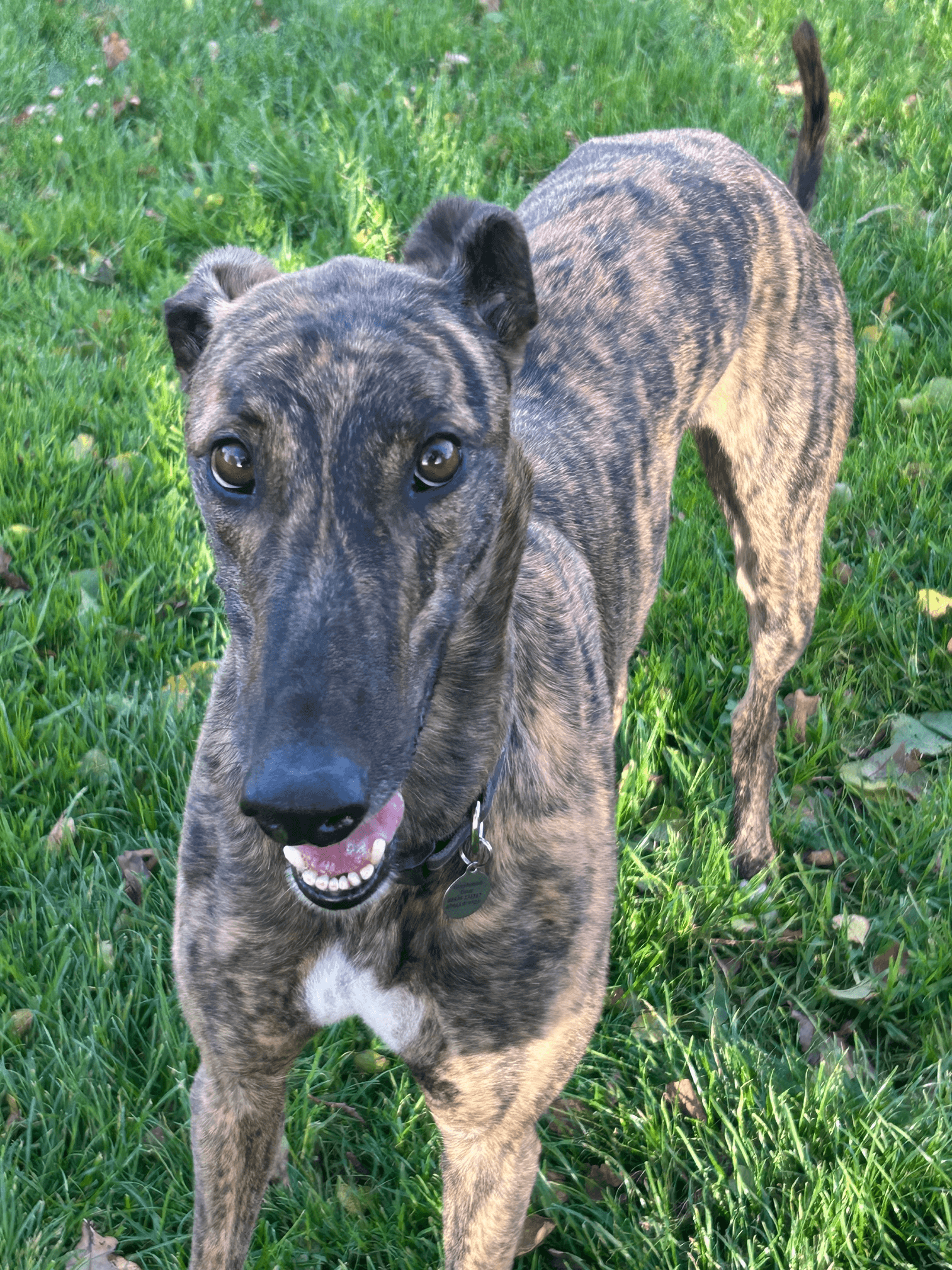

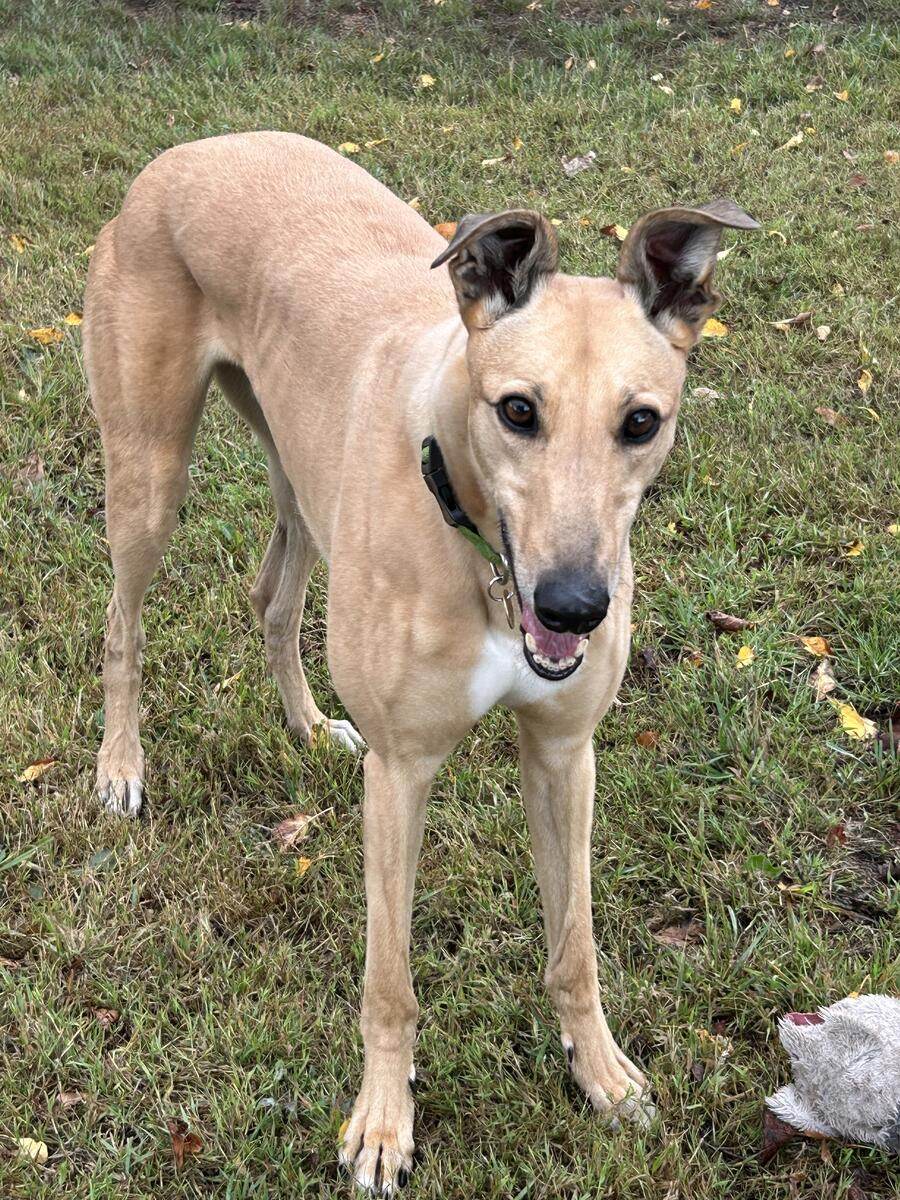
Eli
5 years • Male • Greyhound
Largehigh energy
Can live with:Children
Greyhound Trust Shropshire & Borders· Wem
Meet Eli →Greyhounds and Greyhound crosses looking for new homes with rescues and rehoming centres across the UK, gathered in one place. Adult Greyhounds are usually large dogs, though crosses can vary.
452 listed across the UK from 63 rescues
Twelve months old or under, listed by rescues and rehoming centres. Each one links to the rescue to apply.
Showing 452 dogs
Never miss new Greyhounds
Be first to know when new Greyhounds are listed across the UK. No spam, unsubscribe any time.
5 years • Male • Greyhound
2 years, 10 months • Male • Greyhound
3 years • Male • Greyhound
10 years • Male • Greyhound
4 years • Male • Greyhound
5 years • Female • Greyhound
List your dog for free. Your dog stays at home until you find the right family, every listing is checked by a person, and you choose who adopts. Not sure yet? Read the rehoming guide first.
List your dog for free →452 greyhounds are listed across the UK today, with 63 rescues. By age: 2 puppies, 361 adult dogs and 27 older dogs, plus 62 with no age given. 254 are male and 141 female. The newest was added on 13 November 2026.
Breed labels on rescue listings are often a best guess, and every dog is an individual. Read the profile, then ask the rescue about the dog’s history, what they can live with and the home they need.
| Breed group | Hound |
|---|---|
| Size | Large |
| Height (breed standard) | Dogs 71 to 76 cm, bitches 69 to 71 cm |
| Exercise | Up to 1 hour a day |
| Size of home | A large house with a large garden |
| Grooming | Once a week |
| Coat | Short (sheds) |
| Lifespan | Over 10 years |
Many greyhounds in UK rescue are retired racing dogs. The Greyhound Trust says most retire from racing between three and five years old, so a rescue greyhound is usually a young adult rather than a puppy. The Royal Kennel Club notes that the greyhound seen in the show ring is larger and heavier than the racing greyhound.
Blue Cross says that although many greyhounds are ex-racers and have often lived in kennels, "with a bit of support they can adapt very quickly to life in a home". It also notes they tend to be "a little lazy" and many sleep 16 to 18 hours a day.
Battersea says many ex-racing greyhounds adapt to a home extremely well, but some need extra support. Racing dogs are used to a structured routine, so a predictable one helps them settle. Some have never lived in a house, and things like washing machines, televisions, glass doors and especially stairs can take getting used to. Ask the rescue how this dog is settling in its foster home or kennels.
Greyhounds are large dogs but not marathon runners. The Greyhound Trust says they are "built for speed, not stamina" and are happy with two twenty-minute walks a day; Battersea says they generally prefer around two 30-minute walks a day, and suggests building up gradually with short, frequent walks. The Royal Kennel Club puts the breed at up to an hour of exercise a day and suggests a large house and garden.
Greyhounds are sighthounds and chase what moves. The Greyhound Trust recommends keeping a greyhound muzzled when out and about, at least until you are confident of how it behaves around other breeds, and says it provides a collar, lead and muzzle with every greyhound it homes. Battersea recommends a well-fitted harness, a second lead clip on the collar, and a muzzle on walks.
On running free, Battersea advises against letting a greyhound off the lead in public places, and suggests secure dog walking fields or a long line clipped to the harness instead. PDSA says that once the chase instinct has kicked in it can be hard to regain their attention, so recall "will not always be easy".
The coat is short. Dogs Trust says it generally only needs an occasional brush, and The Royal Kennel Club suggests grooming about once a week.
Thin coats feel the cold. PDSA says dogs with fine or thin fur, such as greyhounds and whippets, need a warm coat when they go out in cold weather, and should go out for shorter periods.
The Royal Kennel Club asks greyhound breeders to DNA test for greyhound neuropathy (GN), and lists the breed's lifespan as over 10 years. Dogs Trust says typically 10 or more, and the Greyhound Trust says up to 15 years.
PDSA lists health problems greyhounds can be prone to, including gastric dilatation volvulus (GDV, or "bloat", where the stomach twists, often seen in large deep-chested breeds), periodontal (gum) disease, progressive retinal atrophy, bone cancer and von Willebrand's disease, a bleeding disorder.
Ask the rescue what vet checks the dog has had and whether any condition or old injury is known. Your own vet is the right person to advise after that.
The Greyhound Trust says about 8,000 greyhounds retire each year, and it finds homes for about half of them. Blue Cross says greyhounds often take longer to rehome "because people do not always see them as family pets", and Battersea says greyhounds "spend more time than any other breed in Battersea centres".
Some rescue greyhounds are galgos, Spanish greyhounds. Greyhounds in Need, a UK charity working in Spain, says many are abandoned or killed once their usefulness as hunting dogs is over. Our greyhound pages include galgos.
As of 14 November 2026, 452 greyhounds are listed with rescues in the UK on LocalPetFinder: by their listed age, 2 puppies aged 12 months or under, 361 adults and 27 aged 7 or over. The rest have no age we can read, so check the profile.
3 of them are listed as a cross, as the rescue describes it: Greyhound x Rottweiler, Greyhound x Saluki and Greyhound x Welsh Foxhound. Breed labels on rescue listings are often a best guess from looks.
The rescues mark 102 as able to live with children, 1 with cats and 121 with other dogs. Where a profile says nothing, it doesn't mean no: ask the rescue.
Whether a greyhound can live with a cat depends on the dog. Blue Cross says "most greyhounds will not be suitable to live with a cat, but there are always exceptions", and the Greyhound Trust says some can be trained to live happily with cats and other small pets. Battersea says an ex-racer's prey drive is most likely to show around smaller dogs, cats and wildlife.
With other dogs, the Greyhound Trust says most greyhounds get on well and many live with other breeds, with careful introductions. Battersea notes that racing greyhounds may only have met other greyhounds, so start with short, calm meetings. The rescue will tell you if this dog has been assessed with cats, small pets or children, so go by what it says on the profile.
Battersea suggests starting with one quiet room that has everything the dog needs, and opening up the rest of the home gradually. It says house training can take longer for a retired greyhound than for some other dogs, so be consistent.
Battersea also says racing greyhounds can be more prone to "sleep startle", reacting with fright if woken suddenly from deep sleep, so it is worth thinking about where the dog's bed goes. The rescue that has been caring for the dog is the best guide to what it already knows.
Sources (checked 30 September 2026)
Breed descriptions are general. Every rescue animal is an individual, so the rescue's own assessment of the animal comes first.
Tap a question to expand
As of 14 November 2026, 452 greyhounds are listed for adoption in the UK on LocalPetFinder, from Home Run Hounds, Wimbledon Greyhound Welfare, Hector's Greyhound Rescue, Greyhound Rescue Fife, Alfie's Dream For Greyhounds, Peterborough & Lincolnshire Greyhound Trust, Durham District Retired Greyhounds, Greyhound Trust Suffolk, Greyhound Rescue Wales, Retired Greyhounds Canterbury, Greyhound Trust Wolverhampton, Makants Greyhound Rescue N.W, Kent Greyhound Rescue, Whittingham Kennels Retired Greyhounds, Crossing Cottage Greyhound Sanctuary, GREYS Finding Homes For Hounds, Northumberland Greyhound Rescue, Greyhound Trust Harvel, Oxfordshire Animal Sanctuary, Yarmouth Greyhound Homefinders, Last Chance Animal Rescue, Gables Dogs & Cats Home, Northern Greyhound Rescue, Rehoming Retired Greyhounds (Scotland), Romford Retired Greyhounds, Dumfriesshire and Cumbria Greyhound Rescue, Greyhound Rescue North East, Hull Greyhound Rescue, Sheffield Retired Greyhounds, Barley Greyhound Sanctuary, Home Run Hounds North West, Manchester & Cheshire Dogs' Home, Maxi's Mates, Greyhound Lifeline, Margaret Green Animal Rescue (Lincoln Farm), S.A.R.A. – The Ann Prosser Foundation, Ashbourne Animal Welfare, Greyhound Trust Shropshire & Borders, Rescue Remedies, Retired Greyhounds South Lakes, Skylor's Animal Rescue, Animals In Need Northamptonshire, Cheltenham Animal Shelter, Daybreaks Trust, Jerry Green Dog Rescue, Leicester Animal Rescue, Pawprints Dog Rescue, Paws A While Shelter, Warrington Animal Welfare, Woodside Animal Welfare Trust, Animal Care Lancaster Morecambe & District, Birch Hill Dog Rescue, Birmingham Dogs Home, Bryson's Animal Shelter, Forest Dog Rescue, Greyhound Gap, National Animal Welfare Trust Bedfordshire, National Animal Welfare Trust Berkshire, National Animal Welfare Trust Hertfordshire, North Clwyd Animal Rescue, Paws and People, Three Counties Dog Rescue and Worcestershire Animal Rescue Shelter. Each profile links to the rescue, and you apply to adopt with them directly.
As of 14 November 2026, Home Run Hounds (at Shenstone): 35, Wimbledon Greyhound Welfare (at Hersham): 31, Hector's Greyhound Rescue (at Aberystwyth): 26, Greyhound Rescue Fife (near Kinross): 25, Alfie's Dream For Greyhounds (at Lockerbie): 21 and Peterborough & Lincolnshire Greyhound Trust (at Spalding): 18, and 57 more. By age, that is 2 puppies, 361 adult dogs and 27 older dogs, plus 62 with no age given. The newest was added on 13 November 2026. Each profile links to the rescue, which handles the adoption.
With the rescue that has the dog. Today the greyhounds on this page are with Home Run Hounds, Wimbledon Greyhound Welfare, Hector's Greyhound Rescue, Greyhound Rescue Fife, Alfie's Dream For Greyhounds, Peterborough & Lincolnshire Greyhound Trust and 57 other rescues. Open a profile and apply to that rescue: each one runs its own application, home check and adoption fee. We don't rehome animals ourselves.
Yes. Many greyhounds in UK rescue are retired racers: the Greyhound Trust says most retire from racing between three and five years old. The greyhounds listed on this page are with rescues and rehoming centres, and each profile links to the rescue to apply.
No. The Greyhound Trust says greyhounds are built for speed rather than stamina and are happy with two twenty-minute walks a day, and Battersea says they generally prefer around two 30-minute walks. Blue Cross says many sleep 16 to 18 hours a day.
The Greyhound Trust and Battersea put it differently. The Greyhound Trust says greyhounds "do not need to be muzzled at all times", but recommends a muzzle when out and about, at least until you are confident of how the dog behaves around other breeds. Battersea says ex-racing greyhounds "will always need to wear one when out walking in public spaces", as a safeguard because a greyhound's prey drive may be triggered by small animals, cats or small dogs. Ex-racers are used to wearing one, and the rescue will tell you what it expects for this dog.
Battersea advises against letting a greyhound off the lead in public places and suggests secure dog walking fields or a long line on a harness instead. The Greyhound Trust says that if you let your dog off, use a confined space and a muzzle. PDSA says recall "will not always be easy" once the chase instinct kicks in.
Some can. The Greyhound Trust says greyhounds are sighthounds whose instinct is to chase, but some can be trained to live happily with cats and other small pets. Blue Cross says most will not be suitable, with exceptions. Rescues often assess greyhounds with cats, so check the profile and ask.
Yes. PDSA says dogs with fine or thin fur, such as greyhounds, need a warm coat on cold-weather walks and should go out for shorter periods. The short coat itself needs little grooming: Dogs Trust says an occasional brush.
The Royal Kennel Club says over 10 years, Dogs Trust typically 10 or more, and the Greyhound Trust up to 15. Because most retire at three to five, a retired racer can have many years ahead of it.
We only list dogs with rescues, so there is nothing to buy here: every greyhound on this page is adopted for the rescue's fee. If you decide to buy, The Royal Kennel Club runs a Find a Puppy service, and Dogs Trust's breed guides suggest talking to your vet, and say some practices offer pre-purchase consultations covering likely health conditions and rough costs. With an adult rescue greyhound, the rescue can tell you how it is with other animals.
It depends on the dog, not the breed. Most of the 452 greyhounds listed in the UK today don't say either way, so ask the rescue. Where a profile says nothing, ask the rescue what age of children the dog could live with.
Each rescue sets its own adoption fee. Battersea charges £230 for a dog over six months and £275 for a puppy under six months, Dogs Trust charges £300 for a puppy or adult dog in England, Wales and Scotland, and Blue Cross fees start from £235 for dogs aged 8 or over and £335 for dogs aged 1 to 7. The fee usually covers neutering, microchipping and first vaccinations, and each rescue confirms its own fee.
No. We don't list animals for sale. Every greyhound on this page is with a rescue or rehoming centre. Rescues rehome animals rather than selling them, usually for an adoption fee: for example, Battersea charges £230 for a dog over six months and £275 for a puppy under six months, and Dogs Trust £300. The fee usually goes towards vet work already done, such as neutering, microchipping and first vaccinations. If you searched "greyhound puppies for sale", the greyhounds here are the rescue route: you apply to the rescue and pay its adoption fee, not a sale price.
Usually not. UK rescues normally ask for an adoption fee, which pays towards neutering, microchipping and vaccinations. Many rescue fees are under £500: Battersea charges £230 for a dog over six months, Dogs Trust £300, and Blue Cross from £235 for dogs aged 8 or over. An animal offered "free to a good home" is usually a private advert rather than a rescue. All dogs in the UK must be microchipped by 8 weeks old, and in England, Wales and Scotland a dog can't pass to a new keeper until it is chipped, so ask to see the microchip details.
Yes: 2 puppies of the 452 listed in the UK are 12 months or under by the listed age.
Yes: 27 greyhounds of the 452 listed in the UK are aged 7 or over by the listed age. Some rescues charge less for older dogs: Blue Cross fees start from £235 for dogs aged 8 or over.
This page lists every greyhound with the rescues we list across the UK, each with its town. For a city, see greyhounds in Aberdeen, Belfast, Birmingham, Bournemouth, Christchurch and Poole, Brecon, Brighton and Hove, Bristol, Cambridge, Canterbury, Cardiff, Carlisle, Dumfries and Galloway, Edinburgh, Exeter, Glasgow, Ipswich, Kendal, Kingston upon Hull, Leeds, Lincoln, Liverpool, London, Manchester, Middlesbrough, Newcastle upon Tyne, North Wales, Northampton, Norwich, Nottingham, Oxford, Perth, Peterborough, Plymouth, Portsmouth, Preston, Sheffield, Shrewsbury, Stoke-on-Trent, Swansea, Taunton, Truro and Worcester. You can also search by postcode with the pet finder on our home page to see what is closest to you.
Need to rehome your greyhound? Read our greyhound rehoming guide →
Not sure which breed suits you? Take our dog breed quiz →