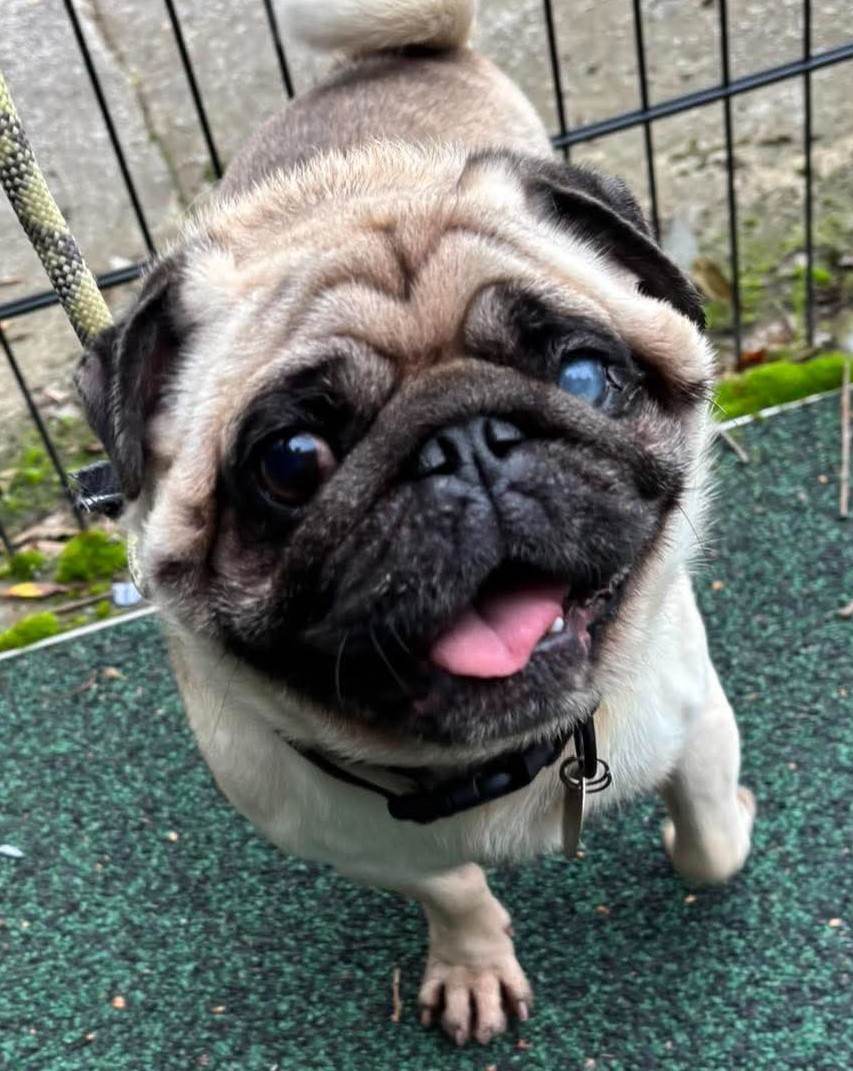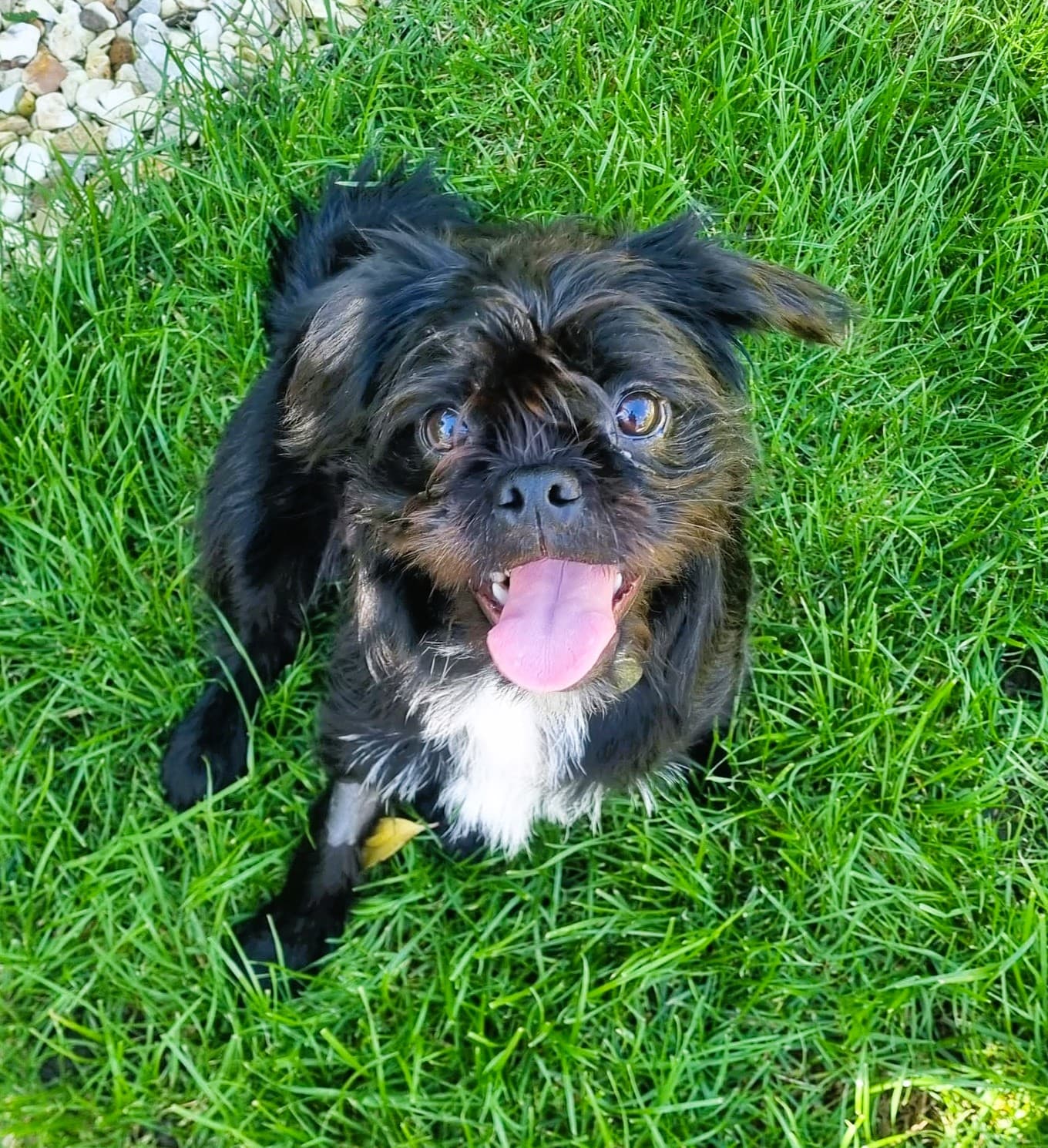

Benji
5 years • Male • Pug
Small
Can live with:ChildrenOther dogs
Listed by owner· Middlesbrough
Meet Benji →Pugs and Pug crosses looking for new homes with rescues and rehoming centres across the UK, gathered in one place. Adult Pugs are usually small dogs, though crosses can vary.
19 listed across the UK from 17 rescues
Twelve months old or under, listed by rescues and rehoming centres. Each one links to the rescue to apply.
Showing 19 dogs
Never miss new Pugs
Be first to know when new Pugs are listed across the UK. No spam, unsubscribe any time.
5 years • Male • Pug
5 years, 1 month • Male • Pug
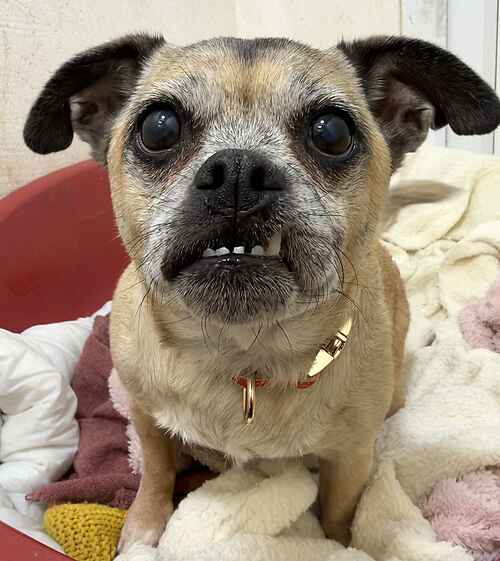
6 years • Female • Pug
6 years • Male • Pug
7 years • Pug
12 years • Female • Jug
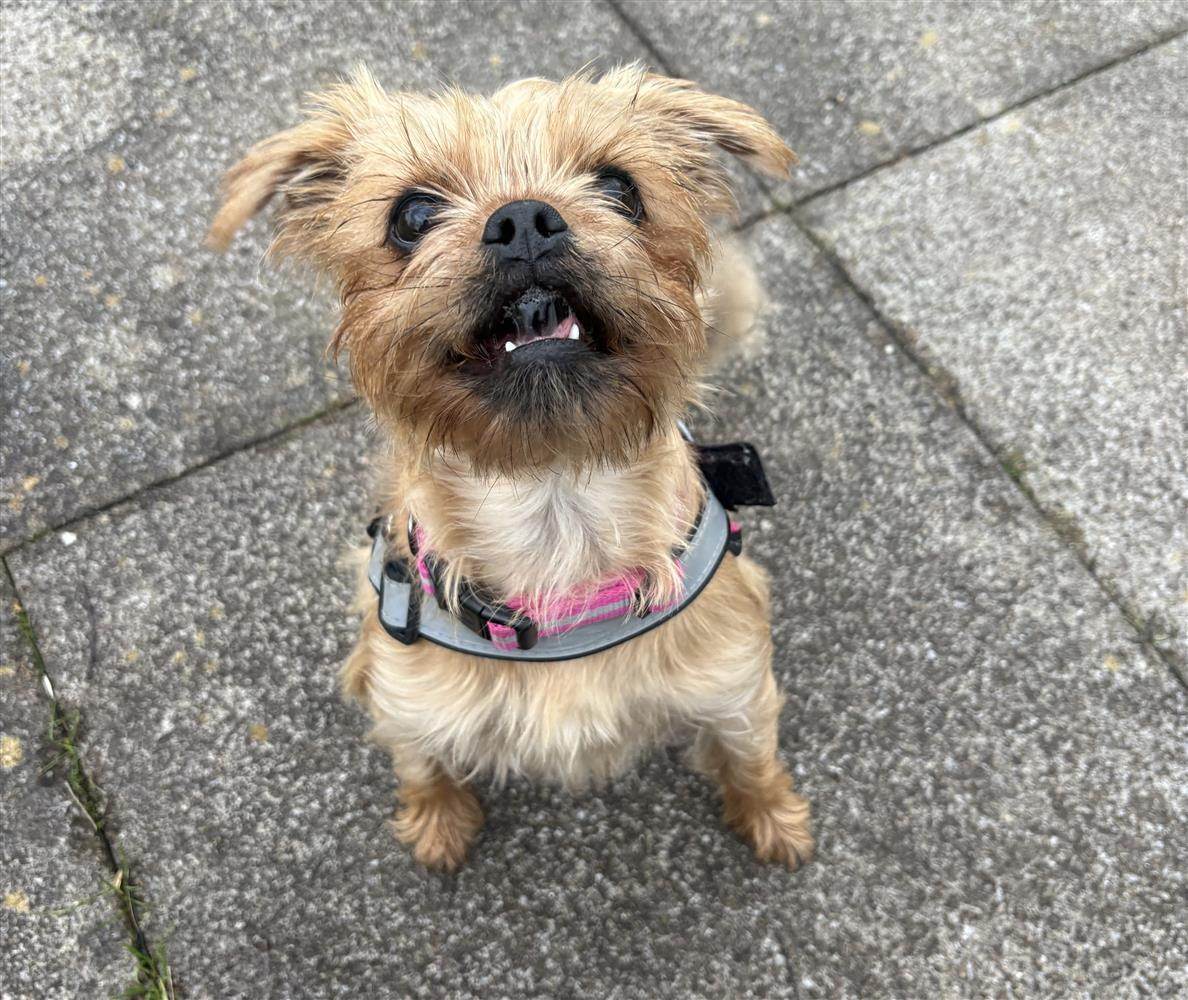
1 year, 9 months • Female • Yorkie x Pug
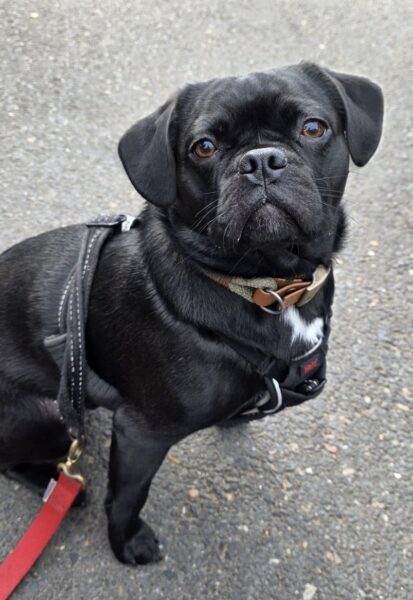
1 year, 6 months • Male • French Bulldog Cross Pug
10 years • Male • Pug
List your dog for free. Your dog stays at home until you find the right family, every listing is checked by a person, and you choose who adopts. Not sure yet? Read the rehoming guide first.
List your dog for free →19 pugs are listed across the UK today, with 17 rescues. By age: 1 puppy, 11 adult dogs and 7 older dogs. 10 are male and 7 female. The newest was added on 13 November 2026.
Breed labels on rescue listings are often a best guess, and every dog is an individual. Read the profile, then ask the rescue about the dog’s history, what they can live with and the home they need.
| Breed group | Toy |
|---|---|
| Size | Small |
| Weight (breed standard) | Ideal weight 6.3 to 8.1 kg |
| Exercise | Up to 1 hour a day |
| Size of home | A flat is big enough |
| Grooming | Once a week |
| Coat | Short (sheds) |
| Lifespan | Over 10 years |
The Pug is a companion dog. The Royal Kennel Club describes it as "a lot of dog in a small frame", and says Pugs "are affectionate, sociable dogs that thrive on human company and were bred purely as companions, not for work". It says traders from the Dutch East India Company are thought to have taken dogs of this type from China to the Netherlands in the 16th century, and that William of Orange's Pugs came with him when he took the English throne.
The Royal Kennel Club adds that Pugs dislike being left alone for long periods and "can be prone to separation anxiety", so they suit owners who are home for a good part of the day. PDSA goes further: it says a Pug should never be left alone for longer than four hours. Both describe Pugs as intelligent but strong-willed, so training works best with patience and rewards.
Dogs Trust makes the point that matters most with a rescue dog: every Pug has its own personality, shaped by its own experiences. A rescue Pug is an individual, may be a cross, and may be older. The rescue will know how this particular dog behaves at home, on the lead and with visitors, so ask them.
The Royal Kennel Club lists the Pug as small and needing up to an hour of exercise a day, with regular short walks and play. It says the breed can live in a flat, with a small or medium garden, in town or country. It also says the Pug's flat face "limits their tolerance for heat, humidity, and strenuous activity", so exercise should be kept gentle in warm weather.
Dogs Trust says Pugs usually need daily walks but "might not manage tough exercise like long walks or mountain hikes", and that they are at higher risk of heat stroke. PDSA suggests several shorter walks rather than one long one, stopping to rest as soon as a Pug starts to struggle for breath, and walking early in the morning or later in the evening when it is warm.
The coat is short but sheds a lot: Dogs Trust describes it as "short length with heavy shedding". The Royal Kennel Club says it needs grooming about once a week.
PDSA says to pay close attention to the folds in a Pug's skin, as they are "the perfect breeding ground for bacterial and fungal infections if left damp", and to dry a Pug straight away after a bath.
Dogs Trust describes Pugs as brachycephalic, meaning short noses, flat faces or both, and says they can struggle with health issues related to that body shape. The Royal Kennel Club lists the problems flat-faced dogs can have: breathing difficulties, skin fold infections, overcrowded teeth, and eye problems from shallow eye sockets. PDSA lists further conditions Pugs may develop, including Pug dog encephalitis (PDE), luxating kneecaps and hemivertebrae.
The Royal Kennel Club asks Pug breeders to have their dogs' breathing graded for BOAS (brachycephalic obstructive airway syndrome) and their eyes tested. Its best practice list adds a DNA test for PDE and hip scoring. The breed is in Category 3 of its Breed Watch, which PDSA calls the highest category of health concerns, and the points show judges must watch for include signs of breathing difficulty, pinched nostrils, protruding eyes, excessive skin, skin fold dermatitis and being too fat. The Royal Kennel Club will not register merle Pugs, because the merle gene in this breed carries an increased risk of impaired hearing and sight.
On lifespan, The Royal Kennel Club says over 10 years and Dogs Trust says typically 10 or more. A rescue dog's parents may not have been health tested, so ask the rescue what vet checks the dog has had, whether anything is known about its breathing, eyes or skin, and what insurance it might need. Your own vet is the right person to advise on anything you notice later.
As of 14 November 2026, 19 Pugs are listed with rescues in the UK on LocalPetFinder: by their listed age, 1 puppy aged 12 months or under, 11 adults and 7 aged 7 or over.
9 of them are listed as a cross, as the rescue describes it: Frenchie x Pug (2), Boston x Pug x Poodle and Cross Pug/Cavalier and others. Breed labels on rescue listings are often a best guess from looks.
The rescues mark 11 as able to live with children, 3 with cats and 10 with other dogs. Where a profile says nothing, it doesn't mean no: ask the rescue.
The Royal Kennel Club says Pugs are typically "good with children when interactions are supervised", and usually get along with other dogs and household pets. Whether a particular rescue Pug can live with children, cats or other dogs still depends on the dog, so go by the rescue's own assessment, which is often noted on the profile.
PDSA says it is important to tell the difference between the noises a Pug makes on purpose and "snorts, snores and loud breathing" that can be a sign of BOAS, and to speak to a vet if you hear those. It also says Pugs can gain weight easily, which can make breathing problems worse, so keeping a Pug slim matters.
The Royal Kennel Club says not all flat-faced dogs will have these problems. With an adult rescue Pug, you can ask the rescue how the dog copes on walks and in warm weather, and whether a vet has looked at its breathing.
Sources (checked 30 September 2026)
Breed descriptions are general. Every rescue animal is an individual, so the rescue's own assessment of the animal comes first.
Tap a question to expand
As of 14 November 2026, 19 Pugs are listed for adoption in the UK on LocalPetFinder, from The Underdogs NI, Aireworth Dogs in Need, Animal Care Lancaster Morecambe & District, Animals In Need Northamptonshire, Assisi Animal Sanctuary, Bleakholt Animal Sanctuary, East Midlands Dog Rescue, Freshfields Animal Rescue, Helping Yorkshire Poundies, Just Like Home Rescue, Last Chance Animal Rescue, Manchester & Cheshire Dogs' Home, Northumberland Dog Rescue, Pro Dogs Direct, Second Chance Animal Rescue (Southampton) and Staffie & Stray Rescue. Each profile links to the rescue, and you apply to adopt with them directly.
As of 14 November 2026, The Underdogs NI (at Carrickfergus): 3, Aireworth Dogs in Need (at Keighley): 1, Animal Care Lancaster Morecambe & District (at Lancaster): 1, Animals In Need Northamptonshire (at Wellingborough): 1, Assisi Animal Sanctuary (at Conlig): 1 and Bleakholt Animal Sanctuary (at Ramsbottom): 1, and 11 more. By age, that is 1 puppy, 11 adult dogs and 7 older dogs. The newest was added on 13 November 2026. Each profile links to the rescue, which handles the adoption.
With the rescue that has the dog. Today the Pugs on this page are with The Underdogs NI, Aireworth Dogs in Need, Animal Care Lancaster Morecambe & District, Animals In Need Northamptonshire, Assisi Animal Sanctuary, Bleakholt Animal Sanctuary and 10 other rescues. Open a profile and apply to that rescue: each one runs its own application, home check and adoption fee. We don't rehome animals ourselves.
Breathing is a recognised concern in the breed. The Royal Kennel Club asks Pug breeders to have their dogs' breathing graded for BOAS (brachycephalic obstructive airway syndrome), and says the flat face limits a Pug's tolerance for heat and hard exercise. PDSA says snorts, snores and loud breathing can be a sign of BOAS and are worth a word with a vet. Ask the rescue what vet checks this dog has had.
Not for long. The Royal Kennel Club says Pugs dislike being left alone for long periods and can be prone to separation anxiety, and PDSA says a Pug should never be left for longer than four hours. Ask the rescue how this dog copes on its own.
Not well. Dogs Trust says Pugs are at higher risk of heat stroke, and PDSA advises avoiding exercise in the heat and walking early in the morning or later in the evening. Ask your vet or the rescue how to keep this dog safe on warm days.
It can be. The Royal Kennel Club lists a flat as a big enough home for the breed, with a small or medium garden, and up to an hour of exercise a day. Pugs dislike being left alone, so how long the dog would be on its own matters as much as the size of the home. The rescue can tell you whether this dog would settle in a flat.
Yes, a lot for a short coat. Dogs Trust describes the coat as "short length with heavy shedding", and The Royal Kennel Club says it needs grooming once a week. Skin folds need keeping clean and dry too.
The Royal Kennel Club gives the Pug's lifespan as over 10 years, and Dogs Trust says typically 10 or more. For a rescue Pug, ask what vet checks it has had and whether anything is known about its breathing, eyes or skin.
We only list dogs with rescues, so there is nothing to buy here: every Pug on this page is adopted for the rescue's fee. PDSA asks people to think carefully before buying or rescuing a Pug, because of the health problems the breed can have. If you decide to buy, The Royal Kennel Club runs a Find a Puppy service, and Dogs Trust suggests talking to your vet, and says some practices offer pre-purchase consultations covering likely health conditions, rough costs, finding a responsible breeder and testing for inheritable diseases. With an adult rescue Pug, the rescue can tell you about its health and personality before you commit.
It depends on the dog, not the breed. Today the rescues mark 11 of the 19 Pugs listed in the UK as able to live with children. Where a profile says nothing, ask the rescue what age of children the dog could live with.
Each rescue sets its own adoption fee. Battersea charges £230 for a dog over six months and £275 for a puppy under six months, Dogs Trust charges £300 for a puppy or adult dog in England, Wales and Scotland, and Blue Cross fees start from £235 for dogs aged 8 or over and £335 for dogs aged 1 to 7. The fee usually covers neutering, microchipping and first vaccinations, and each rescue confirms its own fee.
No. We don't list animals for sale. Every Pug on this page is with a rescue or rehoming centre. Rescues rehome animals rather than selling them, usually for an adoption fee: for example, Battersea charges £230 for a dog over six months and £275 for a puppy under six months, and Dogs Trust £300. The fee usually goes towards vet work already done, such as neutering, microchipping and first vaccinations. If you searched "pug puppies for sale", the Pugs here are the rescue route: you apply to the rescue and pay its adoption fee, not a sale price.
Usually not. UK rescues normally ask for an adoption fee, which pays towards neutering, microchipping and vaccinations. Many rescue fees are under £500: Battersea charges £230 for a dog over six months, Dogs Trust £300, and Blue Cross from £235 for dogs aged 8 or over. An animal offered "free to a good home" is usually a private advert rather than a rescue. All dogs in the UK must be microchipped by 8 weeks old, and in England, Wales and Scotland a dog can't pass to a new keeper until it is chipped, so ask to see the microchip details.
Yes: 1 puppy of the 19 listed in the UK is 12 months or under by the listed age.
Yes: 7 Pugs of the 19 listed in the UK are aged 7 or over by the listed age. Some rescues charge less for older dogs: Blue Cross fees start from £235 for dogs aged 8 or over.
This page lists every Pug with the rescues we list across the UK, each with its town. For a city, see Pugs in Aberdeen, Belfast, Birmingham, Bournemouth, Christchurch and Poole, Brecon, Brighton and Hove, Bristol, Cambridge, Canterbury, Cardiff, Carlisle, Dumfries and Galloway, Edinburgh, Exeter, Glasgow, Ipswich, Kendal, Kingston upon Hull, Leeds, Lincoln, Liverpool, London, Manchester, Middlesbrough, Newcastle upon Tyne, North Wales, Northampton, Norwich, Nottingham, Oxford, Perth, Peterborough, Plymouth, Portsmouth, Preston, Sheffield, Shrewsbury, Stoke-on-Trent, Swansea, Taunton, Truro and Worcester. You can also search by postcode with the pet finder on our home page to see what is closest to you.
Need to rehome your Pug? Read our Pug rehoming guide →
Not sure which breed suits you? Take our dog breed quiz →