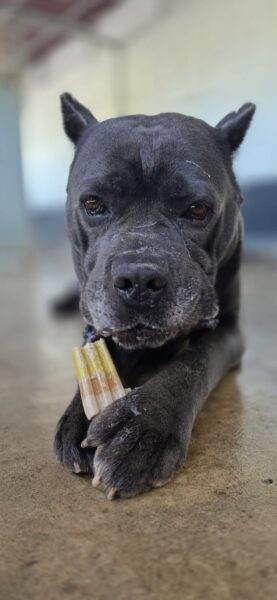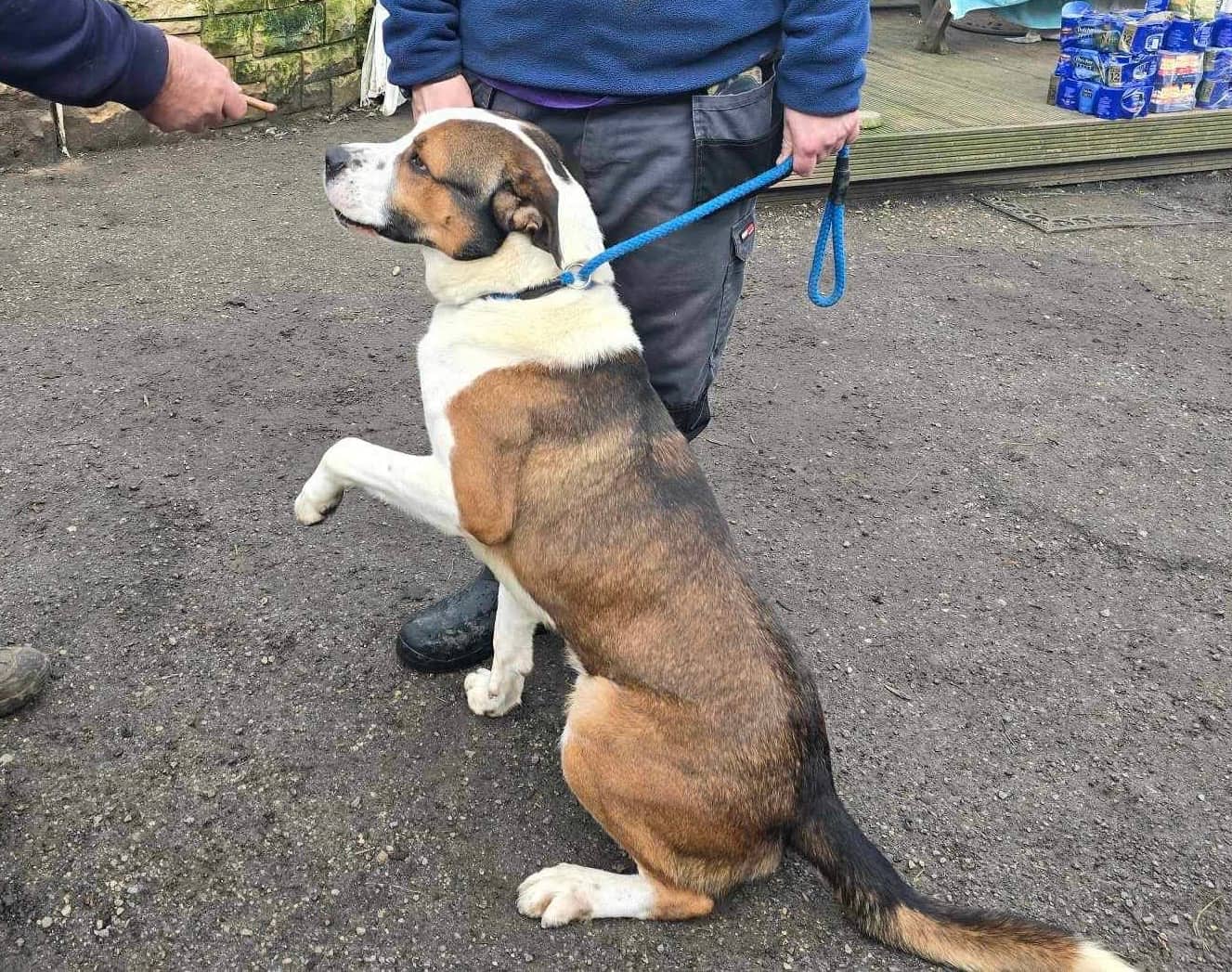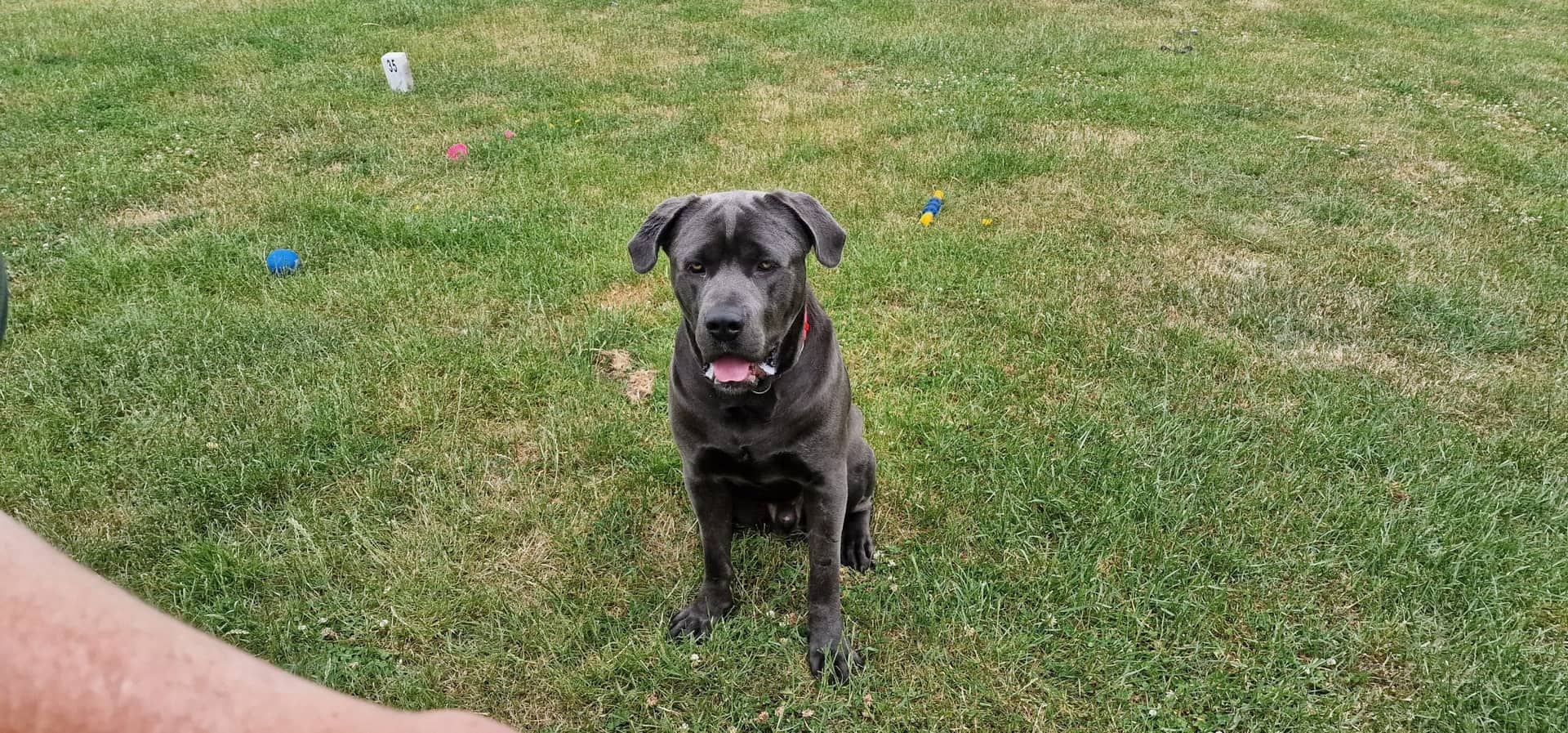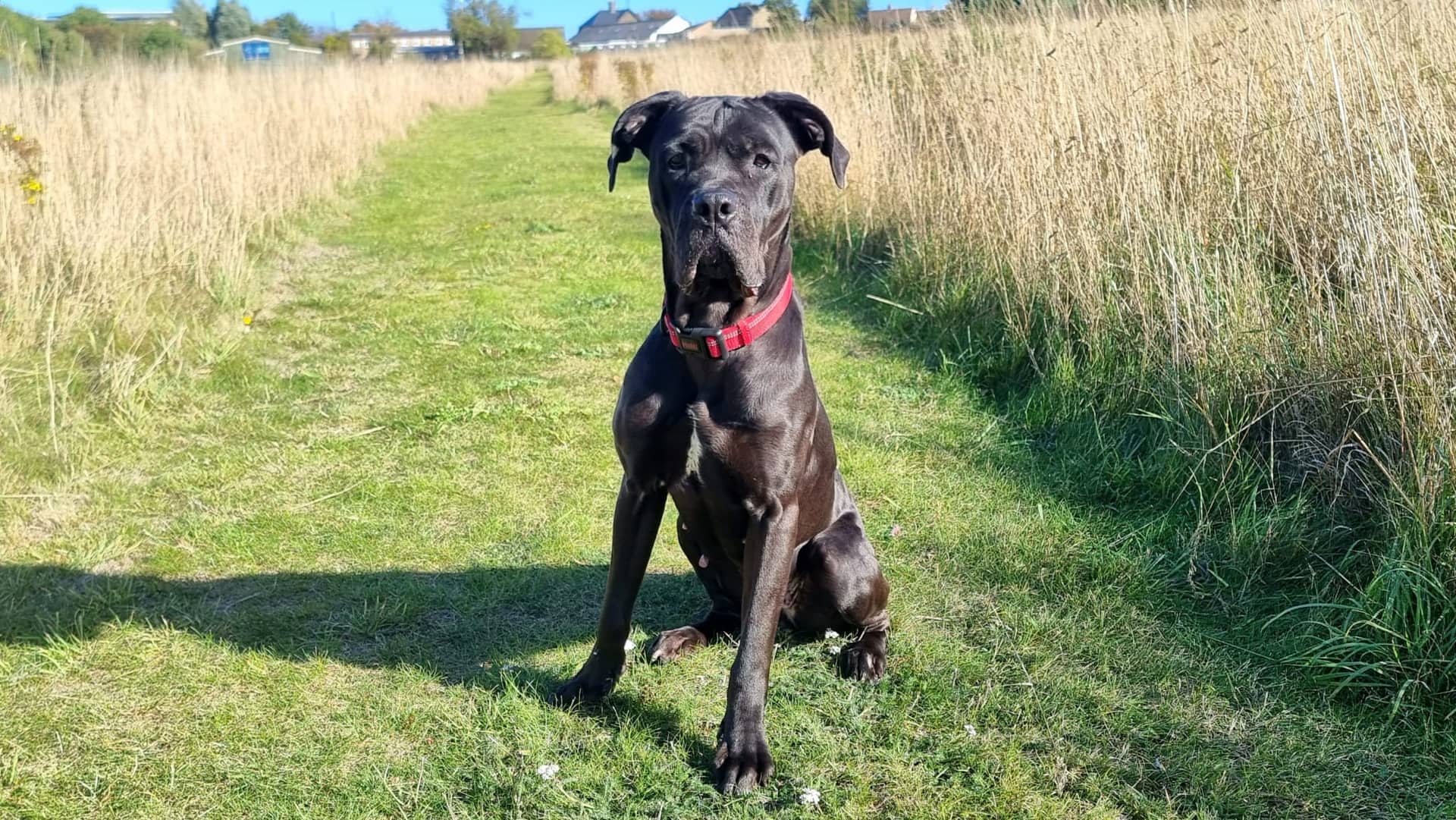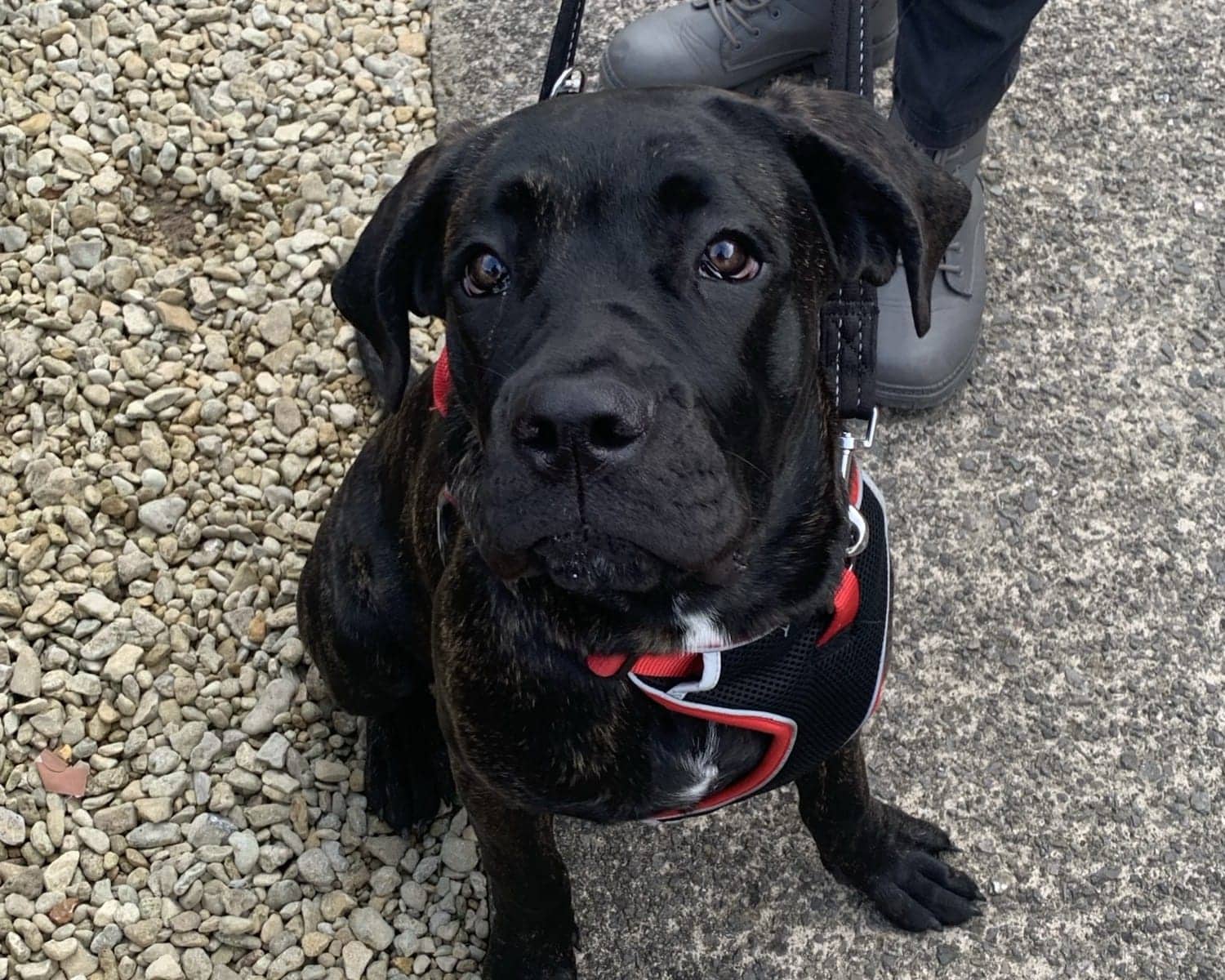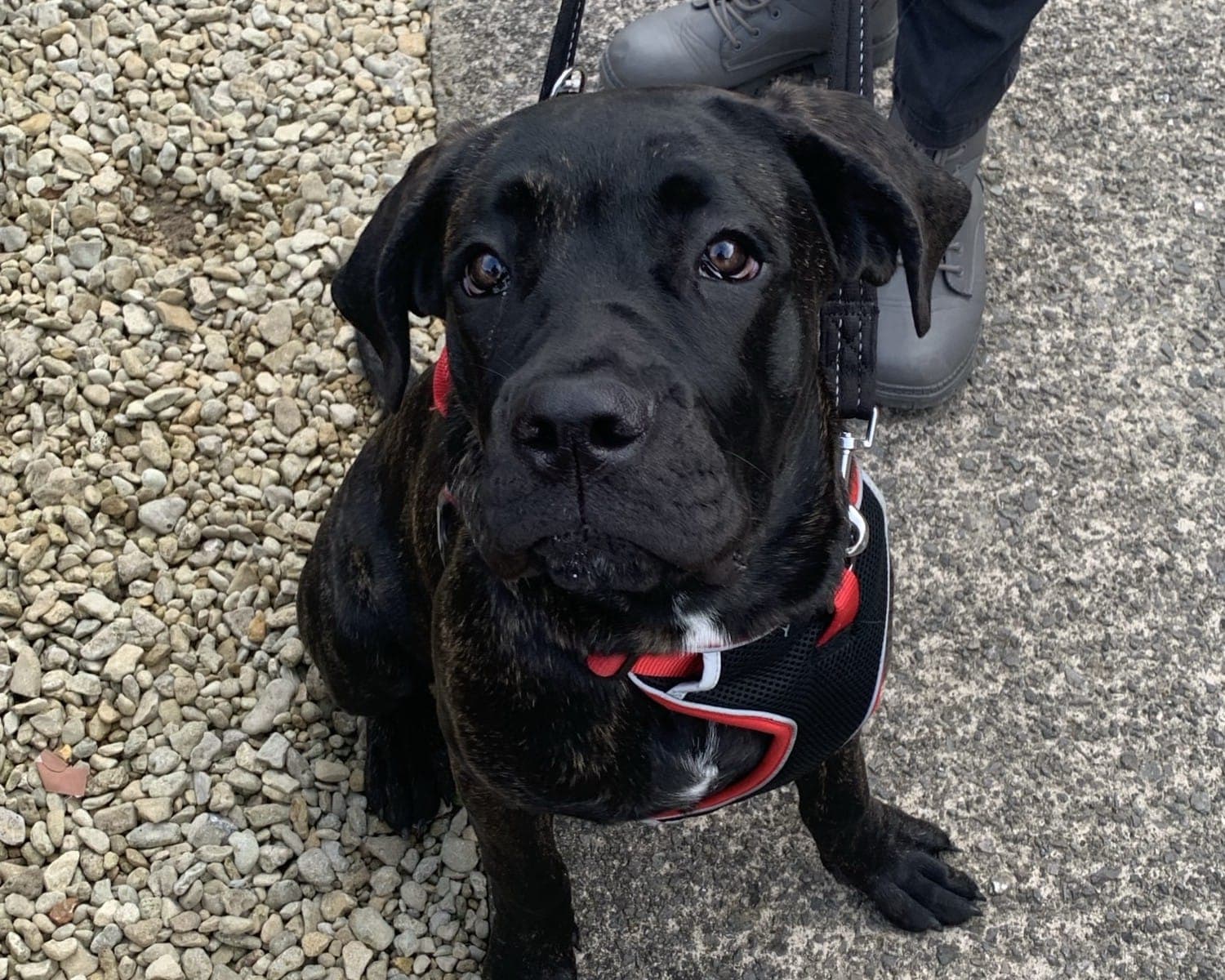
Polly
5 years • Female • Italian Mastiff Cane Corso Cross
Giantlow energy
Can live with:Other dogs
National Animal Welfare Trust Bedfordshire· Aspley Guise
Meet Polly →Cane Corsos and Cane Corso crosses looking for new homes with rescues and rehoming centres across the UK, gathered in one place. Adult Cane Corsos are usually large dogs, though crosses can vary.
31 listed across the UK from 17 rescues
Twelve months old or under, listed by rescues and rehoming centres. Each one links to the rescue to apply.
Showing 31 dogs
Never miss new Cane Corsos
Be first to know when new Cane Corsos are listed across the UK. No spam, unsubscribe any time.
5 years • Female • Italian Mastiff Cane Corso Cross
1 year, 6 months • Female • Italian Mastiff Cane Corso
Adult • Male • Cane Corso Cross
3 years • Female • Cane Corso
6 months • Female • Cane Corso Cross
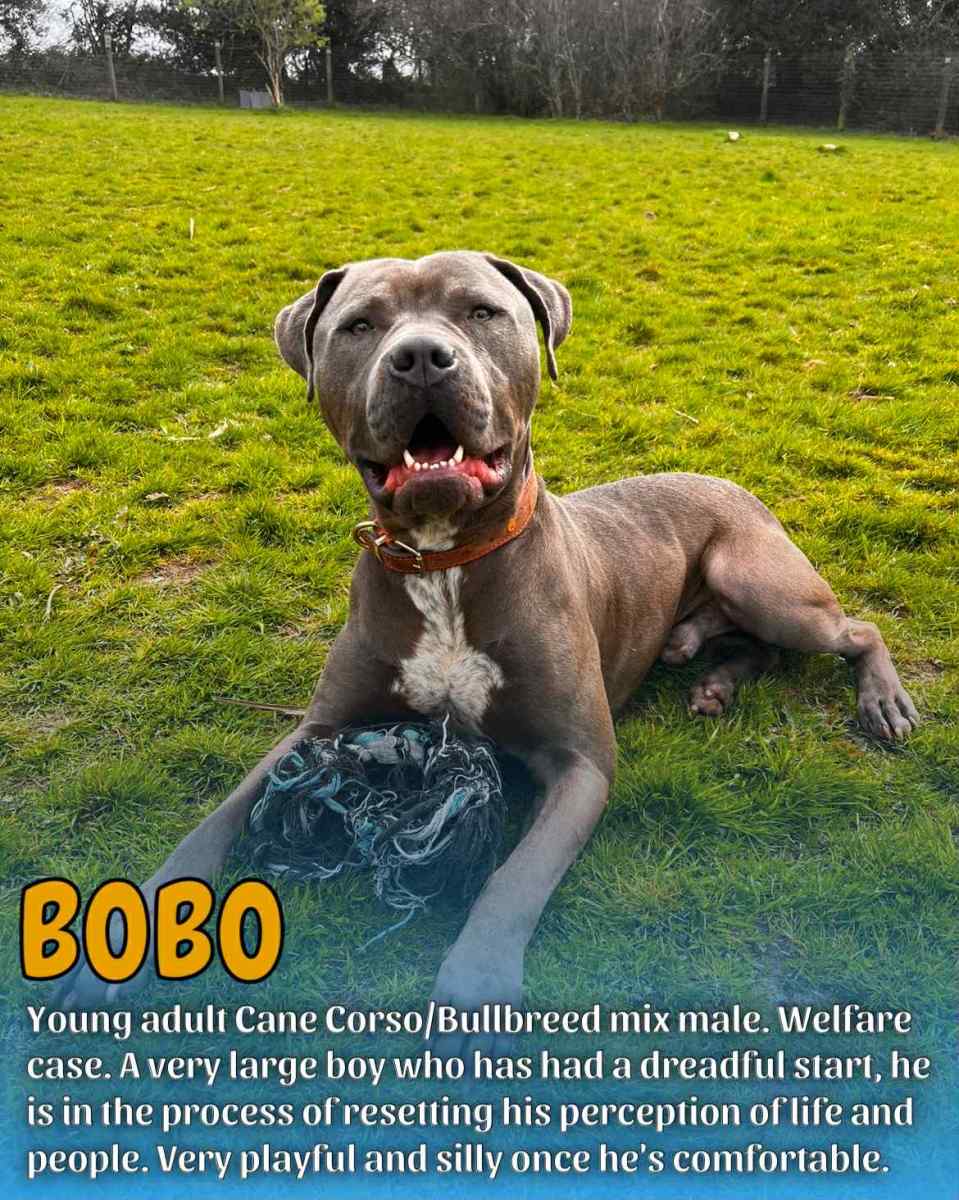
Young adult • Male • Cane Corso/Bullbreed Cross
1 year, 3 months • Male • Italian Mastiff Cane Corso
List your dog for free. Your dog stays at home until you find the right family, every listing is checked by a person, and you choose who adopts. Not sure yet? Read the rehoming guide first.
List your dog for free →31 cane corsos are listed across the UK today, with 17 rescues. By age: 1 puppy, 26 adult dogs and 4 older dogs. 19 are male and 11 female. The newest was added on 7 November 2026.
Breed labels on rescue listings are often a best guess, and every dog is an individual. Read the profile, then ask the rescue about the dog’s history, what they can live with and the home they need.
| Type | Italian mastiff type |
|---|---|
| Size | Large |
| Average height | 58 to 70 cm |
| Average weight | 40 to 50 kg |
| Exercise | At least 2 hours a day |
| Coat | Short (sheds) |
| Lifespan | Under 10 years |
| Minimum cost | £80 a month |
PDSA describes the Cane Corso as a mastiff type, thought to have descended from a Roman war dog, that later worked as a hunter and on farms, guarding and rounding up livestock. Dogs Trust says the breed is sometimes called the Italian Mastiff, and that Cane Corsos are very large, muscular and typically energetic.
Battersea calls the temperament loyal and intelligent "with a strong protective streak", and says this "is a breed that asks a lot of its owner". It says Cane Corsos aren't naturally aggressive but are naturally watchful, and that they have a shorter socialisation window than some breeds, so they can be more likely to develop worries around new people, places and situations.
PDSA says they are large, strong dogs that should be trained with positive, reward-based methods from a young age, and that because of their size they are better suited to experienced owners. Dogs Trust reminds adopters that every dog is an individual with its own personality and history. A rescue Cane Corso may be an adult, may be a cross, and comes with a past the rescue already knows something about, so ask them how this dog behaves at home, on the lead and with visitors.
PDSA puts the need at around two hours a day: a couple of longer, brisk walks with time off lead somewhere secure, plus short training sessions and puzzle games. It adds that as a heavy breed they shouldn't be expected to run for miles. Battersea suggests a couple of walks of 45 minutes to an hour each day, with short training sessions, trick training and food puzzles to prevent boredom.
Dogs Trust calls Cane Corsos high-energy dogs and says they are also at higher risk of developing heat stroke, and points owners to its warm weather advice.
The coat is the easy part. Dogs Trust says the short fur generally only needs an occasional brush and describes the shedding as moderate, but adds that some Cane Corsos have skin folds that need regular cleaning, so ask your vet how. PDSA suggests a weekly brush, says they shed more in spring and autumn, and warns that Cane Corsos are known to drool, on furniture and walls as well as on you.
UK health guidance for this breed is limited. The Cane Corso is not on The Royal Kennel Club's Breeds A to Z, which it describes as its full list of recognised pedigree breeds, so there is no Royal Kennel Club breed standard or breed health-test list for it. PDSA says the breed is relatively uncommon in the UK, so "we can't be sure which health conditions will be more common".
PDSA says there is some evidence that hip and elbow dysplasia, gastric dilatation volvulus (GDV, often called bloat, where the stomach twists) and eye problems such as entropion, ectropion and cherry eye may be a concern. Battersea lists the same joint and eye problems, adds damage to the knee ligaments that often needs surgery, and says eyelids rolling in (entropion) or drooping out (ectropion) usually need surgery too. Blue Cross names the Cane Corso among the breeds in which cherry eye is commonly found. Dogs Trust describes Cane Corsos as brachycephalic (a short nose, a flat face or both) and says they can struggle with health issues linked to that shape.
Bloat is an emergency. PDSA says it requires urgent veterinary attention and Battersea says it needs emergency veterinary treatment, so if you think your dog has bloat, get to a vet straight away.
On lifespan the charities differ: PDSA says under 10 years, Battersea 7 to 10 years, and Dogs Trust typically 10 or more. A rescue dog's parents may never have been hip or elbow scored, so ask the rescue what vet checks the dog has had and whether any condition is already known, and talk to your own vet about anything you notice later.
Battersea says it often sees Cane Corsos given up, "usually because people underestimated the time, training and space this breed needs". PDSA says there are plenty of rescue centres across the country where you may find one, and that a good rescue centre should tell you about any health and behaviour problems. Ask about the dog's history, its training so far, and how it copes with visitors and other dogs before you apply.
As of 8 November 2026, 31 Cane Corsos are listed with rescues in the UK on LocalPetFinder: by their listed age, 1 puppy aged 12 months or under, 26 adults and 4 aged 7 or over.
8 of them are listed as a cross, as the rescue describes it: Cane Corso Cross (4), Cane Corso x Lab and Cane Corso/Bullbreed Cross and others. Breed labels on rescue listings are often a best guess from looks.
The rescues mark 5 as able to live with children, 1 with cats and 7 with other dogs. Where a profile says nothing, it doesn't mean no: ask the rescue.
PDSA says it would not recommend a Cane Corso if you have small children, as they could get hurt if they are accidentally knocked over, and that the breed suits adult-only homes or families with older children or teenagers who understand it. Battersea says Cane Corsos can get on well with children and other dogs in their own family, but that this doesn't always extend to visitors or unfamiliar dogs. PDSA adds that one raised with another pet is likely to be fine with it, though you should always supervise them together. Whether a particular rescue Cane Corso can live with children, cats or other dogs depends on the dog, so go by the rescue's own assessment, which is often noted on the profile.
No. Gov.uk lists the banned types in the UK as the Pit Bull Terrier, Japanese Tosa, Dogo Argentino, Fila Brasileiro and XL Bully, and the Cane Corso is not one of them. Battersea says Cane Corsos are legal to own in the UK. Gov.uk also says whether a dog is a banned type "depends on what it looks like, rather than its breed or name", so a dog is judged on its own characteristics, not on the label on its listing.
Battersea says the breed's size, strength and guarding instincts mean it is sometimes wrongly assumed to be dangerous, and that some insurers and landlords may still treat Cane Corsos with caution, so check your pet insurance policy and tenancy agreement before you apply. PDSA says tail docking in the Cane Corso and ear cropping are both illegal in the UK, and Battersea says these practices were used to make dogs look more intimidating.
Battersea says Cane Corsos do best with plenty of indoor space and a secure garden. It says flat living can work but isn't the easiest setup for a dog this size: they may feel the need to guard communal spaces or become stressed by unfamiliar people passing through, and they can be vocal when they hear people nearby, with a loud bark that carries.
Battersea also says Cane Corsos form close bonds with their owners and can struggle when left alone, so alone time should be built up gradually. PDSA says never to leave a Cane Corso alone for longer than four hours. If you work away from home, tell the rescue: they will know how this dog copes on its own.
Sources (checked 17 October 2026)
Breed descriptions are general. Every rescue animal is an individual, so the rescue's own assessment of the animal comes first.
Tap a question to expand
As of 8 November 2026, 31 Cane Corsos are listed for adoption in the UK on LocalPetFinder, from Rescue Remedies, Birmingham Dogs Home, Doris Banham Dog Rescue, Pawprints Dog Rescue, Animals In Need Northamptonshire, Ashbourne Animal Welfare, Cardiff Dogs Home, Cheltenham Animal Shelter, Foal Farm Animal Rescue, Freshfields Animal Rescue, Helping Yorkshire Poundies, K9 Crusaders Dog Welfare, Leicester Animal Rescue, Maxi's Mates, National Animal Welfare Trust Bedfordshire, Newcastle Dog & Cat Shelter and North Clwyd Animal Rescue. Each profile links to the rescue, and you apply to adopt with them directly.
As of 8 November 2026, Rescue Remedies (at Smallfield): 9, Birmingham Dogs Home (at Birmingham): 5, Doris Banham Dog Rescue (at Cottam): 2, Pawprints Dog Rescue (at Monks Kirby): 2, Animals In Need Northamptonshire (at Wellingborough): 1 and Ashbourne Animal Welfare (at Ashbourne): 1, and 11 more. By age, that is 1 puppy, 26 adult dogs and 4 older dogs. The newest was added on 7 November 2026. Each profile links to the rescue, which handles the adoption.
With the rescue that has the dog. Today the Cane Corsos on this page are with Rescue Remedies (9), Birmingham Dogs Home (5), Doris Banham Dog Rescue (2), Pawprints Dog Rescue (2), Animals In Need Northamptonshire (1), Ashbourne Animal Welfare (1) and 11 other rescues. Open a profile and apply to that rescue: each one runs its own application, home check and adoption fee. We don't rehome animals ourselves.
No. The banned types listed on gov.uk are the Pit Bull Terrier, Japanese Tosa, Dogo Argentino, Fila Brasileiro and XL Bully, and the Cane Corso is not one of them. Battersea says Cane Corsos are legal to own in the UK. Gov.uk says a banned type is judged on what the dog looks like rather than its breed or name.
No. The Cane Corso is not on The Royal Kennel Club's Breeds A to Z, its full list of recognised pedigree breeds, including those on its Imported Breed Register. That means there is no Royal Kennel Club breed standard for it, and UK breed advice comes from charities such as PDSA, Battersea and Dogs Trust.
Around two hours a day, according to PDSA: a couple of longer, brisk walks with secure off-lead time, plus short training sessions. Battersea suggests a couple of walks of 45 minutes to an hour, with training and food puzzles. Ask the rescue about this dog, as age and health make a difference.
They can be with older children. PDSA would not recommend a Cane Corso with small children, who could be knocked over, and says the breed suits adult-only homes or families with older children or teenagers. Battersea says they can get on well with children in their own family, but not always with visiting children. Go by the rescue's assessment of the individual dog.
The charities suggest experience. PDSA says that because of their size they are better suited to experienced dog owners, and Battersea calls the Cane Corso a breed that "asks a lot of its owner". Ask the rescue what experience they are looking for in an adopter for this dog.
It can work, but it isn't easy. Battersea says flat living isn't the easiest setup for a dog this size, as they may guard communal spaces and bark at people nearby, and that they do best with plenty of indoor space and a secure garden. Talk to the rescue about whether this particular dog could settle in a flat.
The charities give figures either side of 10 years: PDSA says under 10 years, Battersea 7 to 10 years, and Dogs Trust typically 10 or more. For a rescue dog, ask what vet checks it has had, and ask your own vet about its health.
Yes to both. Dogs Trust describes the short coat as moderately shedding, and PDSA says they shed more in spring and autumn and are known to drool. A weekly brush is usually enough for the coat, and some dogs have skin folds that need regular cleaning.
PDSA estimates at least £80 a month after the initial costs, and up to £13,000 across the dog's lifetime. Battersea quotes an RSPCA estimate of around £90 to £400 a month for large breeds, and warns that breed-related health conditions can be expensive and pet insurance doesn't always cover everything.
Not here: we only list dogs with rescues, so every Cane Corso on this page is adopted for the rescue's fee. If you decide to buy, Battersea says responsible breeders health-test the parent dogs and put temperament before size or appearance, and PDSA says to make sure the parents have had the relevant health screening. Dogs Trust suggests talking to your vet first, and says some practices offer pre-purchase consultations on likely health conditions and rough costs. With an adult rescue Cane Corso, the rescue can tell you about its temperament, training and vet history.
Each rescue sets its own adoption fee. Battersea charges £230 for a dog over six months and £275 for a puppy under six months, Dogs Trust charges £300 for a puppy or adult dog in England, Wales and Scotland, and Blue Cross fees start from £235 for dogs aged 8 or over and £335 for dogs aged 1 to 7. The fee usually covers neutering, microchipping and first vaccinations, and each rescue confirms its own fee.
No. We don't list animals for sale. Every Cane Corso on this page is with a rescue or rehoming centre. Rescues rehome animals rather than selling them, usually for an adoption fee: for example, Battersea charges £230 for a dog over six months and £275 for a puppy under six months, and Dogs Trust £300. The fee usually goes towards vet work already done, such as neutering, microchipping and first vaccinations. If you searched "cane corso puppies for sale", the Cane Corsos here are the rescue route: you apply to the rescue and pay its adoption fee, not a sale price.
Usually not. UK rescues normally ask for an adoption fee, which pays towards neutering, microchipping and vaccinations. Many rescue fees are under £500: Battersea charges £230 for a dog over six months, Dogs Trust £300, and Blue Cross from £235 for dogs aged 8 or over. An animal offered "free to a good home" is usually a private advert rather than a rescue. All dogs in the UK must be microchipped by 8 weeks old, and in England, Wales and Scotland a dog can't pass to a new keeper until it is chipped, so ask to see the microchip details.
Yes: 1 puppy of the 31 listed in the UK is 12 months or under by their listed age.
Yes: 4 of the 31 listed in the UK are aged 7 or over by their listed age. Some rescues charge less for older dogs: Blue Cross fees start from £235 for dogs aged 8 or over.
This page lists every Cane Corso with the rescues we list across the UK, each with its town. For a city, see Cane Corsos in Belfast, Birmingham, Bournemouth, Christchurch and Poole, Brighton and Hove, Bristol, Canterbury, Cardiff, Carlisle, Dumfries and Galloway, Edinburgh, Exeter, Glasgow, Ipswich, Kendal, Kingston upon Hull, Leeds, Lincoln, Liverpool, London, Manchester, Middlesbrough, Newcastle upon Tyne, Northampton, Norwich, Nottingham, Oxford, Peterborough, Plymouth, Portsmouth, Preston, Sheffield, Stoke-on-Trent, Swansea, Truro and Worcester. You can also search by postcode with the pet finder on our home page to see what is closest to you.
Can’t keep your dog? List them free, safely →
Not sure which breed suits you? Take our dog breed quiz →