Breed adoption guide
Adopting a Cocker Spaniel in Glasgow and across Scotland
Cockers are often listed near Glasgow, thanks to Springer Rescue Scotland, a Scottish spaniel charity whose dogs live in foster homes. Here is how its adoption works, the Scottish breed club that rehomes Cockers from home to home, a UK charity further afield, costs against buying, and the ear and eye questions to ask.
By the LocalPetFinder Team · Checked 21 October 2026
The short answer
To adopt a Cocker Spaniel in Glasgow or anywhere in Scotland, register with Springer Rescue Scotland, a Scottish charity that rehomes spaniels, Cockers included, from foster homes across the country; any of its Cockers within about 41 miles are in the live count below. The Cocker Spaniel Club of Scotland also runs a rescue that passes Cockers from home to home. Both ask you to apply before you are matched.
- Rescue adoption fees
- Each rescue sets its own adoption fee, and Dogs Trust charges £300 for a puppy or adult dog in England, Wales and Scotland. The fee usually covers neutering, microchipping and first vaccinations, and each rescue confirms its own fee.
- Springer Rescue Scotland
- A donation by bank transfer rather than a set fee. It asks adopters to bear in mind that most dogs cost it upwards of £400 while in foster care, and every dog comes with 5 weeks' free insurance.
- Spaniel Aid CIO
- Fees by age: £500 under a year old, falling to £250 at 9 to 11 years, and a donation of your choice for a dog of 12 or more.
- Buying a puppy
- Blue Cross's range for a puppy is £400 to £3,000, and food, insurance and vet bills come on top. We know of no reliable Cocker price, so we leave one out.
- A lifetime with a medium dog
- PDSA sets the minimum lifetime cost of a medium dog at £9,000 to £14,000 (2024 figures, insurance included, vet bills for illness not).
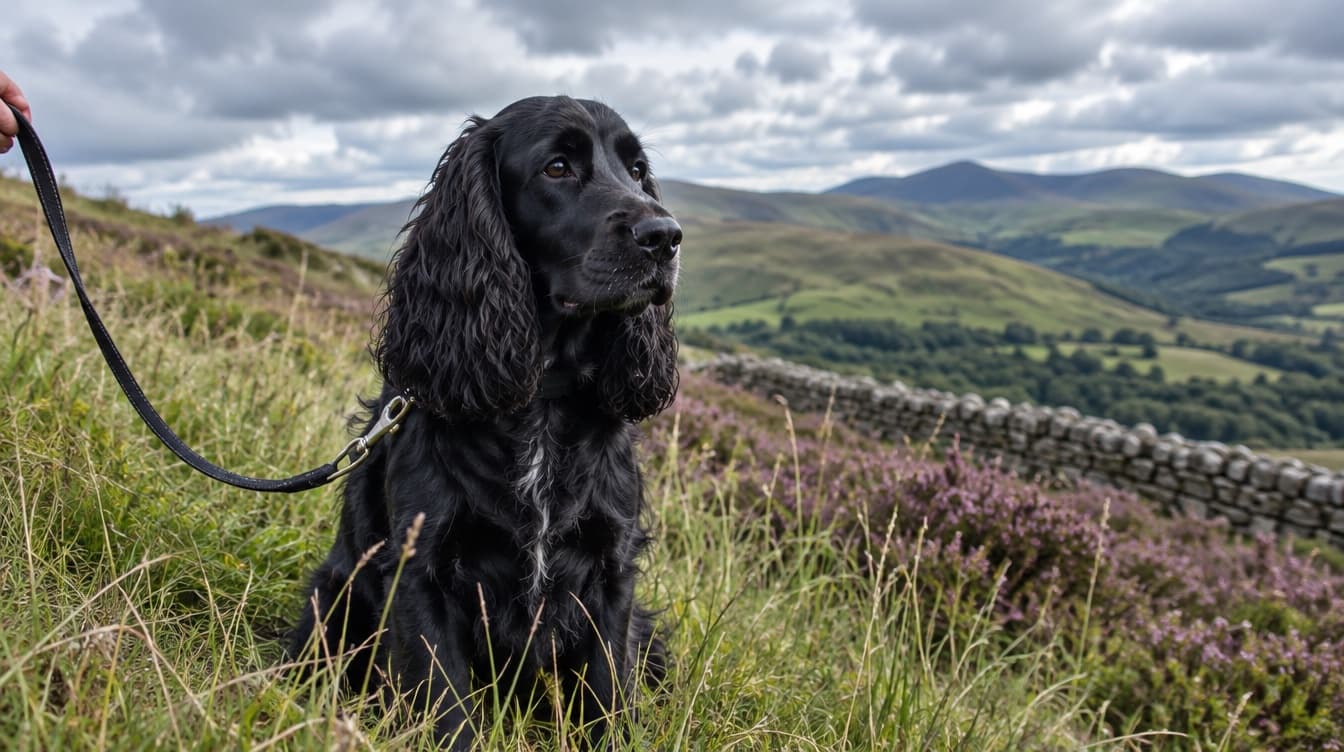
Where to adopt a Cocker Spaniel in Glasgow
The count under the short answer is live and covers every Cocker and Cocker cross listed with us within about 41 miles of Glasgow. When we checked on 21 October 2026, the Cockers in it were all with Springer Rescue Scotland, fostered in South Lanarkshire, and its own list had more fostered elsewhere in Scotland, from the Borders to Inverness-shire. Our Glasgow Cocker Spaniel page shows today's dogs, and our Glasgow spaniels page adds Springers and spaniel crosses.
General rescues take in spaniels too: further afield, Edinburgh Dog and Cat Home, about 42 miles east at Seafield, had a spaniel cross listed on 21 October 2026, and Dogs Trust Glasgow on Hamilton Road rehomes all kinds of dogs; Dogs Trust's Cocker Spaniel page shows the ones it has available. The Scottish SPCA, with a Glasgow centre in Cardonald, also rehomes animals, so search on its own site. Neither Dogs Trust's nor the Scottish SPCA's dogs appear in our listings.
Cocker Spaniel rescue for Glasgow and across Scotland
Two Scottish routes exist for Cockers, and one UK charity is worth knowing about if you can travel.
Springer Rescue Scotland
Despite the name, this charity rehomes spaniels across Scotland, Cockers included, and lists no premises: its dogs live with fosterers, and each listing gives the council area. Founded in 2008 and a charity since 2009, it says many dogs need long foster stays and help from its behaviourists because of how they came to be given up.
Its process has six steps. You fill in the application form in full (incomplete forms are rejected), a member of the rehoming team phones you and may ask for references, and a local volunteer visits your home. Once approved, you watch its website and note interest in any dog that suits, following the email it sends after your home visit; your local Area Coordinator can give you an idea of the likely wait. You then visit the dog in its foster home at least twice, sign the adoption agreement by email and collect the dog from the fosterer. It follows up a week or so later.
The Cocker Spaniel Club of Scotland's rescue
A breed club established in 1933, whose rescue scheme rehomes Cockers of all ages, mainly show-type Cockers, often for owners who have fallen ill or families after an owner has died. It prefers a home-to-home move, to reduce the stress on the dog, so it puts you in touch with the present owner. You download its adoption form, and adopted dogs come with 5 weeks' free pet insurance whatever their age.
Because you deal with the owner, take the care you would with any private rehoming: meet the dog where it lives, more than once if you can, check that the microchip is registered to that owner, and ask for vet records. It is a breed club and shows no charity registration.
Spaniel Aid CIO, further afield
A registered charity whose spaniels all live in foster homes. Its list gives each dog's location, and on 21 October 2026 they were all in England and Wales, so a match would mean a long trip south. You apply separately for each dog you like, and it warns that young dogs with no issues draw dozens of applications, while older dogs and pairs often wait weeks.
Adopting or buying a Cocker Spaniel: what you pay
A rescue fee or donation goes on vet work, foster care and travel. Springer Rescue Scotland asks a donation, and says most dogs cost it upwards of £400 in foster care. Spaniel Aid CIO charges £500 for a dog under a year down to £250 at 9 to 11, and all its dogs are vet checked, vaccinated and neutered where possible. Dogs Trust charges £300 for a dog in Scotland.
A bought puppy costs £400 to £3,000 by Blue Cross's range, with neutering and the rest of its jabs still to pay for. PDSA puts a medium dog's set-up costs at £531 and its running costs at £83 a month or more.
Cocker Spaniel health: ears, eyes and kidneys
Ask what the rescue's vet has found, because a rescue Cocker seldom arrives with its parents' screening results. The breed is on the BVA eye scheme's list of common breeds at risk of eye disease, and UK sources raise these points:
- Ears and skin. PDSA names ear problems, and atopy, an allergy that brings itchy skin and ear infections. Ask how often the dog's ears have needed treatment.
- Eyes and joints. PDSA names inherited eye conditions and hip dysplasia. The Royal Kennel Club asks breeders to DNA test for progressive retinal atrophy (prcd-PRA) and acral mutilation syndrome (AMS) at a minimum.
- Inherited conditions. PDSA also lists familial nephropathy, a kidney disease, adult onset neuropathy and some auto-immune conditions.
Life with a Cocker in Glasgow
Company comes first. PDSA says Cockers are known for separation anxiety, that it is best to have someone with them during the day, and that four hours alone is the limit, which may still be too much. It asks for at least an hour of exercise a day, spread across several walks with off-lead running somewhere secure, and says dogs from working parents will probably need more.
Then the coat: The Royal Kennel Club lists grooming as every day, and PDSA says show types may need a professional clip every three months. Ask the rescue whether the dog is a show or working type, and how it copes with a brush and having its ears handled.
If you've been searching "Cocker Spaniel puppies for sale Glasgow"
Nobody sells a rescue Cocker: you adopt one. The rescue checks you out first, then matches you with a dog, and you pay a fee or donation. Puppies are rare, so be ready for an adult. Our Glasgow Cocker Spaniel page lists the Cockers near the city today, each linked to its rescue.
If you buy, ask the breeder for both parents' eye results and DNA tests, and whether the line is working or show bred. Dogs Trust suggests asking your vet about a pre-purchase consultation, and The Royal Kennel Club's "Find a puppy" service is another place to look. Police Scotland's marketplace advice is to avoid paying for anything you haven't seen, and you can report online marketplace fraud to it.
The law in Scotland
Microchipping and change of keeper
In Scotland, as everywhere in the UK, every dog must be microchipped and registered by 8 weeks old. Since 6 April 2016 a dog in Scotland can't pass to a new keeper until it is chipped, and the new keeper must update the database (the Scotland regulations). A rescue chips before rehoming; after adoption, keep the details up to date.
Lucy's Law: buying a puppy
In Scotland, Lucy's Law has banned the third-party sale of puppies under six months since 1 September 2021.
Banned dog types
In Scotland, it is against the law to sell, abandon, give away or breed from a banned type: the Pit Bull Terrier, Japanese Tosa, Dogo Argentino, Fila Brasileiro and XL Bully. Whether a dog is banned depends on what it looks like rather than its breed or name, so no rescue can rehome one and none appear on LocalPetFinder. The Staffordshire Bull Terrier is not a banned type.
XL Bully dogs
In Scotland, since 23 February 2024 it has been illegal to sell, advertise, gift or exchange an XL Bully or let it stray, and since 1 August 2024 an offence to own one without an exemption certificate. The Scottish rules also say it is unlawful to "sell, give away or rehome an XL Bully".
Rehoming licences
In Scotland, since 1 September 2021, anyone sourcing five or more animals in any 12-month period to rehome as pets needs a licence (Scottish Government). A licence is a useful sign that a Scottish rescue is what it says it is.
Questions
Tap a question to expand
Is there a Cocker Spaniel rescue in Scotland?
Yes, two. Springer Rescue Scotland rehomes spaniels, Cockers included, from foster homes across Scotland, and The Cocker Spaniel Club of Scotland runs a rescue that passes Cockers from home to home. Our Glasgow Cocker Spaniel page shows any of Springer Rescue Scotland's Cockers within about 41 miles of the city.
How much does it cost to adopt a Cocker Spaniel compared with buying a puppy?
Usually less, though not nothing. Springer Rescue Scotland asks a donation and says most dogs cost it upwards of £400 in foster care, Dogs Trust charges £300 and Spaniel Aid CIO £250 to £500 by age. Blue Cross puts a bought puppy at £400 to £3,000.
Can I get a Cocker Spaniel for free, or for £250 or less, near Glasgow?
Not free from a rescue, but £250 or less is possible for an older dog: Spaniel Aid CIO charges £250 for a dog of 9 to 11 and a donation of your choice from 12, though its dogs are in England and Wales. A "free to good home" Cocker is a private advert, so see the dog at home and check the microchip details first.
Should I adopt a Cocker Spaniel puppy, an adult or an older dog?
An adult or an older dog is the realistic choice, since rescue puppies are rare. Spaniel Aid CIO says older dogs and pairs often wait weeks for a home, and with a lifespan of over 10 years by The Royal Kennel Club's and PDSA's figures, a Cocker of 7 or 8 can still have years ahead.
Why do Cocker Spaniels end up in rescue?
Rescues give their own reasons. The Cocker Spaniel Club of Scotland's rescue is mainly for owners who have fallen ill and families after an owner has died, and Springer Rescue Scotland says many of its dogs need long foster stays and behaviourist support because of how they were given up.
What health problems should I ask about with a rescue Cocker Spaniel?
Ears, skin and eyes first. PDSA lists allergies that cause itchy skin and ear infections, inherited eye conditions, hip dysplasia and a kidney disease, and the BVA counts the Cocker among breeds at risk of eye disease. Ask what the rescue's vet has seen.
Can I adopt a Cocker Spaniel if I work full time?
Only with daytime cover. PDSA says Cockers are known for separation anxiety, that it is best to have someone with them during the day and that four hours alone is the most, so tell the rescue how your days work.
What is the difference between a show and a working Cocker?
Mostly energy and coat. PDSA says Cockers from parents bred to work will probably need more exercise, and that working types need less coat care than show types, which may need a groomer every three months. The Cocker Spaniel Club of Scotland's rescue mainly rehomes show-type Cockers.
Keep reading
- Cocker Spaniels for adoption in and around Glasgow
- All rescue dogs in and around Glasgow
- The best dog rescues in Glasgow, compared
- Cocker Spaniels across the UK
- Adopting a Cockapoo or Cavapoo in Glasgow: rescues, waits and costs
- Adopting a Labrador in Glasgow and across Scotland
- Adopting a Chihuahua in Glasgow and across Scotland
- Adopting a Dachshund in Glasgow: rescues, rules and costs
- Adopting a French Bulldog in Glasgow: rescues, costs and breathing
- Adopting a German Shepherd in Glasgow: rescues, rules and costs
- Adopting a greyhound in Glasgow: rescues, rules and costs
- Adopting a Jack Russell in Glasgow and across Scotland
- Adopting a Shih Tzu in Glasgow: rescues, costs and care
- Adopting a Staffy in Glasgow: rescues, costs and the law
- Adopting a Westie (West Highland White Terrier) in Glasgow and Scotland
- Adopting a Yorkie (Yorkshire Terrier) in Glasgow: rescues and costs
- Every dog adoption guide for Glasgow
- Rescue pets in Glasgow
- Rehoming a Cocker Spaniel? Our owner guide
Cocker Spaniels in other cities: Belfast, Birmingham, Bournemouth, Christchurch and Poole, Brighton and Hove, Bristol, Canterbury, Cardiff, Carlisle, Dumfries and Galloway, Edinburgh, Exeter, Ipswich, Kendal, Kingston upon Hull, Leeds, Lincoln, Liverpool, London, Manchester, Middlesbrough, Newcastle upon Tyne, Northampton, Norwich, Nottingham, Oxford, Peterborough, Plymouth, Portsmouth, Preston, Sheffield, Stoke-on-Trent, Swansea, Truro, Worcester
Cocker Spaniel guides in other cities: Birmingham, Bristol, Leeds, Liverpool, London, Manchester, Nottingham, Sheffield
For rescues and rehoming centres
Are you a rescue near Glasgow? Get your animals listed free.
Every animal links back to your own adoption page, and you can ask to be removed at any time.
Sources: Springer Rescue Scotland: home page · Springer Rescue Scotland: adopt a dog (dogs and their council areas) · Springer Rescue Scotland: adoption application (process, donation, insurance) · The Cocker Spaniel Club of Scotland: Cocker Rescue · Spaniel Aid CIO: available spaniels and adoption fees · Edinburgh Dog and Cat Home: our rehoming process · Dogs Trust: Glasgow rehoming centre · Scottish SPCA: Glasgow rescue and rehoming centre · PDSA: Cocker Spaniel · The Royal Kennel Club: Spaniel (Cocker) · Dogs Trust: Cocker Spaniel · BVA: Canine Health Schemes, eye scheme · Teng et al. (2022), Scientific Reports: life tables of annual life expectancy for dog breeds in the UK (RVC VetCompass) · Blue Cross: getting a puppy · PDSA: the cost of owning a dog · The Royal Kennel Club: Find a puppy · Police Scotland: online marketplace fraud · gov.uk: Get your dog microchipped · gov.uk: Banned dogs · Scottish Government: further protection for animals · legislation.gov.uk: Microchipping of Dogs (Scotland) Regulations 2016 · Scottish Government: XL Bully dog rules