Breed adoption guide
Adopting a British Shorthair in London: rescues, rules and costs
British Shorthairs are among the cats Londoners search for most, but they rarely reach the rescues around the city. Here is where to look instead, the rules the pedigree rescue sets, what adopting costs against buying a kitten, and the health questions to ask.
By the LocalPetFinder Team · Checked 20 October 2026
The short answer
To adopt a British Shorthair in London, watch our London British Shorthair page, which shows any British Shorthair or cross listed with the cat rescues around the city, and check Strawberry Persian and Pedigree Cat Rescue, a volunteer pedigree rescue that helps British Shorthairs and has fosterers in Greater London and Essex. The Southern British Shorthair Cat Club also lists adult cats whose owners are rehoming them. Each Strawberry listing gives the cat's location, and expect an adult rather than a kitten.
- Rescue adoption fees
- Each rescue sets its own adoption fee. Battersea charges £100 for a cat over six months and £130 for a kitten, Cats Protection says you can expect to pay £80 to £120 on average for an adult cat and £100 to £120 for a kitten, varying between its branches, and Blue Cross fees start from £150 for cats aged 4 months to 7 years. The fee usually covers neutering, microchipping and first vaccinations, and each rescue confirms its own fee.
- Buying a pedigree kitten
- Cats Protection says, in its "Getting a pedigree cat" advice, that a registered pedigree can cost anything from £200 to well over £1,000 depending on the breed. We don't quote a British Shorthair-only price.
- The pedigree rescue
- Strawberry Persian and Pedigree Cat Rescue doesn't publish a set fee. It says its fees vary, and that it charges more for younger, apparently healthy cats so it can afford to help old and ill ones.
- London cat rescues we list
- Those that publish a fee ask from a suggested minimum donation of £85 per cat at Celia Hammond Animal Trust to between £100 and £175, by age, at Foal Farm Animal Rescue.
- A lifetime with a cat
- PDSA estimates a cat costs at least £11,400 to £13,600 over its lifetime, with set-up costs of about £366 and a minimum of £79 a month (its 2024 figures, not counting buying the cat).
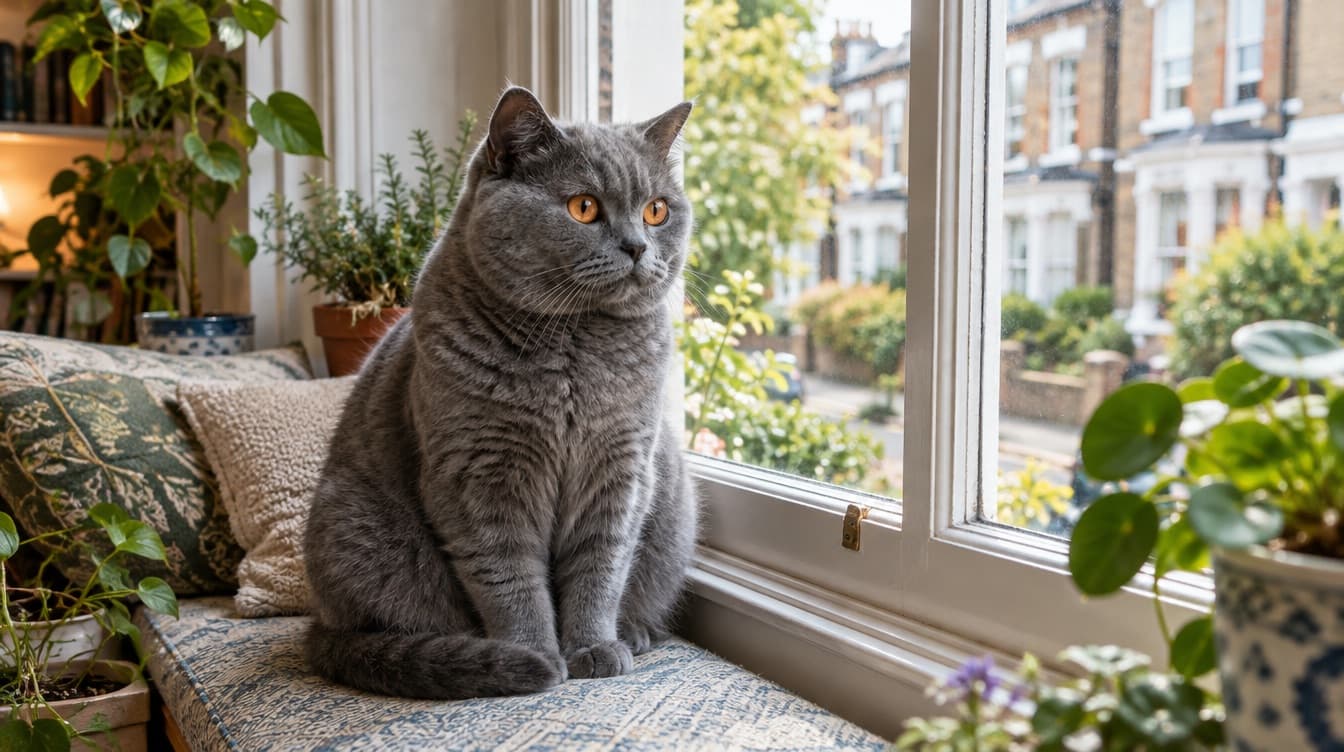
Where to adopt a British Shorthair in London
The count under the short answer is live: it shows every British Shorthair and British Shorthair cross listed with us in London and within about 35 miles, and each profile links to the rescue. Pedigree British Shorthairs rarely reach the general cat rescues around London, so a low count, or none, is the honest picture. The GCCF, the UK pedigree cat registry, says each of its affiliated cat clubs has a welfare officer who keeps lists of older or rescued cats that need homes, and of people willing to offer them one.
Strawberry Persian and Pedigree Cat Rescue
A volunteer rescue for pedigree and pedigree-looking cats, and its homepage names "British Blue and other colours of British Shorthair" among the breeds it helps. Its cats live in foster homes, not a centre: its adoption page says they are in Greater London, Essex, the West Midlands and County Durham, and each listing gives the cat's location. Its rules are strict: indoor-only homes, no children under 8 now or in the future, and, in its adoption policy, vet records for previous indoor cats in your own name or experience of indoor cats. It says a pedigree cat shouldn't be your first cat, and you must collect by car, not public transport.
The Southern British Shorthair Cat Club's re-home page
This GCCF breed club is not a rescue. Its welfare and re-home page lists adult British Shorthairs whose owners are rehoming them, and you contact the owner directly. The club asks that a listed cat is up to date with its vaccinations and neutered, so ask to see the cat's vet records. Because you are dealing with a private owner, take the same care as with any private advert:
- See the cat in its home with its owner before you agree anything.
- Pay no deposit before you have met the cat.
- Check the microchip. In England, cats must be microchipped before they are 20 weeks old, so ask to see the microchip details and make sure they are updated to you.
Cat rescues and charities in London
Battersea Dogs & Cats Home, Mayhew and Cats Protection, with its South London and North West London cat centres, also rehome cats. We don't list their cats, so search their own sites. Our guide to London cat rescues compares the rescues we do list, their rules and their fees.
Why British Shorthairs come into rescue
We found no published intake figures for British Shorthairs alone, but the pedigree rescue explains its intake. Strawberry Persian and Pedigree Cat Rescue says most of its cats come from homes where children or babies were present and being in that environment was causing them distress. Its adoption policy adds that some were kept in a pen in a garden and used for breeding, or left in a garden when an owner moved, and that many are simply waiting for a new home because they didn't get on with other cats, dogs or children.
Adopting or buying a British Shorthair: what you pay
Strawberry doesn't publish a set fee, so ask. What the fee buys is clear: its homepage says all its cats are neutered, vaccinated, microchipped, and flea and worm treated, with 5 weeks' free insurance, and its adoption page says lifetime insurance is a requirement for every cat it rehomes.
With a bought kitten, ask the breeder what has already been done; Cats Protection gives £200 to well over £1,000 for a registered pedigree. Running costs are the same either way: PDSA puts the minimum at £79 a month.
British Shorthair health: the heart and kidneys
The GCCF says polycystic kidney disease (PKD), where cysts grow in the kidneys, was once a problem in the breed and is now under control thanks to DNA testing by responsible breeders. It also says hypertrophic cardiomyopathy (HCM), a thickening of the heart muscle, can be a problem in the breed, and that there is no DNA test for HCM in British cats yet. A rescue cat's parents are rarely known, so ask what the rescue's vet has checked.
- The same two conditions. PDSA lists HCM and PKD as possible health problems in British Shorthairs, and says a genetic test is available for PKD.
- What the rescue checks. Strawberry Persian and Pedigree Cat Rescue says each cat has a vet check when it is vaccinated, but that it doesn't DNA test, scan or X-ray every cat, so ask what is known about the one you like.
- Weight. The GCCF says an indoor British Shorthair needs suitable stimulus, and that care must be taken to manage any tendency to gain weight.
A British Shorthair in a London home
The breed suits indoor life. The GCCF says the British is suitable as an indoor-only companion but needs suitable stimulus and should be supervised outside because its trusting nature can leave it vulnerable. Strawberry Persian and Pedigree Cat Rescue only rehomes indoor-only cats: it is happy to rehome to a flat, but windows stay closed and there is no balcony access unless the balcony is fully cat-proofed.
They are calm cats that take their time: the GCCF says the breed can take up to five years to reach full physical maturity, and PDSA describes it as a fairly relaxed breed that may not enjoy being picked up and is not always happy sharing a home with other cats it hasn't grown up with.
If you've been searching "British Shorthair kittens for sale London"
Rescue British Shorthairs are adopted, not sold: you apply for a particular cat, the rescue decides which home suits it best, and you pay its adoption fee. Pedigree rescues rehome cats whose owners can no longer keep them, so expect an adult rather than a kitten.
If you decide to buy, Cats Protection suggests a breeder registered with a breed association such as the GCCF, and seeing the kitten with its mother at home rather than buying from a video or social media advert. The GCCF notes that responsible breeders DNA test for PKD, so ask to see the results for the parents. Report a suspected scam advert to Report Fraud, which replaced Action Fraud.
The law in England
Microchipping cats
In England, cats must be microchipped before they are 20 weeks old and registered on a database, a rule in force since 10 June 2024. An owner found without one has 21 days to comply or may be fined up to £500. Free-living cats (farm, feral and community cats) are exempt.
Lucy's Law: buying a kitten
In England, Lucy's Law has meant since 6 April 2020 that kittens under six months can't be sold by a third party such as a pet shop or dealer: you buy direct from the breeder or adopt from a rehoming centre.
Questions
Tap a question to expand
Is there a British Shorthair rescue that covers London?
Yes, Strawberry Persian and Pedigree Cat Rescue helps British Shorthairs and has fosterers in areas including Greater London and Essex. The Southern British Shorthair Cat Club's re-home page also lists adult cats whose owners are rehoming them; it is a club route to private owners, not a rescue. Our London British Shorthair page shows any British Shorthair listed with the cat rescues near the city today, though there are often none.
Is it cheaper to adopt a British Shorthair than to buy a kitten?
Very likely, though Strawberry Persian and Pedigree Cat Rescue doesn't publish a set fee. Cats Protection says a registered pedigree costs from £200 to well over £1,000 to buy. Strawberry's cats come neutered, vaccinated and microchipped, with 5 weeks' free insurance.
Can I get a British Shorthair for free, or for £85 or less, in London?
Not free from a rescue: Strawberry Persian and Pedigree Cat Rescue says it doesn't give cats away, because fees keep the rescue going. Cats Protection says its adult cat fees average £80 to £120, and Celia Hammond Animal Trust suggests a minimum donation of £85 per cat, but pedigree cats rarely reach the general rescues. A "free" British Shorthair in a private advert has no rescue checks behind it.
Should I adopt a British Shorthair kitten, an adult or an older cat?
Most likely an adult or an older cat, because that is what comes up: the Southern British Shorthair Cat Club's page lists adult cats, and Strawberry says it doesn't run a waiting list for kittens of a particular breed. An adult's character is already known, which matters with a calm breed that PDSA says may not enjoy sharing a home with other cats.
Why do British Shorthairs end up in rescue?
Usually because of the home they came from. Strawberry Persian and Pedigree Cat Rescue says most of its cats come from homes where children or babies were causing them distress, that some were used for breeding or left behind when an owner moved, and that many didn't get on with other cats, dogs or children.
What health problems should I ask about with a rescue British Shorthair?
Ask about the heart and kidneys. The GCCF says HCM, a heart disease, can be a problem in the breed and has no DNA test in British cats yet, while PKD, a kidney disease, is now under control through DNA testing. PDSA lists both. Ask what the rescue's vet has checked and keep the cat insured.
How long do British Shorthair cats live?
The GCCF gives a life expectancy of 14 to 20 years. A Royal Veterinary College VetCompass study of cats under UK vet care gave its "British cats" group, defined as British Blue and British Longhair, a life expectancy at birth of 9.58 years, from 194 recorded deaths: a figure for that group, not for British Shorthairs alone.
Is an older British Shorthair a good choice for a London flat?
Often, yes. The GCCF says the British is suitable as an indoor-only cat with suitable stimulus and care over its weight, and Strawberry Persian and Pedigree Cat Rescue rehomes to flats as long as windows stay closed and any balcony is fully cat-proofed.
Keep reading
- British Shorthairs for adoption in and around London
- All rescue cats in and around London
- The best cat rescues in London, compared
- British Shorthairs across the UK
- Adopting a Ragdoll cat in London: rescues, rules and costs
- Adopting a rescue kitten in London: rescues, rules and costs
- Adopting a Bengal cat in London: rescues, rules and costs
- Adopting a Maine Coon in London: rescues, rules and costs
- Adopting a Persian cat in London: rescues, rules and costs
- Adopting a Russian Blue in London: rescues, rules and costs
- Adopting a Siamese cat in London: rescue, rules and costs
- Adopting a Siberian cat in London: rescues, rules and costs
- Every cat adoption guide for London
- Rescue pets in London
- Rehoming a British Shorthair? Our owner guide
British Shorthairs in other cities: Chelmsford, Guildford, Luton, Watford, Crawley, Maidstone, Belfast, Birmingham, Bournemouth, Christchurch and Poole, Brighton and Hove, Bristol, Canterbury, Cardiff, Carlisle, Dumfries and Galloway, Edinburgh, Exeter, Glasgow, Ipswich, Kendal, Kingston upon Hull, Leeds, Lincoln, Liverpool, Manchester, Middlesbrough, Newcastle upon Tyne, Northampton, Norwich, Nottingham, Oxford, Peterborough, Plymouth, Portsmouth, Preston, Sheffield, Stoke-on-Trent, Swansea, Truro, Worcester
British Shorthair guides in other cities: Birmingham
For rescues and rehoming centres
Are you a rescue near London? Get your animals listed free.
Every animal links back to your own adoption page, and you can ask to be removed at any time.
Sources: Strawberry Persian and Pedigree Cat Rescue: homepage · Strawberry Persian and Pedigree Cat Rescue: adoption policy · Strawberry Persian and Pedigree Cat Rescue: cats available for adoption · Southern British Shorthair Cat Club: welfare and re-home · GCCF: British · GCCF: clubs rehoming · PDSA: British Shorthair · Teng et al. (2024), Journal of Feline Medicine and Surgery: life tables of annual life expectancy for cats in the UK (RVC VetCompass) · Celia Hammond Animal Trust: adopt a cat · Foal Farm Animal Rescue: rehoming process · Cats Protection: Getting a pedigree cat and Buying a kitten advice (homepage linked; its terms ask that deep links be approved) · PDSA: the cost of owning a cat · gov.uk: microchipping for cats becomes compulsory · GCCF · Report Fraud · gov.uk: Get your dog microchipped · gov.uk: Banned dogs · gov.uk: Lucy's Law in England · legislation.gov.uk: Microchipping of Cats and Dogs (England) Regulations 2023