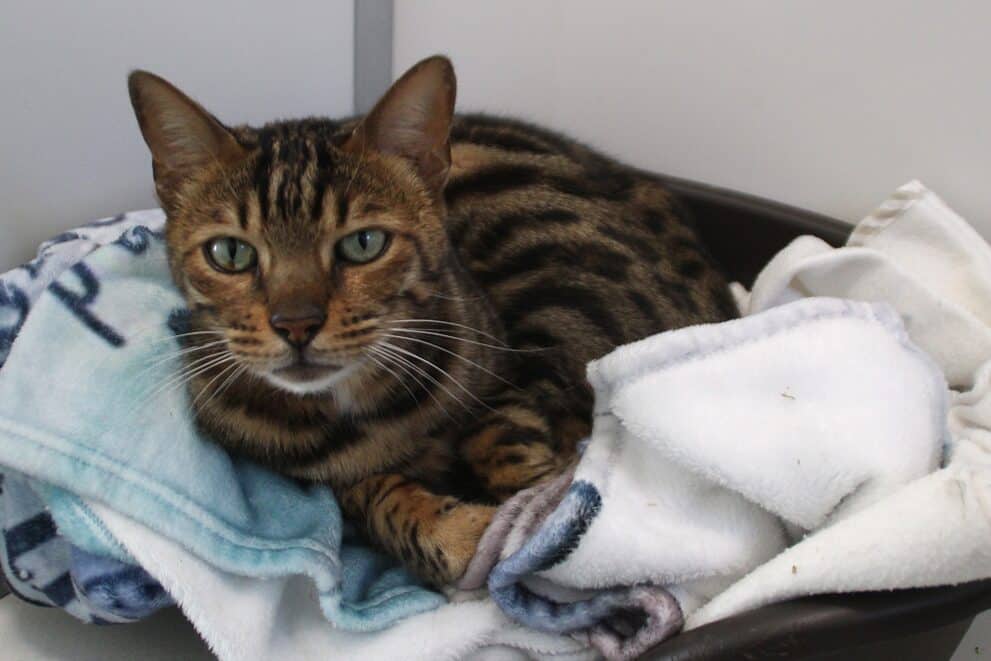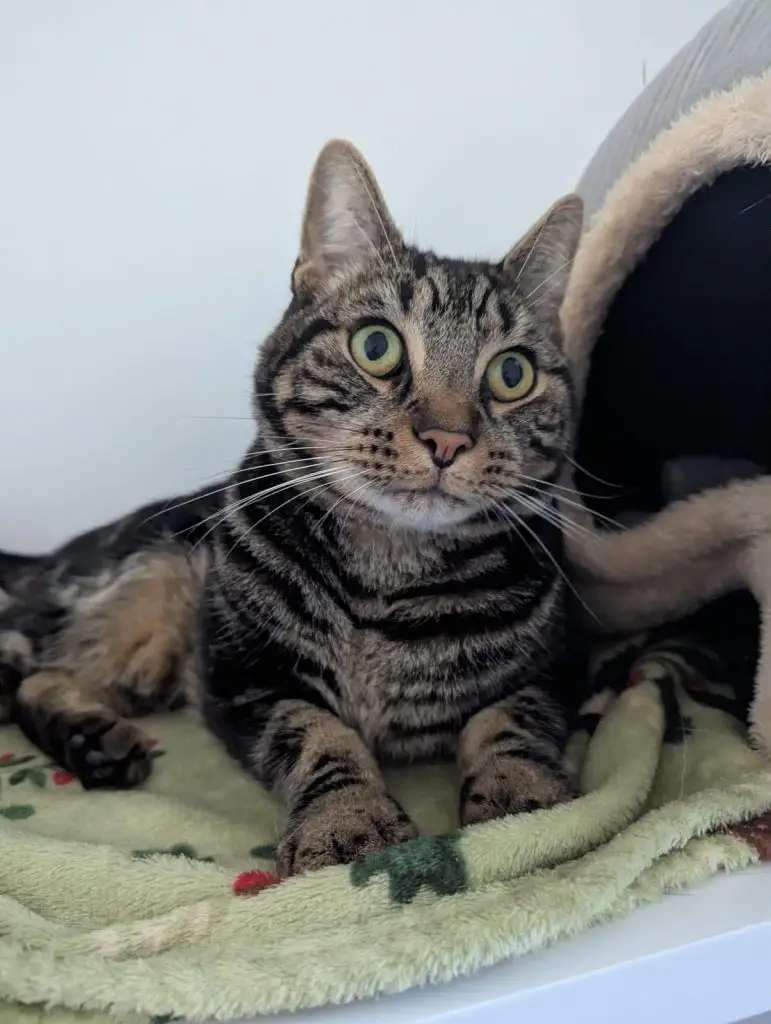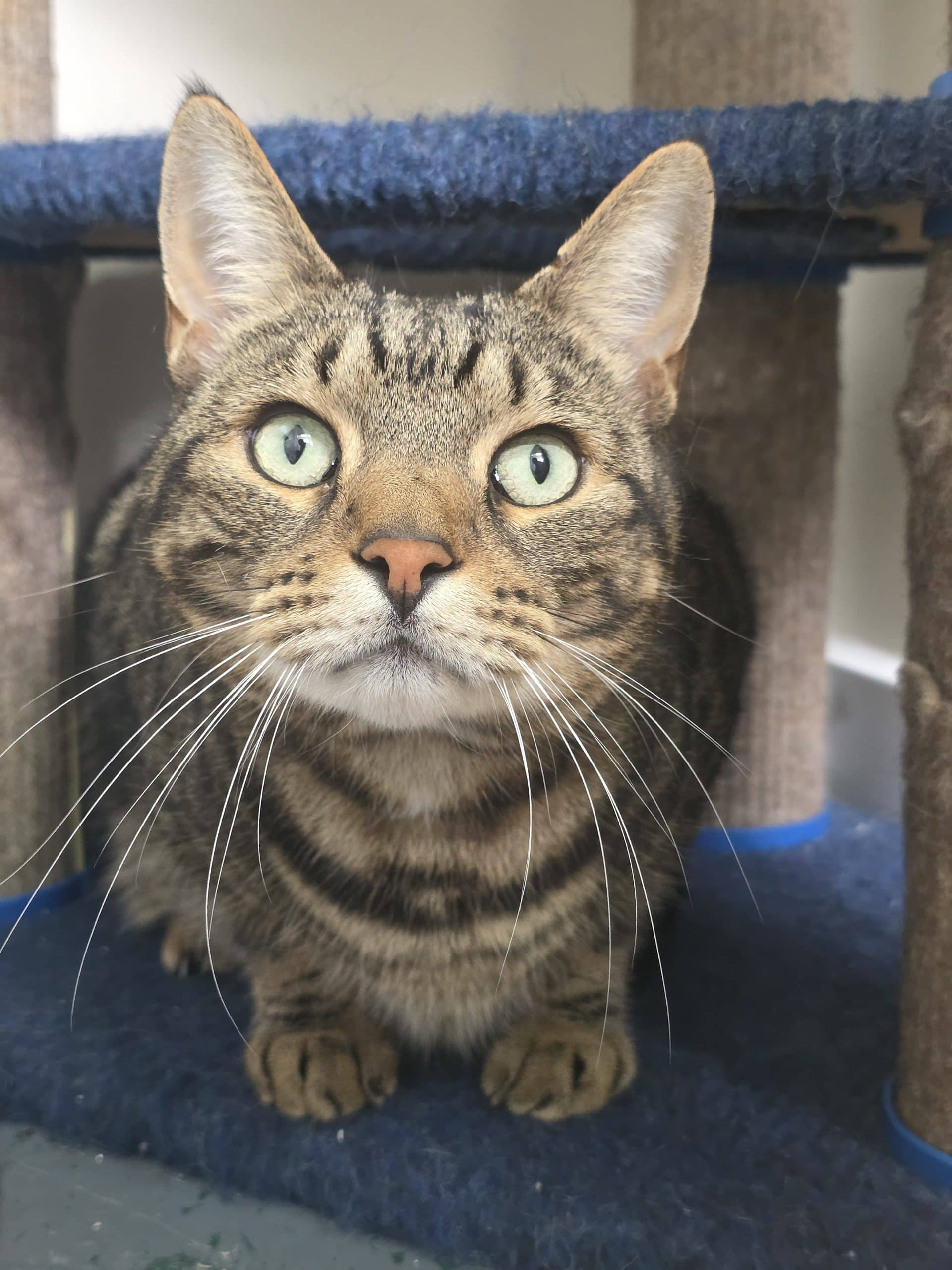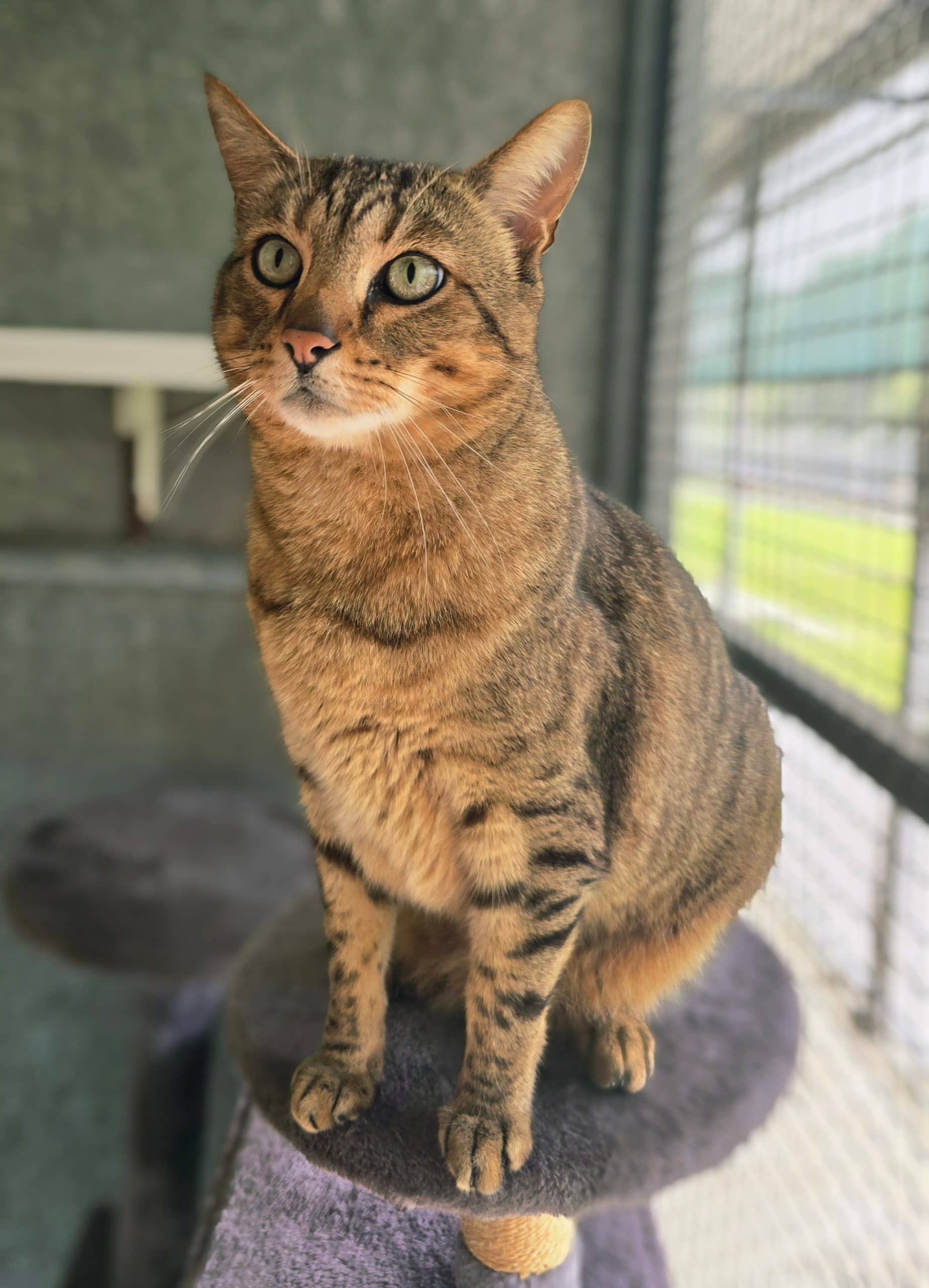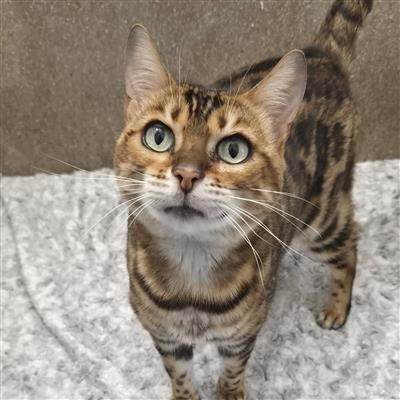
Elk
9 years • Female • Bengal
Margaret Green Animal Rescue (Church Knowle)· Church Knowle
Meet Elk →Bengals and Bengal crosses looking for new homes with rescues and rehoming centres across the UK.
5 listed across the UK from 5 rescues
Showing 5 cats
Never miss new Bengal cats
Be first to know when new Bengal cats are listed across the UK. No spam, unsubscribe any time.
9 years • Female • Bengal
7 years • Male • Bengal
3 years • Male • Bengal Cross
8 years • Male • Bengal Cross
5 years • Male • Bengal X Dsh
List your cat for free. Your cat stays at home until you find the right family, every listing is checked by a person, and you choose who adopts. Not sure yet? Read the rehoming guide first.
List your cat for free →5 bengal cats are listed across the UK today, with 5 rescues. 4 are male and 1 female. The newest was added on 7 November 2026.
Breed labels on listings are often a best guess from appearance. Read each profile, then ask the rescue about the cat’s history and the home they need.
| GCCF section | Foreign |
|---|---|
| Size | Medium to large, 8 to 15 lb (females 3.6 to 5.4 kg, males 4.5 to 6.8 kg) |
| Coat | Short, soft and dense; spotted or marbled |
| Grooming | Low: a light brush and comb once a week |
| Lifespan | 12 to 16 years |
| Temperament | Intelligent, playful, affectionate |
| Colours | 3 colours, 2 patterns and 3 eye colours |
| Estimated lifetime cost | £13,600 to £18,000 (PDSA, essentials only) |
The Governing Council of the Cat Fancy (GCCF), which registers pedigree cats in the UK, describes the Bengal as "confident, active, curious, athletic and energetic". It is known for its spotted or marbled coat, and the GCCF says Bengals are now one of the most popular short-haired breeds, though they only appeared in the UK around 20 years ago. It says they are very sociable, enjoy the company of their human family, and are "very vocal" and can be quite strident, which "shouldn't be confused with aggression".
PDSA adds that Bengals will make sure you know if they want something, and that they are affectionate, though you are more likely to find them "curled up next to you rather than on your lap".
A rescue cat is an individual, and a cat listed as a Bengal may be a cross. The rescue knows how this cat behaves at home, so ask them.
The GCCF says a Bengal needs to be kept engaged and amused, with toys and activity centres such as boxes, tunnels and high shelves, and that Bengals "seem to like using cat exercise wheels". PDSA says they need plenty of mental stimulation and chances to exercise, and like a high vantage point, for which a cat tree is ideal.
The GCCF says "it is not a good idea to let Bengals go out and roam free", though they can be trained to walk on a harness and lead over time. It also says Bengals are widely reported to enjoy playing with water.
The coat is short and dense. The GCCF says Bengals need minimal grooming: "a light brush and combing once a week" keeps the coat in good condition and removes loose hair. PDSA gives the same advice.
The GCCF says "the Bengal is generally a healthy cat", with no diseases specific to the breed. It names some conditions breeders and buyers should know about: HCM (hypertrophic cardiomyopathy), a heart condition that "does occur in some Bengal lines" and has no DNA test in the breed, so heart screening of breeding cats is recommended; pyruvate kinase deficiency, which causes anaemia and has a DNA test; and progressive retinal atrophy (PRA), a rare eye disease, which also has a DNA test. It says patellar luxation (a slipping kneecap) is now much less common than in early imports.
PDSA lists hip dysplasia, patellar luxation and feline infectious peritonitis (FIP) as problems Bengals are prone to, and says Bengals are more likely than non-pedigree cats to develop FIP. International Cat Care says cats with early heart disease may show no signs at all, and that a vet may pick up early signs during an examination, one reason it advises a check-up at least once a year.
A rescue cat's parents may not have been health tested, so ask the rescue what vet checks the cat has had and whether any condition is known. Your own vet is the right person to advise on anything you notice later.
As of 8 November 2026, 5 Bengals are listed with rescues in the UK on LocalPetFinder: by their listed age, 5 adults.
3 of them are listed as a cross, as the rescue describes it: Bengal Cross (2) and Bengal x Dsh. Breed labels on rescue listings are often a best guess from looks.
The rescues mark 2 as able to live with children. Where a profile says nothing, it doesn't mean no: ask the rescue.
The GCCF says Bengals get on well with children and cat-friendly dogs. Bengals are active, lively cats, so think about whether that suits your home. Whether a particular rescue cat can live with children, dogs or other cats depends on the cat, so go by the rescue's own assessment, which is often noted on the profile.
Not any more. The GCCF says the Bengal began in the United States in the early 1960s as a hybrid between the Asian Leopard Cat and a domestic cat, and that "by the fourth generation" a Bengal can be considered a domestic cat rather than a hybrid. It adds that first-generation cats "could be problematic as domestic pets". The GCCF stopped registering first-generation Bengals on 1 June 2002 and third-generation Bengals from 1 June 2008.
If you want to know more about a rescue Bengal's background, ask the rescue what they know.
The GCCF's advice is not to let a Bengal roam free, but to give it plenty to do indoors and, with patience, harness training. International Cat Care says there is no right or wrong answer to keeping a cat indoors or letting it out: it depends on the cat and the home. It says an indoor-only cat needs a stimulating home with chances to play, climb and explore, such as shelves and cat climbing trees, and daily play, because boredom and frustration can lead to unwanted behaviour and stress.
Ask the rescue how this cat has lived so far and what they recommend for it.
Sources (checked 30 September 2026)
Breed descriptions are general. Every rescue animal is an individual, so the rescue's own assessment of the animal comes first.
Tap a question to expand
As of 8 November 2026, 5 Bengals are listed for adoption in the UK on LocalPetFinder, from Bryson's Animal Shelter, Gables Dogs & Cats Home, Happy Landings Animal Rescue Centre, Margaret Green Animal Rescue (Church Knowle) and St Francis Animal Welfare. Each profile links to the rescue, and you apply to adopt with them directly.
As of 8 November 2026, Bryson's Animal Shelter (at Eighton Banks): 1, Gables Dogs & Cats Home (at Plymouth): 1, Happy Landings Animal Rescue Centre (at Shepton Mallet): 1, Margaret Green Animal Rescue (Church Knowle) (at Church Knowle): 1 and St Francis Animal Welfare (at Fair Oak): 1. The newest was added on 7 November 2026. Each profile links to the rescue, which handles the adoption.
With the rescue that has the cat. Today the Bengals on this page are with Bryson's Animal Shelter (1), Gables Dogs & Cats Home (1), Happy Landings Animal Rescue Centre (1), Margaret Green Animal Rescue (Church Knowle) (1) and St Francis Animal Welfare (1). Open a profile and apply to that rescue: each one runs its own application, home check and adoption fee. We don't rehome animals ourselves.
As a breed, yes. The GCCF describes the Bengal as confident, active, curious, athletic and energetic, and says it needs to be kept engaged with toys, tunnels and high shelves. PDSA says Bengals need plenty of mental stimulation and chances to exercise. Ask the rescue how active this particular cat is.
The GCCF says it is not a good idea to let Bengals roam free, but they can be trained to walk on a harness and lead. If a cat lives indoors, International Cat Care says it needs a stimulating home with space to climb and daily play. The rescue may also have its own advice for this cat.
No. The GCCF says the breed started as a cross between the Asian Leopard Cat and domestic cats in the 1960s, but by the fourth generation a Bengal can be considered a domestic cat. The GCCF no longer registers first- or third-generation Bengals.
They can be. The GCCF says Bengals are very vocal and can be quite strident, but that this should not be confused with aggression, and PDSA says they will make sure you know if they want something. Ask the rescue how chatty this cat is.
No. The GCCF says a light brush and comb once a week keeps a Bengal's short, dense coat in good condition and removes loose hair.
The GCCF gives a life expectancy of 12 to 16 years. It describes the Bengal as a medium to large cat, with females weighing 3.6 to 5.4 kg (8 to 12 lb) and males 4.5 to 6.8 kg (10 to 15 lb).
The GCCF says the Bengal is generally healthy, but HCM (a heart condition) occurs in some lines, and pyruvate kinase deficiency and progressive retinal atrophy have DNA tests. PDSA lists hip dysplasia, patellar luxation and FIP. Ask the rescue what vet checks this cat has had.
We only list cats with rescues, so there is nothing to buy here: every Bengal on this page is adopted for the rescue's fee. If you decide to buy a kitten, Cats Protection suggests researching the health conditions the breed may be prone to, looking for a breeder registered with a breed association such as the GCCF, and seeing the kitten with its mother at home rather than buying from a video or social media advert. With an adult rescue Bengal, the rescue can tell you about its personality and vet history.
It depends on the cat, not the breed. Most of the 5 Bengals listed in the UK today don't say either way, so ask the rescue. Where a profile says nothing, ask the rescue what age of children the cat could live with.
Each rescue sets its own adoption fee. Battersea charges £100 for a cat over six months and £130 for a kitten, Cats Protection says you can expect to pay £80 to £120 on average for an adult cat and £100 to £120 for a kitten, varying between its branches, and Blue Cross fees start from £150 for cats aged 4 months to 7 years. The fee usually covers neutering, microchipping and first vaccinations, and each rescue confirms its own fee.
No. We don't list animals for sale. Every Bengal on this page is with a rescue or rehoming centre. Rescues rehome animals rather than selling them, usually for an adoption fee: for example, Battersea charges £100 for a cat over six months and £130 for a kitten. The fee usually goes towards vet work already done, such as neutering, microchipping and first vaccinations. If you searched "bengal kittens for sale", the Bengals here are the rescue route: you apply to the rescue and pay its adoption fee, not a sale price.
Usually not. UK rescues normally ask for an adoption fee, which pays towards neutering, microchipping and vaccinations. At the large cat charities, fees for one cat are under £200: Battersea charges £100 for a cat over six months and £130 for a kitten, and Cats Protection says £80 to £120 on average for an adult cat. An animal offered "free to a good home" is usually a private advert rather than a rescue.
Not right now: none of the 5 listed in the UK is under a year old by its listed age. Kittens do get listed, so check back or look at the adults, whose rescues can tell you much more about their character.
Not right now: none of the 5 listed in the UK is aged 10 or over by its listed age. Older Bengals do come into rescue, so check back. Some rescues charge less for older cats: Blue Cross fees start from £100 for cats aged 8 or over.
This page lists every Bengal with the rescues we list across the UK, each with its town. For a city, see Bengals in Belfast, Birmingham, Bournemouth, Christchurch and Poole, Brighton and Hove, Bristol, Canterbury, Cardiff, Carlisle, Dumfries and Galloway, Edinburgh, Exeter, Glasgow, Ipswich, Kendal, Kingston upon Hull, Leeds, Lincoln, Liverpool, London, Manchester, Middlesbrough, Newcastle upon Tyne, Northampton, Norwich, Nottingham, Oxford, Peterborough, Plymouth, Portsmouth, Preston, Sheffield, Stoke-on-Trent, Swansea, Truro and Worcester. You can also search by postcode with the pet finder on our home page to see what is closest to you.
Need to rehome your Bengal? Read our Bengal rehoming guide →