Breed adoption guide
Adopting a Ragdoll in Glasgow: rescues, rules and costs
Most Glasgow searches for Ragdolls are for kittens to buy, and rescue Ragdolls hardly ever reach the cat rescues around the city. This guide sets out what is realistic: the breed club that takes applications from anywhere in the UK, the local charities worth asking, what adopting costs against a pedigree kitten, and the heart test to ask about.
By the LocalPetFinder Team · Checked 21 October 2026
The short answer
To adopt a Ragdoll in Glasgow, check our Glasgow Ragdoll page for any Ragdoll or cross with the cat rescues we list within about 41 miles, though it is usually empty. The steadier route is The British Ragdoll Cat Club, whose rehoming service accepts applications from anywhere in the UK for the cats it lists. Expect an adult rather than a kitten, a home visit, and a wait.
- Rescue adoption fees
- Each rescue sets its own adoption fee, and Cats Protection says you can expect to pay £80 to £120 on average for an adult cat and £100 to £120 for a kitten, varying between its branches. The fee usually covers neutering, microchipping and first vaccinations, and each rescue confirms its own fee.
- Cat fees near Glasgow
- Cats Protection Glasgow asks £120 for an adult cat and £140 for a kitten. Fife Cat Shelter charges £120 for a neutered cat and Purrple Cat Rescue generally from £250 a cat. Further afield, Edinburgh Dog and Cat Home asks £150 for a cat aged 9 months to 9 years and £100 for one over 9.
- Buying a pedigree kitten
- Cats Protection's "Getting a pedigree cat" advice says a registered pedigree costs from £200 to well over £1,000, depending on the breed. We have no Ragdoll-only price we would trust, so we don't quote one.
- Running costs
- PDSA puts the cost of a cat at £79 a month or more and £11,400 to £13,600 or more over its life (2024 figures, not counting buying the cat).
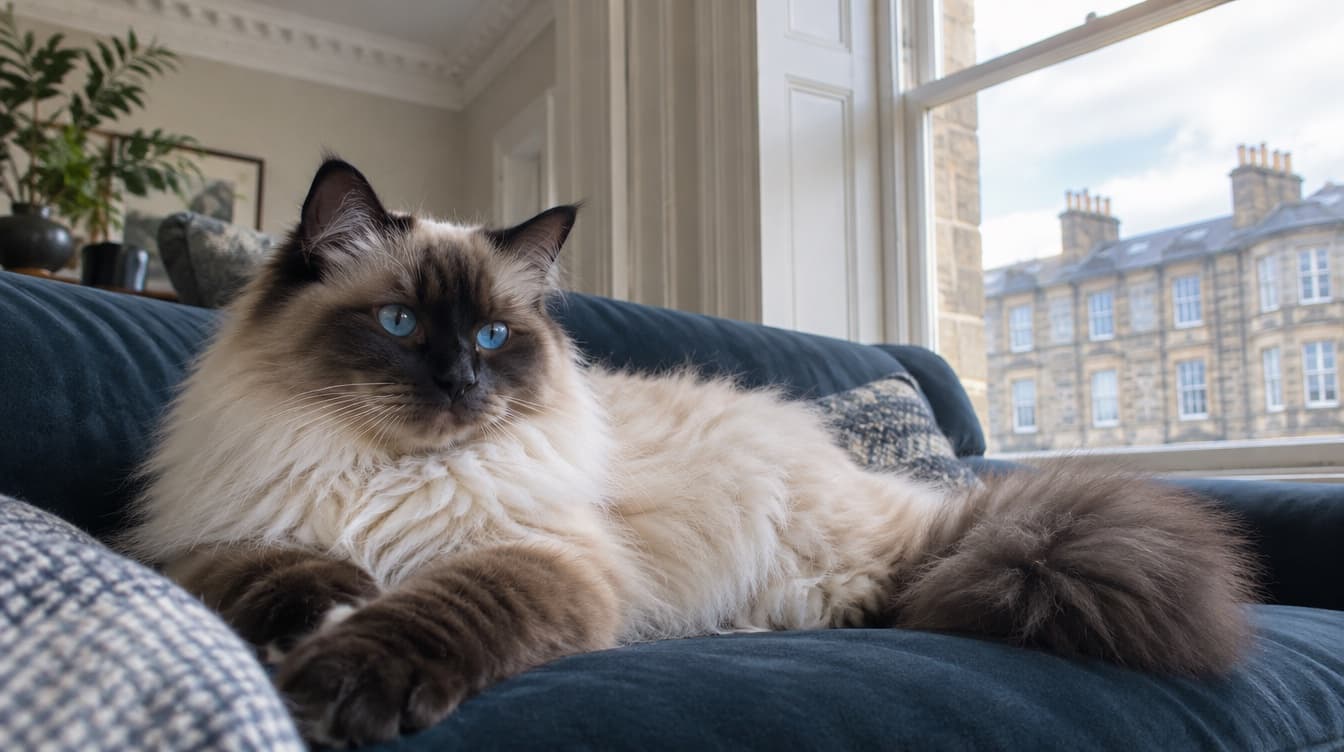
Where to adopt a Ragdoll in Glasgow
The live count near the top covers every Ragdoll or Ragdoll cross listed with the cat rescues we list in Glasgow and up to about 41 miles away, linked to each rescue. Most days it shows none. Fluffy moggies turn up far more often than pedigrees, and those listed today are on our Glasgow long-haired cats page. Pedigree cats also move through the cat fancy itself: every club affiliated to the GCCF (the UK pedigree registry) has a welfare officer holding lists of older or rescued cats and of people offering homes.
The British Ragdoll Cat Club
Just three main volunteers and a small band of helpers run the club's UK-wide rehoming service, so expect slow replies. Nobody joins a queue: you put your name to one cat from its available cats page, the club decides whose home fits that cat best, and a seasoned member normally sees the home before the cat goes. When we looked on 21 October 2026, its only listing was a bonded pair fostered in the Scottish Borders, open to applicants nationwide, needing a home with no other pets, children of 12 or over and a catio or secure garden.
Cats Protection Glasgow and the rescues we list
Pedigrees do sometimes reach general rescues. Cats Protection has a Glasgow branch whose cats all live with fosterers and a Glasgow Cat Centre in G41; we don't list its cats, so search its site. The Scottish SPCA also rehomes animals, including from its Glasgow centre; search on its own site. Purrple Cat Rescue, on St Enoch Square, is the only rescue we list inside the city; Fife Cat Shelter, by Kinross, is roughly 40 miles off, and Edinburgh Dog and Cat Home is further afield at Seafield. Our Glasgow cat rescues guide compares them.
Why Ragdolls need new homes
Most come up because an owner's situation changes. The British Ragdoll Cat Club says it has rehomed upwards of 60 cats a year for the past few years, and puts that down to owners' circumstances changing or to serious health or welfare worries. Many of its cats, its rehoming page explains, had to be taken out of homes with children or other pets they could not cope with, which is why so many listings ask for a quieter household.
Adopting or buying a Ragdoll: what you pay
A rescue fee usually comes with vet work already done. Every animal from Edinburgh Dog and Cat Home, further afield, leaves with a month's pet insurance, and Purrple Cat Rescue puts its fee towards vet bills, chipping, vaccinations, neutering and health checks. The breed club publishes no fee, so ask about it, and about what the cat has had done, before you apply.
A registered pedigree kitten from a breeder costs £200 to well over £1,000 (Cats Protection), and you need to check which vaccinations it has had and when it will be neutered. Whichever way the cat arrives, PDSA's minimum of £79 a month applies from then on.
Ragdoll health: the heart comes first
The GCCF warns that Ragdolls can carry a gene for hypertrophic cardiomyopathy (HCM), a heart disease that can cause heart failure at a young age. Since 2007 breeders have been able to test for the single known Ragdoll HCM mutation, and the GCCF has required the test for every Ragdoll it registers for breeding since 24 February 2016. A rescue cat's parents, though, are often unknown.
- No early signs. International Cat Care lists the Ragdoll among the breeds more prone to HCM and says the early stages may show no signs at all. Breed screening combines a heart scan (an echocardiogram) with a genetic test from a blood sample or cheek swab, so ask whether this cat has had either.
- Kidneys. PDSA also names polycystic kidney disease as a condition in the breed.
- Coat. The GCCF says the coat needs weekly care and extra grooming while the cat moults, because it will mat if left.
A Ragdoll in a Glasgow flat
A flat can work if it suits the cat: The British Ragdoll Cat Club treats Ragdolls, like most pedigrees, as indoor cats, but each listing says what outdoor space it needs, and its only listing on 21 October 2026 needed a catio or secure garden. The GCCF calls it one of the largest breeds, taking up to four years to mature, and says play is essential to keep it fit. A passage quoted on its breed page also dismisses the famous floppiness as hype; what sets the breed apart, it says, is a gentle, even temper.
If you rent, sort out permission early. Cats Protection Glasgow asks renters for written permission from the council or landlord to keep a cat. PDSA describes Ragdolls as not usually very active and not very chatty, but inclined to follow you around the house.
If you've been searching "Ragdoll kittens for sale Glasgow"
Rescues and breed clubs don't sell cats: you apply for one, the club or rescue decides which home suits it, and you pay an adoption fee or donation. Ragdoll kittens almost never come up this way, so be ready for an adult. Our Glasgow Ragdoll page shows anything listed near the city today.
If you buy, Cats Protection suggests a breeder registered with a body such as the GCCF, and seeing the kitten with its mother at home rather than buying from a video or a social media advert. The GCCF says a buyer should get copies of the parents' HCM results with the kitten paperwork, so ask for them. If an advert smells wrong, Police Scotland takes online marketplace fraud reports, and its advice is not to pay for anything you haven't seen.
The law in Scotland
Microchipping cats
In Scotland, microchipping a cat is a choice rather than a legal requirement: gov.uk says owners in Scotland, Wales and Northern Ireland "can choose to microchip" their cat. Compulsory cat microchipping applies in England only.
Lucy's Law: buying a kitten
In Scotland, Lucy's Law has banned the third-party sale of kittens under six months since 1 September 2021.
Rehoming licences
In Scotland, since 1 September 2021, anyone sourcing five or more animals in any 12-month period to rehome as pets needs a licence (Scottish Government). A licence is a useful sign that a Scottish rescue is what it says it is.
Questions
Tap a question to expand
Is there a Ragdoll rescue that covers Glasgow?
There is no Ragdoll rescue in Scotland that we could find. The British Ragdoll Cat Club runs a UK-wide rehoming service and accepts applications from anywhere for the cats it lists; on 21 October 2026 its only listing was a pair in the Scottish Borders. Our Glasgow Ragdoll page shows any listed with the cat rescues near the city, which is rare.
Is it cheaper to adopt a Ragdoll than to buy a kitten?
Usually. A Ragdoll at Cats Protection Glasgow would cost £120 as an adult, or £150 at Edinburgh Dog and Cat Home, about 42 miles away; Cats Protection puts a registered pedigree at £200 to well over £1,000. On a club cat, ask the fee up front, because none is published.
Can I get a Ragdoll for free, or for £100 or less, near Glasgow?
No rescue gives cats away. The lowest fee published by the rescues on this page is Edinburgh Dog and Cat Home's £100 for a cat over 9, about 42 miles away, and a Ragdoll turning up there would be unusual. A free Ragdoll advert is a private sale with no rescue checks, so meet the cat in its home and ask whether it is microchipped before agreeing anything.
Should I adopt a Ragdoll kitten, an adult or an older cat?
Realistically an adult: kittens almost never come through the club. With a grown cat you can see its personality, and its listing will say if it can't live with children or other pets. For an older Ragdoll, ask what is known about its heart and kidneys.
Why do Ragdolls end up in rescue?
Life changes for the owner, usually. The British Ragdoll Cat Club, which has rehomed over 60 cats a year recently, also cites serious health or welfare concerns, and says many of its cats left homes where children or other pets were too much for them.
What health problems should I ask about with a rescue Ragdoll?
Start with HCM, an inherited heart disease the GCCF links to the breed; International Cat Care notes a cat can seem completely normal early on. PDSA adds polycystic kidney disease. Ask for the cat's vet history and have insurance in place from the day it comes home.
How long do Ragdoll cats live?
The GCCF gives 12 to 17 years. A VetCompass study of UK vet records put life expectancy at birth at 10.31 years; the two figures measure different things.
Can an older Ragdoll live in a Glasgow flat?
It can, if the cat's listing allows it. The British Ragdoll Cat Club treats Ragdolls as indoor cats, but each listing says what outdoor space the cat needs, sometimes a catio or secure garden. If you rent, Cats Protection Glasgow wants written permission from your council or landlord first.
Keep reading
- Ragdolls for adoption in and around Glasgow
- All rescue cats in and around Glasgow
- Cat rescues in Glasgow: the best ones compared
- Ragdolls across the UK
- Adopting a rescue kitten in Glasgow: rescues, rules and costs
- Adopting a Maine Coon in Glasgow: rescues, rules and costs
- Every cat adoption guide for Glasgow
- Rescue pets in Glasgow
- Rehoming a Ragdoll? Our owner guide
Ragdolls in other cities: Belfast, Birmingham, Bournemouth, Christchurch and Poole, Brighton and Hove, Bristol, Canterbury, Cardiff, Carlisle, Dumfries and Galloway, Edinburgh, Exeter, Ipswich, Kendal, Kingston upon Hull, Leeds, Lincoln, Liverpool, London, Manchester, Middlesbrough, Newcastle upon Tyne, Northampton, Norwich, Nottingham, Oxford, Peterborough, Plymouth, Portsmouth, Preston, Sheffield, Stoke-on-Trent, Swansea, Truro, Worcester
Ragdoll guides in other cities: Birmingham, Bristol, Leeds, Liverpool, London, Manchester, Nottingham, Sheffield
For rescues and rehoming centres
Are you a rescue near Glasgow? Get your animals listed free.
Every animal links back to your own adoption page, and you can ask to be removed at any time.
Sources: The British Ragdoll Cat Club: rescue and rehome · The British Ragdoll Cat Club: available rehome cats · The British Ragdoll Cat Club: about us · Cats Protection: Glasgow branch and Glasgow Cat Centre pages (fees, fosterers, renting) and Getting a pedigree cat and Buying a kitten advice (homepage linked; its terms ask that deep links be approved) · Purrple Cat Rescue: adopt (fees and FAQs) · Edinburgh Dog and Cat Home: our rehoming process (fees) · Scottish SPCA: Glasgow rescue and rehoming centre · GCCF: Ragdoll · GCCF: clubs rehoming · PDSA: Ragdoll · International Cat Care: Cardiomyopathy (heart disease) in cats · Teng et al. (2024), Journal of Feline Medicine and Surgery: life tables of annual life expectancy for cats in the UK (RVC VetCompass) · PDSA: the cost of owning a cat · GCCF · Police Scotland: online marketplace fraud · gov.uk: Get your dog microchipped · gov.uk: Banned dogs · Scottish Government: further protection for animals · legislation.gov.uk: Microchipping of Dogs (Scotland) Regulations 2016