Breed adoption guide
Adopting a Labrador in Leeds: rescues, costs and matching
Labradors are rarely listed by the general rescues around Leeds, but a Labrador charity covers the whole of Yorkshire. Here is how its matching works, what adopting costs against buying a puppy, and the health questions to ask.
By the LocalPetFinder Team · Checked 19 October 2026
The short answer
To adopt a Labrador in Leeds, apply to join the Matching List of Labrador Welfare, a volunteer-run Labrador charity that covers Yorkshire and the North East, and watch the general rescues near Leeds whose dogs we list, such as Good Life Dog Rescue in Garforth and Pabs & Pals Rescue in Harrogate. Labrador Welfare matches each dog to the home that suits it best rather than working through a queue, and asks a £450 adoption fee. You pay a fee, not a sale price.
- Rescue adoption fees
- Each rescue sets its own adoption fee. Dogs Trust charges £300 for a puppy or adult dog in England, Wales and Scotland, and Blue Cross fees start from £235 for dogs aged 8 or over and £335 for dogs aged 1 to 7. The fee usually covers neutering, microchipping and first vaccinations, and each rescue confirms its own fee.
- Buying a puppy
- Blue Cross puts the cost of buying a puppy at £400 to £3,000, before food, insurance and vet bills, and says a puppy from a health-screened litter costs more upfront. We have found no reliable Labrador-only price, so we don't quote one.
- Labrador breed rescue fee
- Labrador Welfare asks a £450 adoption fee, which it says all goes back into the charity.
- Rescues near Leeds
- Aireworth Dogs in Need charges £250 for most dogs and £100 for a dog over 10, Pabs & Pals Rescue usually £300, and Good Life Dog Rescue £350.
- A lifetime with a large dog
- PDSA puts the minimum lifetime cost of a large dog at £8,200 to £18,800 (its 2024 figures, including insurance but not vet bills if the dog becomes ill).
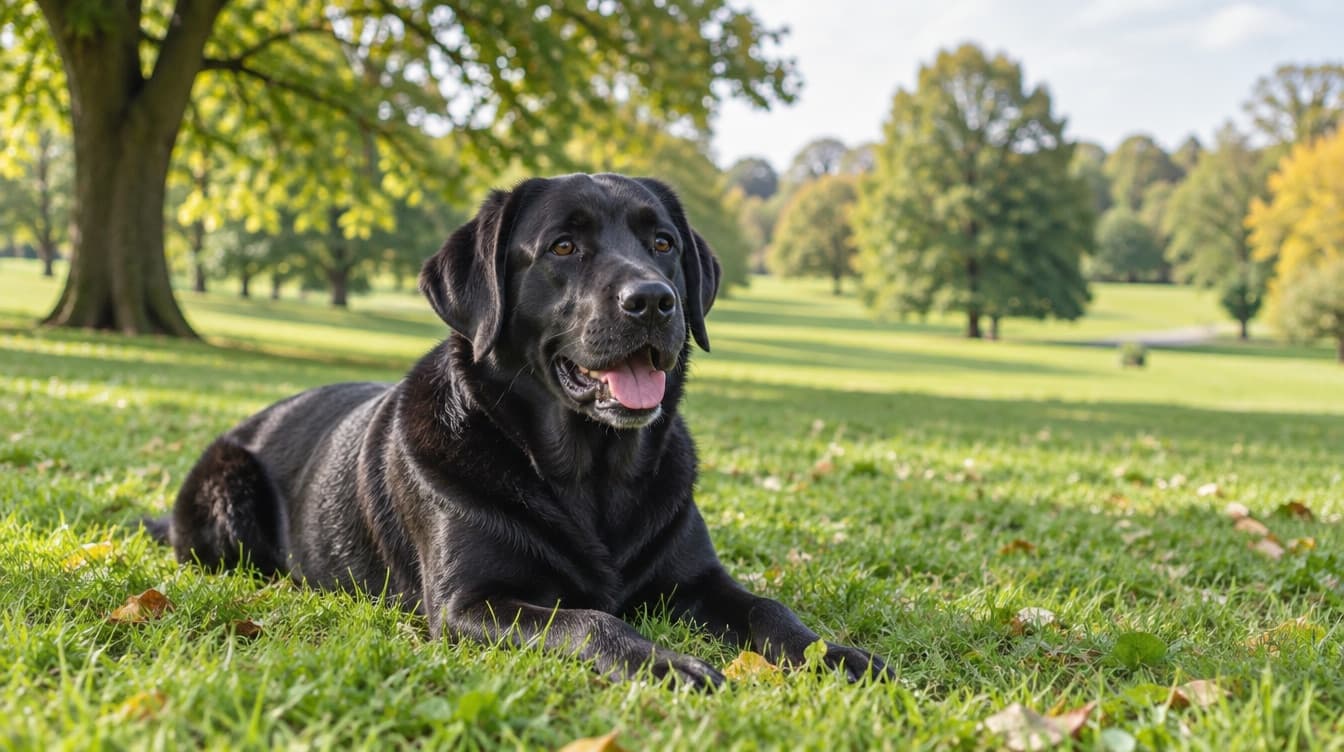
Where to adopt a Labrador in Leeds
Most Leeds adopters will need two routes at once: join the Labrador charity that covers Yorkshire, and keep an eye on the general rescues near the city. The count under the short answer is live: it shows every Labrador and Labrador cross listed with us in Leeds and within about 25 miles, with a link to the rescue that has each dog. On many days it is short, which is why the breed charity matters.
Labrador Welfare
A small, Labrador-only registered charity (number 1012192 on its site) run entirely by volunteers. It covers North Derbyshire, parts of Cheshire, North Nottinghamshire, North Lincolnshire, Yorkshire and the North East, and says it will generally only rehome in those areas, so Leeds is well inside its patch. If you searched for "Labrador rescue Yorkshire", this is the verified charity to contact.
You apply online to join its Matching List. It explains that the list "does not work in the same way as a waiting list": when a dog comes in, the team looks at everyone on it and contacts whoever suits that dog best, wherever they are on the list. There is no open viewing. If you are matched, you meet the dog by appointment at kennels or a foster home, bringing any dog you already have, and a home visit follows before the adoption is finalised. We don't list its dogs; contact it directly.
General rescues near Leeds
Labradors and Labrador crosses turn up now and then with the general rescues we list. Aireworth Dogs in Need fosters dogs around Keighley and only rehomes within its area, which reaches the bordering parts of Leeds; it home checks you before you choose a dog. Pabs & Pals Rescue in Harrogate asks you to apply only if you meet the needs set out on a dog's profile. Our guide to Leeds dog rescues compares every rescue near the city.
Dogs Trust Leeds
Dogs Trust Leeds, on York Road inside the city, rehomes all kinds of dogs and is open for browsing five days a week. We don't list Dogs Trust dogs, so search its own site; its fee is in the cost box above.
Why Labradors come into rescue
Not because of the dog, by Labrador Welfare's account. Labrador Welfare says it rehomes Labradors that need new homes "through no fault of their own", and that it works with owners who are giving up a dog "without judgement". Apart from strays, abandoned dogs and dogs whose owners have died, it takes as full a background history as it can from the previous owner before a dog comes in.
That history is useful to you. It means the rescue can usually tell you how a dog has lived with children, cats or other dogs, which is something no advert for a puppy can.
Adopting or buying a Labrador: what you pay
A Labrador from a breed charity is not always cheaper than a puppy: Labrador Welfare's £450 fee sits just above the bottom of Blue Cross's £400 to £3,000 range for buying one. The difference is what comes with it: a dog whose background and temperament are known, and back-up for life. Labrador Welfare says it will stand beside the dog and its new owner "for the rest of the dog's natural life".
General rescues near Leeds often charge less: £250 for most dogs at Aireworth Dogs in Need if you live on the Leeds edge of its area, with neutering, vaccinations, worming, flea treatment and a microchip included. Either way, PDSA estimates £560 to set up a large dog and a minimum of £116 a month after that.
Labrador health: what to ask the rescue
A rescue Labrador rarely comes with its parents' health results, so ask what a vet has found. These are the concerns UK sources name for the breed:
- Hips, elbows and eyes. Before breeding, The Royal Kennel Club wants Labrador parents hip and elbow scored, eye tested and DNA tested for inherited conditions, among them exercise induced collapse and progressive retinal atrophy.
- Joints and weight. Hip and elbow dysplasia are on PDSA's list of breed health problems, and it describes Labradors as "prone to obesity". Weight is a concern in the show ring too: the Royal Kennel Club's Breed Watch tells judges to watch for Labradors that are significantly overweight.
Living with a Labrador in Leeds
Time alone is the rule that catches most applicants. Labrador Welfare wants homes where a dog is not routinely left on its own for more than four hours in total on any day, with the company of someone who may be at home for most of the day. Its home visitors check the garden, which should ideally have a 5ft fence or wall.
Labradors are big, busy dogs. The Royal Kennel Club classes the breed as large, with an exercise need of more than two hours a day, and Dogs Trust describes them as typically high-energy, wanting daily walks plus time to explore and play. An older rescue Labrador may need less, and the rescue is best placed to say whether a particular dog fits your routine.
If you've been searching "Labrador puppies for sale Leeds"
No rescue sells a Labrador. You join a list or apply for a dog, the rescue decides on the match, and you pay an adoption fee. Puppies are rare: Labrador Welfare says it seldom has dogs under 6 months old coming through, though it helps dogs of every age, so be open to an adult.
Buying instead? Search The Royal Kennel Club's "Find a puppy" listings, which can be filtered for puppies from health-tested parents, and see your vet beforehand: Dogs Trust notes that some practices offer pre-purchase consultations covering likely health conditions and rough costs. Ask the breeder for both parents' hip, elbow and eye results. If an advert looks like a scam, report it to Report Fraud (formerly Action Fraud).
The law in England
Microchipping and change of keeper
In England, as everywhere in the UK, every dog must be microchipped and registered by 8 weeks old. Since 6 April 2016 a dog in England can't pass to a new keeper until it is chipped, and the new keeper must update the database (the England regulations). A rescue chips before rehoming; after adoption, keep the details up to date.
Lucy's Law: buying a puppy
In England, Lucy's Law has meant since 6 April 2020 that puppies under six months can't be sold by a third party such as a pet shop or dealer: you buy direct from the breeder or adopt from a rehoming centre.
Banned dog types
In England, it is against the law to sell, abandon, give away or breed from a banned type: the Pit Bull Terrier, Japanese Tosa, Dogo Argentino, Fila Brasileiro and XL Bully. Whether a dog is banned depends on what it looks like rather than its breed or name, so no rescue can rehome one and none appear on LocalPetFinder. The Staffordshire Bull Terrier is not a banned type.
XL Bully dogs
In England, since 31 December 2023 it has been illegal to breed, sell, advertise, gift, exchange or abandon an XL Bully or let it stray, and since 1 February 2024 illegal to own one without a Certificate of Exemption (gov.uk: England and Wales).
Questions
Tap a question to expand
Is there a Labrador rescue that covers Leeds and Yorkshire?
Yes. Labrador Welfare, a volunteer-run Labrador charity, covers Yorkshire and the North East along with North Derbyshire, parts of Cheshire, North Nottinghamshire and North Lincolnshire, and generally rehomes only in those areas. You apply online to join its Matching List. General rescues near Leeds, such as Aireworth Dogs in Need and Pabs & Pals Rescue, list Labradors with us from time to time, though only a few pass through them at once, so our Leeds Labrador page is often short. We don't list Labrador Welfare's dogs, so join its Matching List directly as well as watching our page.
How does Labrador Welfare's Matching List work?
It is not a queue. When a dog comes in, Labrador Welfare looks at everyone on its Matching List and contacts the applicant who best suits that dog, whatever their position on the list. If you are matched, you meet the dog by appointment at kennels or a foster home, and a home visit follows. It says it can't keep applicants regularly updated, but will be in touch if you are matched.
Is adopting a Labrador cheaper than buying a puppy?
Sometimes, though not always by much. Labrador Welfare asks £450, and Blue Cross puts the cost of buying a puppy at £400 to £3,000. General rescues near Leeds often charge less, from £250 at Aireworth Dogs in Need. A rescue fee usually covers vet work such as neutering and microchipping that you would pay for separately with a bought puppy.
Can I get a Labrador for free, or for £100 or less, near Leeds?
Not free from a rescue, but £100 is possible for a dog over 10, and under £300 from a general rescue if you live in its area. Aireworth Dogs in Need, whose area reaches only the bordering parts of Leeds, charges £250 for most dogs and £100 for a dog over 10. Labrador Welfare's fee is £450. A Labrador offered "free to good home" is a private advert, with no rescue checking the dog or the seller, so take care.
Can I adopt a Labrador puppy in Leeds?
It is unlikely. Labrador Welfare says it seldom has dogs under 6 months old coming through, though it helps dogs of every age. Most rescue Labradors are adults, and the rescue can tell you how an adult behaves at home, which makes the match easier than with a puppy.
Why do Labradors end up in rescue?
Not because of the dog, by Labrador Welfare's account. It says it rehomes Labradors that need new homes through no fault of their own, and works with owners giving up a dog without judgement. Apart from strays, abandoned dogs and dogs whose owners have died, it takes as full a history as it can from the previous owner, so it can usually tell you how a dog has lived with children, cats or other dogs.
What should I ask a rescue about a Labrador's health?
Weight, joints and eyes are the three to cover. PDSA describes the breed as prone to obesity and names hip and elbow dysplasia, while The Royal Kennel Club wants breeding Labradors hip and elbow scored, eye tested and DNA tested for conditions such as progressive retinal atrophy. A rescue dog rarely has those results, so ask what a vet has found and whether it can be insured.
Can I adopt an older Labrador?
Yes. Labrador Welfare rehomes dogs aged 9 and over through its lifetime foster scheme, with the same matching process as younger dogs. The Royal Kennel Club gives the breed's lifespan as over 10 years, and an older dog's habits are already known. Aireworth Dogs in Need charges £100 for a dog over 10.
Can I adopt a Labrador if I work full time?
It depends on how the dog's day would be covered. Labrador Welfare wants homes where a dog is not routinely left alone for more than four hours in total on any day, with someone who may be at home for most of the day. Tell the rescue honestly what your days look like.
Keep reading
- Labradors for adoption in and around Leeds
- All rescue dogs in and around Leeds
- The best dog rescues in Leeds, compared
- Labrador Retrievers across the UK
- Adopting a Staffy in Leeds: rescues, costs and the law
- Adopting a German Shepherd in Leeds: rescues, costs and the law
- Adopting a Border Collie in Leeds: rescues, rules and health
- Adopting a Chihuahua in Leeds: rescues, costs and health
- Adopting a Cockapoo or Cavapoo in Leeds: rescues, costs and health
- Adopting a Cocker Spaniel in Leeds: rescues, costs and health
- Adopting a Dachshund in Leeds: rescues, rules and health
- Adopting a French Bulldog in Leeds: rescues, costs and breathing
- Adopting a Golden Retriever in Leeds: breed clubs, costs and health
- Adopting a Jack Russell in Leeds: rescues, costs and health
- Adopting a Pomeranian in Leeds: rescues, costs and health
- Adopting a Rottweiler in Leeds: rescues, costs and health
- Adopting a Shih Tzu in Leeds: rescues, costs and health
- Every dog adoption guide for Leeds
- Rescue pets in Leeds
- Rehoming a Labrador? Our owner guide
Labradors in other cities: Wakefield, York, Bradford, Huddersfield, Belfast, Birmingham, Bournemouth, Christchurch and Poole, Brighton and Hove, Bristol, Canterbury, Cardiff, Carlisle, Dumfries and Galloway, Edinburgh, Exeter, Glasgow, Ipswich, Kendal, Kingston upon Hull, Lincoln, Liverpool, London, Manchester, Middlesbrough, Newcastle upon Tyne, Northampton, Norwich, Nottingham, Oxford, Peterborough, Plymouth, Portsmouth, Preston, Sheffield, Stoke-on-Trent, Swansea, Truro, Worcester
Labrador guides in other cities: Birmingham, Bristol, Glasgow, Liverpool, London, Manchester, Middlesbrough, Nottingham, Sheffield
For rescues and rehoming centres
Are you a rescue near Leeds? Get your animals listed free.
Every animal links back to your own adoption page, and you can ask to be removed at any time.
Sources: Labrador Welfare: give a dog a home · Labrador Welfare: FAQs · Labrador Welfare: about us · Aireworth Dogs in Need: adopting a dog · Pabs & Pals Rescue: adopt · Good Life Dog Rescue: adoption process · Dogs Trust: Leeds rehoming centre · Blue Cross: getting a puppy · PDSA: the cost of owning a dog · The Royal Kennel Club: Labrador Retriever · The Royal Kennel Club: Breed Watch, Labrador Retriever · PDSA: Labrador Retriever · Dogs Trust: Labrador · The Royal Kennel Club: Find a puppy · Report Fraud · gov.uk: Get your dog microchipped · gov.uk: Banned dogs · gov.uk: Lucy's Law in England · legislation.gov.uk: Microchipping of Cats and Dogs (England) Regulations 2023 · gov.uk: Ban on XL Bully dogs